What Will Happen at the Final Hearing of Ex-President Yoon's Insurrection Trial?
Synopsis
The insurrection trial of former South Korean President Yoon Suk Yeol reaches its final hearing, raising questions about the potential death penalty he may face. As significant political figures gather, will justice be served or will history repeat itself?
Key Takeaways
Yoon Suk Yeol 's insurrection trial concludes with significant implications for South Korean politics.
The potential for the death penalty raises questions regarding judicial processes.
The verdict is anticipated to be delivered in early February.
The courtroom has historical significance, housing trials of previous leaders.
Amnesty International notes South Korea’s stance against the death penalty since 1997.
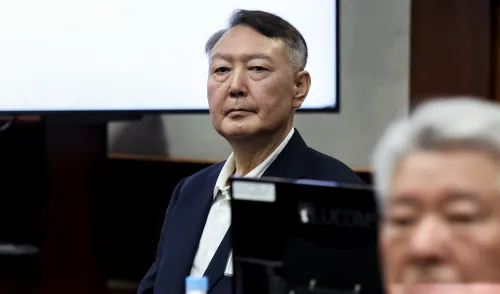
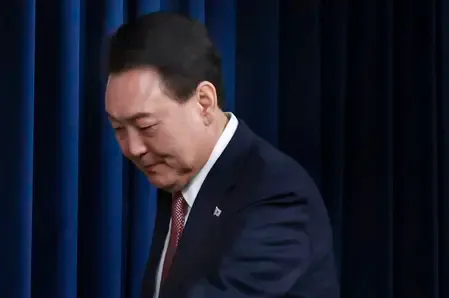
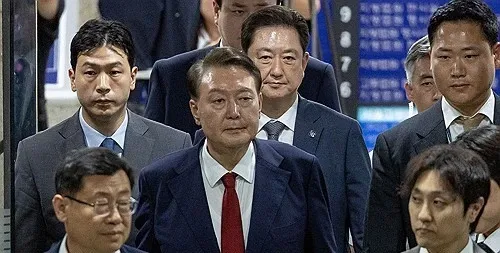
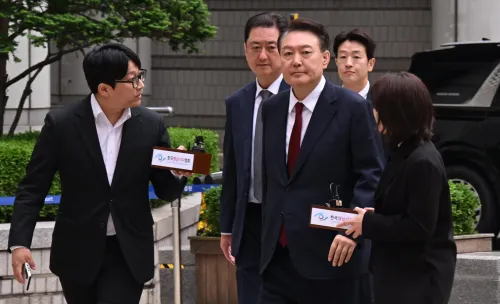
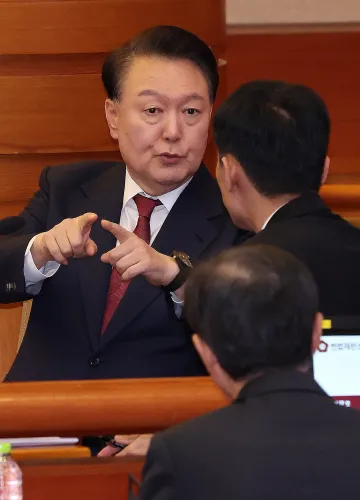
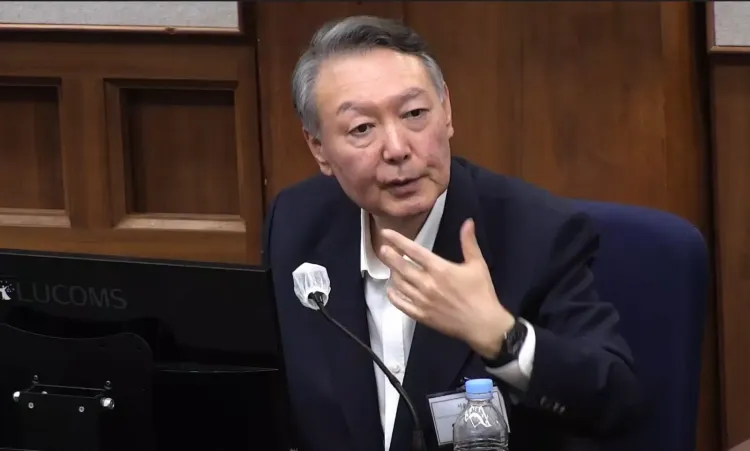
Seoul, Jan 9 (NationPress) The concluding session of the insurrection trial involving former South Korean President Yoon Suk Yeol took place on Friday, drawing significant attention regarding the potential penalties, including the death penalty. The trial commenced in February after Yoon was charged with instigating an insurrection due to his declaration of martial law on December 3, 2024. This hearing, which began at 9:20 a.m. at the Seoul Central District Court, marks the conclusion of the proceedings.
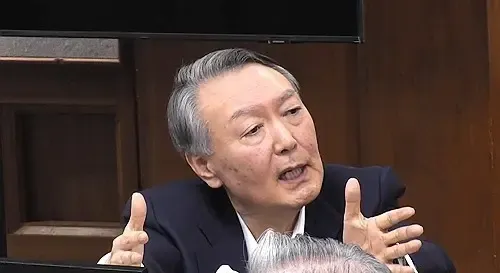
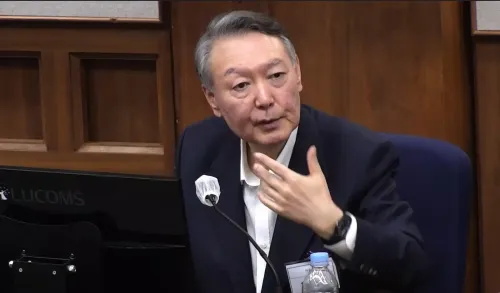
This session also serves as the final hearing for former Defence Minister Kim Yong-hyun, former National Police Agency chief Cho Ji-ho, and five others accused of crucial roles in the insurrection through their participation in the brief enforcement of martial law.
All eight defendants, including the imprisoned former president, were present. A final hearing usually involves the prosecution's last opinion and sentencing recommendations, the defense's closing arguments, and the defendant's final statements.
In Yoon's situation, the special counsel Cho Eun-suk's team is expected to request one of three legal penalties for the leader of an insurrection: the death penalty, life imprisonment, or life imprisonment without hard labor.
According to legal sources, the court's decision is anticipated in early February, as reported by Yonhap news agency.
Yoon faces charges of conspiring with the former defense minister and others to incite a riot aimed at undermining the Constitution by unlawfully declaring martial law without war or a significant national emergency. Specifically, he is accused of deploying troops and police to barricade the National Assembly compound to prevent lawmakers from overturning his decree and ordering the arrest of the National Assembly speaker and the leaders of both the ruling and opposition parties.
Yoon is notably the first sitting president to be indicted with physical detention, occurring in January of last year. He was released in March following a court ruling that annulled his arrest but was subsequently detained again in July over additional charges linked to his martial law attempt.
The courtroom hosting Friday's hearing is the same venue where previous leaders, including Chun Doo-hwan and Roh Tae-woo, faced trials for various offenses, receiving sentencing recommendations of the death penalty and life imprisonment, respectively, for their involvement in the 1979 coup that placed Chun in power in 1980.
Amnesty International has classified South Korea as a de facto abolitionist of the death penalty, with no executions carried out since December 1997.
Point of View
It is crucial to approach this significant trial with a focus on justice and accountability. The outcome of Yoon Suk Yeol's insurrection trial will undoubtedly influence public trust in the political system and the rule of law in South Korea.
NationPress
18 Oct 2026
Frequently Asked Questions
What charges does Yoon Suk Yeol face?
Yoon Suk Yeol is charged with leading an insurrection by unlawfully declaring martial law and conspiring with others to mobilize troops and police to prevent legislative actions.
What are the potential penalties for Yoon Suk Yeol?
The potential penalties for Yoon Suk Yeol include the death penalty, life imprisonment, or life imprisonment without hard labor.
When is the court's sentencing expected?
The court's sentencing is anticipated to be announced in early February.
Has South Korea executed anyone recently?
No, South Korea has not carried out any executions since December 1997, making it a de facto abolitionist of the death penalty.
What historical context surrounds this trial?
This trial is significant as it marks the first time a sitting president has faced physical detention in South Korea, alongside historical trials of other former leaders.