Is Gagan Thapa the New President of Nepali Congress Amidst a Party Split?
Click to start listening
Synopsis
In a significant political shift, Gagan Thapa has emerged as the new president of the Nepali Congress amidst a controversial split. His election marks a potential turning point for the party, which now faces the challenge of legitimacy and unity ahead of upcoming elections.
Key Takeaways
- Gagan Thapa has been elected president amid internal party strife.
- The party now faces legitimacy challenges from rival factions.
- This marks the second split in 23 years, impacting electoral prospects significantly.
- Thapa's leadership promises a shift towards more responsive governance.
- The upcoming elections in March will be critical for the party's future.
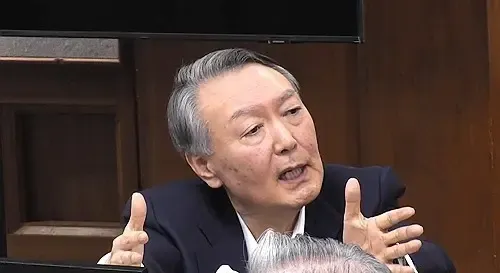
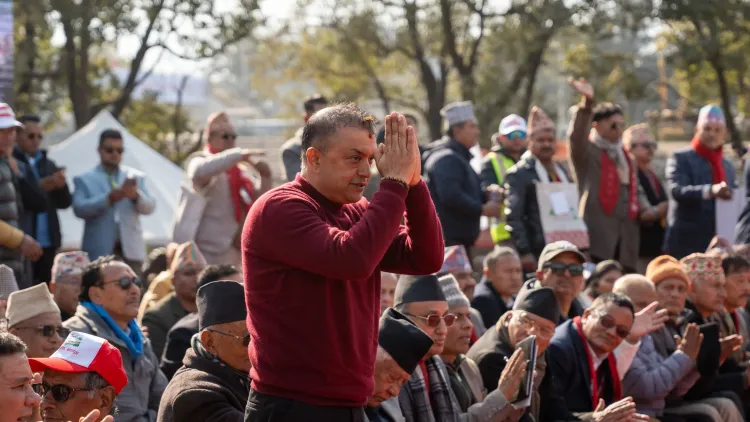
Kathmandu, Jan 15 (NationPress) In a contentious Special General Convention (SGC) of the Nepali Congress, Gagan Thapa was elected as the new president of the historic party, mere hours after facing expulsion from a faction led by former Prime Minister Sher Bahadur Deuba.
At the stroke of midnight on Wednesday, the SGC also appointed new members to the Central Working Committee. Bishwa Prakash Sharma and Pushpa Bhusal were elected as vice-presidents, while Pradeep Poudel and Gururaj Ghimire took on the roles of general secretaries.
This transition signifies a significant shift from the older generation to a new leadership, although it comes with the unfortunate consequence of a party split.
The primary challenge for this new leadership will be to gain recognition from the Election Commission — or possibly the Supreme Court — as the legitimate governing body of the Nepali Congress. The Election Commission has acknowledged that both factions have submitted claims to legitimacy.
This marks the second split within the party in the last 23 years, raising concerns about its electoral viability ahead of the upcoming elections scheduled for March 5.
Upon his election, Thapa vowed to operate in a manner that would instill pride in all Nepali Congress leaders and members.
During his address at the SGC, he emphasized that the Nepali Congress would serve as a supportive entity that prioritizes the welfare of the general public, criticizing previous leadership for neglecting the concerns of citizens.
Multiple discussions between the SGC organizers and the Deuba-led faction broke down over whether Deuba should step down prior to the elections. Following this failure, the SGC organizers moved forward with the leadership election, while the Deuba faction declared disciplinary measures against three leaders, including Thapa and Sharma, as well as Farmullaha Mansur.
Despite repeated requests from a significant number of elected members for a general convention, the Deuba faction resisted calling the SGC, prompting Thapa and Sharma to proceed without Deuba’s endorsement.
Back in 2002, Deuba, who was then serving as prime minister, formed his own party, the Nepali Congress (Democratic), after being expelled by the party led by the late Girija Prasad Koirala due to his suggestion to dissolve the House of Representatives, a move contrary to the party's consensus.
After the successful 2006 people’s movement, the two parties merged to form a unified Nepali Congress.
Thapa, at 49, gained recognition as a student leader during the 2006 people’s movement, where his passionate speeches against the monarchy and in favor of establishing a republic resonated with the youth.
As a leader of the party’s student wing, the Nepal Student Union, he delivered powerful orations challenging the monarchy during a time of stringent royal control.
During that period, the leadership of the Nepali Congress was largely muted on the need for a republican transformation, adhering instead to the “two-pillar theory” of constitutional monarchy and multiparty democracy.
Since stepping into the national arena two decades ago, Thapa has established himself as a widely respected figure both within the party and among the general populace.
Post the 2006 people’s movement, he was included in the proportional representation list for the 2008 Constituent Assembly elections, which allowed him to enter the Assembly.
After the first Constituent Assembly failed to draft a new constitution, new elections were conducted in 2013, wherein Thapa contested from the Kathmandu–4 constituency and emerged victorious. He successfully retained the same seat in the elections of 2017 and 2022, solidifying his status as an influential player in national politics.
Within the party, Thapa faced defeat initially in his bid for the general secretary position at the 13th general convention in 2016. However, he successfully contested again for the same role at the 14th convention in 2021.
Following the 2022 general election, Thapa challenged Deuba for leadership of the parliamentary party but was unsuccessful. Nonetheless, he exerted pressure on Deuba following the Gen Z movement in September of last year, when he joined forces with fellow general secretary Bishwa Prakash Sharma to advocate for an SGC, asserting that the party required change ahead of the upcoming elections.
With the leadership refusing to accommodate calls for the SGC, Thapa and Sharma took matters into their own hands, ultimately leading to Thapa's election as the new president — albeit at the price of a party divide.
Point of View
It's crucial to recognize the significance of Gagan Thapa's election as president of the Nepali Congress. This leadership change reflects the evolving dynamics within the party and poses important questions regarding its future trajectory, particularly in light of the upcoming elections. The division within the party could have lasting effects on its ability to unite and present a strong front to the electorate.
NationPress
15/01/2026
Frequently Asked Questions
What led to Gagan Thapa's election as president?
Gagan Thapa was elected president during a Special General Convention, following his expulsion from a faction led by Sher Bahadur Deuba, highlighting the internal divisions within the party.
What are the immediate challenges facing the new leadership?
The new leadership must secure recognition from the Election Commission as the legitimate governing body of the Nepali Congress amidst competing claims from different factions.
How many times has the Nepali Congress experienced a split?
This is the second split within the Nepali Congress in the past 23 years, raising concerns about the party's electoral prospects.
What promises did Gagan Thapa make after his election?
Thapa vowed to work in a manner that would instill pride in all members of the Nepali Congress, emphasizing the need to address the concerns of the general public.
How has Gagan Thapa's political journey been so far?
Thapa has been a prominent figure in Nepali politics, rising from student leadership during the 2006 movement to a key player in the Nepali Congress, winning multiple elections.