Historic Gaza Municipal Vote: First Elections in 20 Years Held in Deir al-Balah
Synopsis
For the first time since 2006, Gaza held municipal elections on April 25 — limited to Deir al-Balah, the enclave's least-damaged city. With 70,000 eligible voters, four competing lists, and campaign posters even in displacement camps, this fragile democratic moment signals a push to revive Palestinian civic life amid ongoing conflict.
Key Takeaways
April 25, 2025 : Gaza held its first municipal elections in 20 years , confined to Deir al-Balah in central Gaza.
Approximately 70,000 voters were eligible in Deir al-Balah; 1.3 million Palestinians were eligible across all Palestinian territories.
Four electoral lists with 60 total candidates — including at least four women per list — competed in Deir al-Balah.
Across Palestinian territories, 321 electoral lists , 3,773 municipal candidates , and 1,358 village council candidates participated in the elections.
Hamas spokesman Hazem Qassem called the vote "an important step" and called for elections to be extended across the Gaza Strip.
The last Gaza local elections were held in 2006 , before Hamas seized control of the enclave in 2007 .
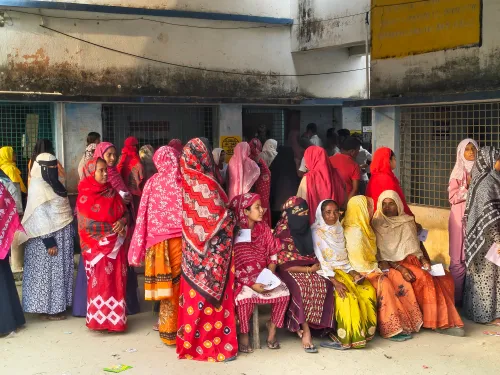
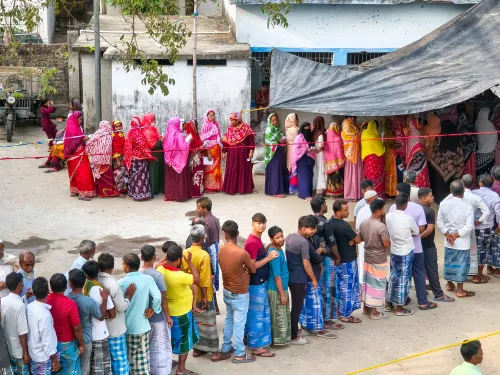
Deir al-Balah, Gaza Strip, April 25 — In a landmark moment for Palestinian democratic participation, thousands of Gaza residents cast their ballots on Saturday, April 25, in the territory's first municipal elections in two decades. The vote was confined to Deir al-Balah, located in central Gaza — selected for its relatively lower levels of infrastructure destruction — while simultaneous local elections were conducted across the West Bank.
Polling Details and Voter Turnout
Polling stations in Deir al-Balah opened at 7:00 a.m. local time (0400 GMT) and remained operational until 5:00 p.m., while West Bank polling booths stayed open until 7:00 p.m., according to the Palestinian Central Elections Commission (PCEC).
The commission confirmed that approximately 1.3 million voters are eligible to participate across Palestinian territories, with around 70,000 eligible voters registered specifically in Deir al-Balah. The elections span 183 local bodies across Palestinian territories.
A total of 321 electoral lists featuring 3,773 candidates are competing for municipal seats, with an additional 1,358 candidates vying for village council positions. In Deir al-Balah alone, four electoral lists — each comprising 15 candidates, including a minimum of four women — are contesting the local seats.
Why Deir al-Balah Was Chosen
Officials noted that Deir al-Balah was deliberately selected as the Gaza venue for this electoral exercise because it is considered the "least affected" of Gaza's governorates in terms of war-related infrastructure damage. This pragmatic decision reflects the broader devastation across the enclave that has made conducting elections elsewhere logistically impossible.
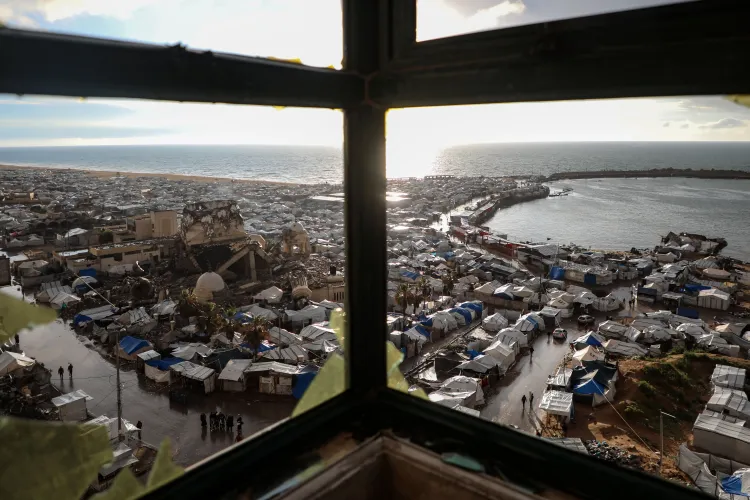
Despite the ongoing humanitarian crisis, campaign activity was visibly active in the weeks preceding the vote. Candidate posters and electoral list banners adorned walls, shopfronts, and street poles throughout the city. Campaigning also extended into displacement camps, community centers, and residential areas sheltering internally displaced families — a striking image of democratic expression amid conflict.
Voices From the Ground
Salman al-Aidi, a 42-year-old Deir al-Balah resident, described his experience as smooth and unobstructed. "The process was smooth, and there were no difficulties or obstacles for voters," he told Xinhua news agency. Al-Aidi emphasized that participating in municipal elections after so many years of absence carried profound personal and civic significance for him and many others.
Hamas spokesman Hazem Qassem described the vote as "an important step" and called for conditions to be established that would allow the electoral process to be extended to the rest of the Gaza Strip in future rounds.
Gaza-based political analyst Eyad Abdel Jawad said the elections are aimed at reviving local democratic processes that have been effectively frozen for years due to political divisions and repeated cycles of conflict.
Historical Context: Two Decades Without Local Polls
This is the first time local elections have been conducted in Gaza since 2006 — the year before Hamas seized control of the enclave in 2007 following a violent power struggle with Fatah. Since then, a combination of multiple armed conflicts with Israel, deep-seated Palestinian political fragmentation, and the resulting international isolation has consistently prevented any form of democratic local governance renewal.
This comes amid an extraordinarily difficult humanitarian backdrop. Gaza has been under sustained military pressure since the October 7, 2023 Hamas attacks on Israel and the subsequent Israeli military campaign, which has caused catastrophic civilian displacement and infrastructure collapse across most of the territory. The decision to hold even a limited election underscores a deliberate attempt to signal institutional continuity and local governance amid the rubble.
Broader Implications for Palestinian Democracy
The significance of this vote extends well beyond its limited geographic scope. For a population that has been denied meaningful electoral participation at the local level for nearly two decades, the Deir al-Balah vote represents a fragile but symbolically powerful reassertion of civic identity. Critics, however, note that holding elections in only one of Gaza's five governorates — while the rest remain engulfed in conflict and displacement — raises questions about the representativeness and legitimacy of the broader democratic process.
Notably, the Palestinian Authority, which administers the West Bank, has itself been criticized internationally for delaying presidential and legislative elections. The last Palestinian legislative elections were held in 2006, and presidential elections in 2005. The Deir al-Balah vote, while modest in scale, may add pressure on Palestinian leadership to accelerate broader electoral reform.
As international attention remains fixed on ceasefire negotiations and humanitarian access, the outcome of these local elections — and whether they can be extended to the rest of Gaza — will be a key indicator of whether Palestinian civil institutions can survive and function under conditions of prolonged conflict. The world will be watching whether this tentative democratic step becomes a foundation for broader political renewal or remains an isolated moment in an otherwise fractured landscape.
Point of View
Not meaningfully — but because it exposes the impossible contradiction at the heart of Palestinian politics: a leadership that claims democratic legitimacy while presiding over nearly two decades of electoral paralysis. The real test isn't whether ballots were cast on April 25th, but whether this moment builds toward genuine, territory-wide political renewal — or becomes another footnote in a long history of deferred democratic promises.
NationPress
16 Sept 2026
Frequently Asked Questions
When were the last municipal elections held in Gaza before 2025?
The last municipal elections in Gaza were held in 2006 , just one year before Hamas took control of the enclave in 2007. A combination of political divisions and repeated armed conflicts prevented any local elections from being held for nearly two decades.
Why were Gaza's 2025 elections limited to Deir al-Balah?
Deir al-Balah was selected because it is considered the least infrastructure-damaged of Gaza's governorates, making it the only area logistically capable of hosting elections. The rest of the Gaza Strip remains severely affected by ongoing conflict and displacement.
How many candidates and voters were involved in the Gaza municipal elections?
Approximately 70,000 eligible voters were registered in Deir al-Balah, while 1.3 million voters were eligible across all Palestinian territories. In Deir al-Balah, four electoral lists with a total of 60 candidates — including at least four women per list — competed for municipal seats.
What did Hamas say about the Gaza municipal elections?
Hamas spokesman Hazem Qassem called the vote "an important step" and urged that conditions be created to extend the electoral process to the rest of the Gaza Strip. Hamas has governed Gaza since 2007 following its takeover of the enclave.
What is the significance of the 2025 Gaza elections for Palestinian democracy?
The elections mark the first democratic local vote in Gaza in 20 years , symbolizing an attempt to revive civil governance after prolonged political stagnation. Analysts say the vote is a step toward restoring local democratic processes, though its limited geographic scope highlights the deeper political and humanitarian challenges facing Palestinians.