India at Arctic Circle Assembly: Singh links Arctic shifts to Indian monsoon
Synopsis
India's MoS for External Affairs Kirti Vardhan Singh told the Arctic Circle Assembly in Reykjavik that Arctic climate shifts directly influence India's monsoon — and therefore the livelihoods of millions. He proposed a trilateral India-Japan-South Korea polar science partnership ahead of the International Polar Year 2032-33, signalling India's push to move from passive observer to active Arctic contributor.
Key Takeaways
Kirti Vardhan Singh addressed the Arctic Circle Assembly in Reykjavik on 9 October 2026 , representing India as an Observer State.
Singh directly linked Arctic climate changes to shifts in the Indian monsoon , warning of consequences for agriculture, water, and livelihoods.
India's Arctic engagement is anchored by the Himadri research station in Svalbard and its formal Arctic Policy .
Singh reaffirmed India's adherence to UNCLOS and the Arctic Council framework, including the rights of indigenous peoples .
He proposed trilateral scientific cooperation among India , Japan , and South Korea , targeting the International Polar Year 2032-33 .
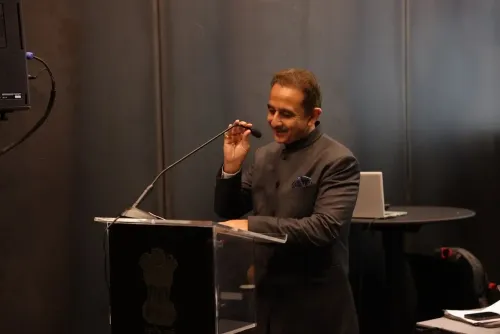
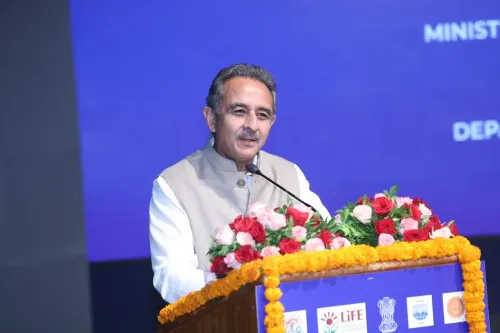
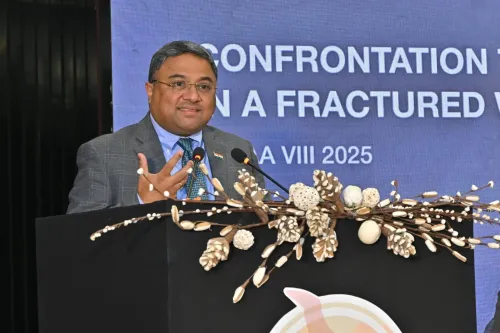
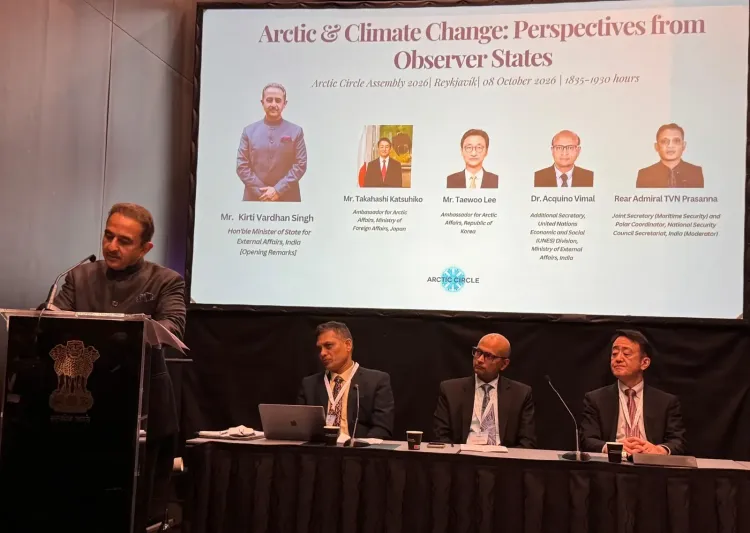
Minister of State for External Affairs Kirti Vardhan Singh on 9 October 2026 addressed the Arctic Circle Assembly in Reykjavik, Iceland, reaffirming India's science-driven engagement with the Arctic as an Observer State. Speaking at the session titled 'Arctic and Climate Change: Perspectives from Observer States', Singh underscored that while India is geographically distant from the Arctic, it remains deeply scientifically connected to the region.
The Monsoon Connection
Singh offered a direct explanation of why Arctic developments matter to a country thousands of kilometres away. "The Indian monsoon is shaped by a complex interaction of oceans, atmosphere, land, snow, and ice. Scientists are examining how changes in the Arctic may interact with the atmospheric circulation across Eurasia and influence our monsoons," he said.
He acknowledged the limits of current knowledge while stressing the urgency of research. "We do not yet have all the answers, but for India, understanding these connections matters. The monsoon has a direct bearing on our agriculture, our water resources, energy, and the livelihoods of millions of people," he added. The statement positions Arctic science not as an abstract geopolitical exercise but as a matter of direct domestic consequence for hundreds of millions of Indians dependent on a reliable monsoon.
India's Arctic Anchors: Himadri Station and Arctic Policy
Singh pointed to India's Himadri research station in Svalbard as the operational cornerstone of its Arctic engagement, alongside the country's formal Arctic Policy. India has held Observer State status at the Arctic Council since 2013, and Himadri has been the primary platform for its polar research activities. Singh reaffirmed India's three-pronged priorities: advancing scientific research, fostering sustainable development, and strengthening international cooperation.
Shipping Routes and International Legal Framework
On the emergence of new Arctic shipping routes as sea ice retreats, Singh signalled a cautious and rules-based approach. "India attaches great importance to the established international legal framework applicable to the Arctic, including the United Nations Convention on the Law of the Sea (UNCLOS), as well as to the work of the Arctic Council," he said. He further acknowledged the primacy of Arctic states and indigenous peoples in shaping the region's future, a notable diplomatic signal from a major Observer State.
Proposed Trilateral Scientific Cooperation
In a concrete forward-looking proposal, Singh called for closer scientific collaboration among India, Japan, and South Korea — three major non-Arctic Observer States with significant polar research capabilities. He outlined potential joint expeditions, sharing of research facilities and data, and exchange opportunities for young scientists across institutions. The minister cited the International Polar Year 2032-33 as a natural horizon for this trilateral initiative. This comes amid growing recognition that Observer States must demonstrate tangible scientific contribution to retain meaningful engagement with Arctic governance.
India's Broader Arctic Stance
Singh's remarks reflect a deliberate diplomatic posture: active and constructive engagement rather than passive observation. "We are geographically distant, but scientifically connected. We are an observer, but we seek to be an active and constructive one. And we see the Arctic not as an isolated region, but as an important part of the Earth system that we are all seeking to understand better," he said. The framing aligns with India's broader multilateral strategy of positioning itself as a responsible stakeholder in global commons governance, from the deep sea to outer space and now the poles.
Point of View
India differentiates itself from other Observer States whose Arctic interest is more visibly commercial. The proposed India-Japan-South Korea trilateral is worth watching: three technologically advanced democracies in Asia coordinating on polar research could quietly reshape the Observer State bloc's influence within Arctic governance. The open question is whether scientific goodwill translates into a seat at the table when actual Arctic resource and route decisions are made.
NationPress
9 Oct 2026
Frequently Asked Questions
Why is India interested in the Arctic despite being geographically far away?
India's interest in the Arctic is primarily scientific: researchers are studying how Arctic climate changes affect atmospheric circulation over Eurasia and, in turn, influence the Indian monsoon. Since the monsoon directly affects Indian agriculture, water resources, and the livelihoods of millions, Arctic research has direct domestic relevance for India.
What is India's Himadri research station?
Himadri is India's Arctic research station, located in Svalbard, Norway. It serves as the operational base for India's polar science activities and is central to the country's engagement as an Observer State at the Arctic Council, which India has held since 2013.
What scientific cooperation did Kirti Vardhan Singh propose at the Arctic Circle Assembly?
Singh proposed trilateral scientific cooperation among India, Japan, and South Korea, involving joint polar expeditions, sharing of research facilities and data, and exchange programmes for young scientists. He suggested the International Polar Year 2032-33 as a target horizon for this initiative.
What is India's position on Arctic shipping routes and international law?
India supports the established international legal framework governing the Arctic, specifically the United Nations Convention on the Law of the Sea (UNCLOS) and the work of the Arctic Council. Singh said India's interest in emerging shipping routes is grounded in responsible engagement, and he acknowledged the primary role of Arctic states and indigenous peoples.
What is the Arctic Circle Assembly?
The Arctic Circle Assembly is the world's largest annual international gathering on Arctic affairs, held in Reykjavik, Iceland. It brings together governments, scientists, businesses, and civil society to discuss Arctic policy, climate change, and sustainable development. India participates as an Observer State at the Arctic Council.