India at Arctic Circle Assembly 2026: MoS Kirti Vardhan Singh to lead delegation in Reykjavik
Synopsis
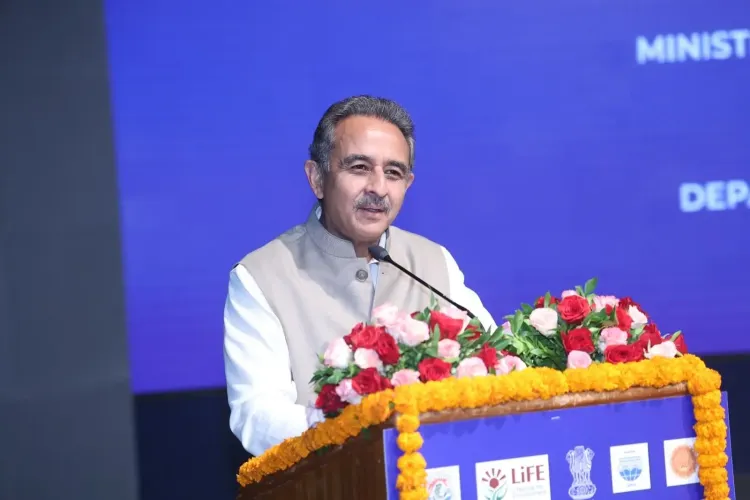
India is sending a cabinet-level delegation to the world's largest Arctic forum for the first time since formalising its Arctic Policy 2022. MoS Kirti Vardhan Singh will not only attend but lead a session organised by India — a quiet but significant step in New Delhi's bid to shape Arctic governance as melting ice reshapes global trade routes and climate dynamics.
Key Takeaways
MoS Kirti Vardhan Singh will lead the Indian delegation to the Arctic Circle Assembly in Reykjavik, Iceland from 8–10 October 2026 .
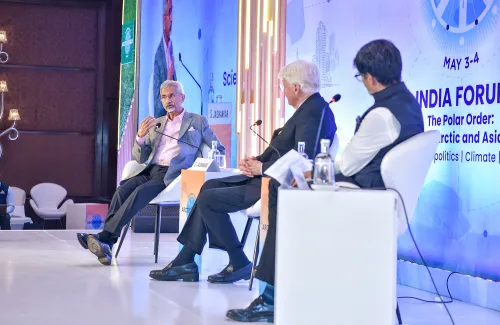
Singh will participate in the plenary 'Melting Poles: Perspectives from India and Singapore' and deliver opening remarks at a session organised by India.
India's engagement is guided by its Arctic Policy 2022 , built on six pillars including science, climate, connectivity, and governance.
A bilateral meeting with Iceland's Foreign Minister is scheduled, with ties strengthened by the India-EFTA TEPA and cooperation in geothermal and clean energy.
The Arctic Circle Assembly draws up to 2,500 participants from over 70 countries annually.
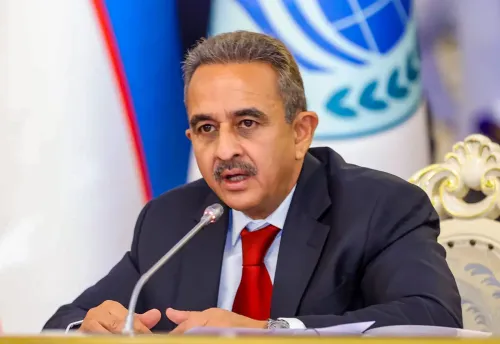
Minister of State for External Affairs and Environment, Forest and Climate Change, Kirti Vardhan Singh will lead the Indian delegation to Reykjavik, Iceland, from 8 to 10 October 2026 for the annual Arctic Circle Assembly (ACA), the Ministry of External Affairs (MEA) announced on Wednesday, 7 October. The visit marks India's continued engagement with Arctic governance at one of the world's largest multilateral forums on polar affairs.
India's Role at ACA 2026
MoS Singh is scheduled to participate in the plenary session titled 'Melting Poles: Perspectives from India and Singapore', which examines the accelerating consequences of polar ice loss from an Indo-Pacific vantage point. He will also deliver opening remarks at a session titled 'Arctic and Climate Change Perspectives from Observer States' — a session organised by India itself, signalling New Delhi's proactive role beyond mere attendance.
India's Arctic Policy and Strategic Interests
India's engagement with the Arctic is anchored in its Arctic Policy 2022, which rests on six pillars: science and research, climate and environment, economic and human development, transportation and connectivity, governance and international cooperation, and national capacity building. According to the MEA, India has been strengthening cooperation with Arctic nations — particularly in polar research, climate science, and environmental monitoring — driven by the growing interdependence between the Arctic and Indo-Pacific regions. The two geographies, once considered distant in strategic terms, are increasingly linked through climate feedback loops, shipping lane disruptions, and resource access questions.
Bilateral Meeting with Iceland's Foreign Minister
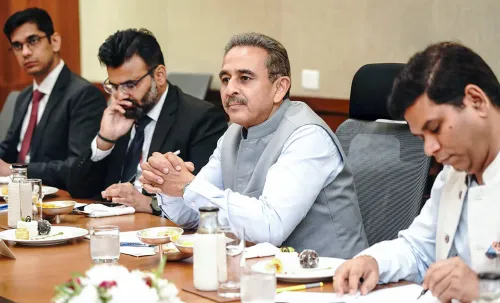
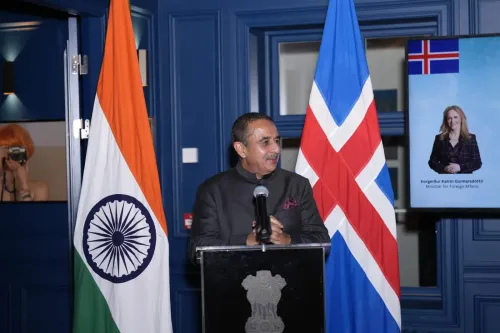
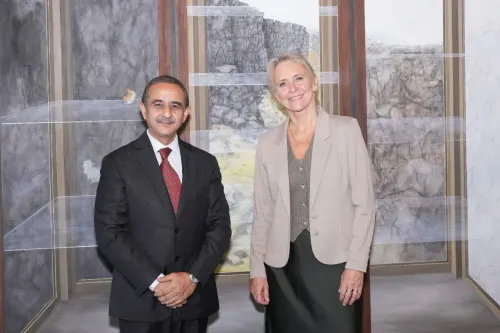
MoS Singh is also scheduled to hold a bilateral discussion with Iceland's Foreign Minister on the sidelines of the Assembly. Bilateral ties between India and Iceland have expanded in recent years, boosted by the landmark India-EFTA Trade and Economic Partnership Agreement (TEPA), regular high-level diplomatic exchanges, and growing collaboration in geothermal energy, fisheries, and clean energy sectors.
About the Arctic Circle Assembly
The Arctic Circle Assembly is the largest annual international gathering dedicated to Arctic affairs, drawing up to 2,500 participants from more than 70 countries. Held every October at the Harpa Concert Hall and Conference Centre and the Reykjavik Edition in Iceland, the Assembly brings together heads of state, scientists, business leaders, indigenous communities, and policymakers. The Arctic Circle Secretariat, based in Reykjavik, manages the Assembly's organisation, outreach, and partner coordination year-round.
Why This Matters for India
India, as an Observer State to the Arctic Council, does not have a vote in the Council's decisions but participates actively in Arctic science and governance discussions. This engagement reflects a broader diplomatic calculus: as Arctic sea routes become commercially viable and polar resources attract international attention, New Delhi is keen to have a credible seat at the table. This is the latest in a series of high-level Indian engagements at ACA, underscoring the government's intent to position India as a responsible Arctic stakeholder ahead of the next Arctic Council ministerial cycle.
Point of View
But the strategic dimension is harder to ignore. As Arctic sea ice recedes, new shipping lanes and resource corridors are opening — and India, heavily dependent on energy imports and maritime trade, has direct economic stakes in who shapes the rules. The India-EFTA TEPA and the bilateral agenda with Iceland signal that New Delhi is weaving trade relationships into its polar outreach. What remains underdeveloped is a public articulation of India's interests beyond the six policy pillars — particularly on Arctic shipping and critical minerals, where the country has yet to stake out a clear position.
NationPress
7 Oct 2026
Frequently Asked Questions
Who is leading India's delegation to the Arctic Circle Assembly 2026?
Minister of State for External Affairs and Environment, Forest and Climate Change, Kirti Vardhan Singh will lead the Indian delegation to the Arctic Circle Assembly in Reykjavik, Iceland, from 8 to 10 October 2026. The MEA announced the visit on 7 October 2026.
What is the Arctic Circle Assembly and where is it held?
The Arctic Circle Assembly is the largest annual international gathering on Arctic affairs, attended by up to 2,500 participants from over 70 countries. It is held every October at the Harpa Concert Hall and Conference Centre in Reykjavik, Iceland.
What is India's Arctic Policy 2022?
India's Arctic Policy 2022 is a framework built on six pillars: science, climate and environment, economic and human development, transportation and connectivity, governance and international cooperation, and national capacity building. It guides India's engagement with Arctic nations as an Observer State to the Arctic Council.
Will India hold bilateral talks with Iceland at the Assembly?
Yes, MoS Kirti Vardhan Singh is scheduled to hold a bilateral discussion with Iceland's Foreign Minister on the sidelines of the Arctic Circle Assembly. India-Iceland ties have grown through the India-EFTA TEPA and cooperation in geothermal energy, fisheries, and clean energy.
Why does the Arctic matter for India?
India, as an Observer State to the Arctic Council, has interests in Arctic polar research, climate change monitoring, and emerging shipping routes that could affect global trade. The MEA has highlighted the growing inter-linkages between the Arctic and Indo-Pacific regions as a key driver of India's engagement.