India-Iceland clean energy talks: Kirti Vardhan Singh meets Johannsson in Reykjavik
Synopsis
India's MoS Kirti Vardhan Singh visited Reykjavik for the Arctic Circle Assembly and held talks with Iceland's environment minister on clean and geothermal energy cooperation — a meeting that quietly signals India's push to build high-value clean energy partnerships with technically advanced smaller nations, as Iceland generates nearly 100% of its power from renewables.
Key Takeaways
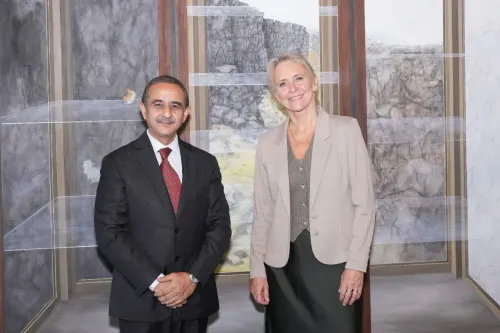
Kirti Vardhan Singh met Iceland's Johann Pall Johannsson in Reykjavik on 9 October 2025 to discuss clean energy and climate cooperation.
Johannsson had recently visited India for the 2nd India-EFTA Prosperity Summit , indicating growing bilateral momentum.
Singh toured the Hellisheiði Power Plant , one of the world's leading geothermal energy facilities, citing its relevance to India's clean energy transition.
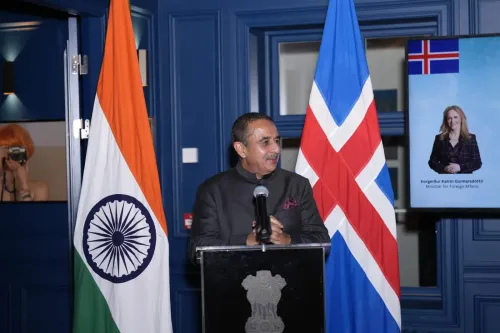
India delivered the opening statement at the Arctic Circle Assembly session on 'Arctic and Climate Change: Perspectives from Observer States', reaffirming its science-first Arctic engagement.
Singh planted an English Oak sapling at Lake Hvaleyrarvatn under PM Modi's 'Ek Ped Maa Ke Naam' initiative, marking one of its first international plantings.
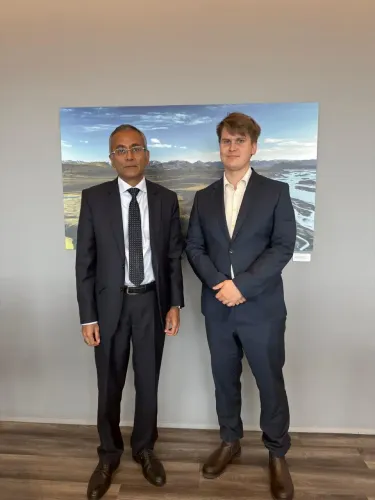
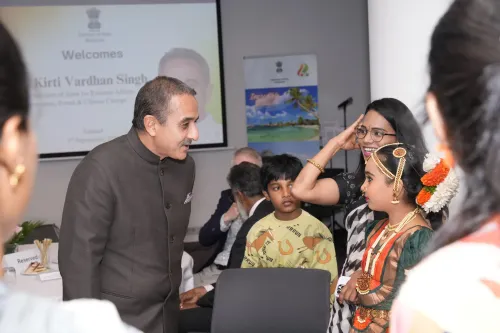
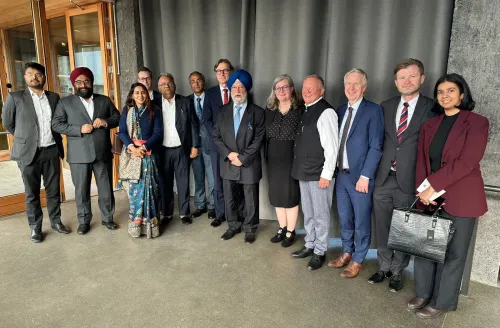
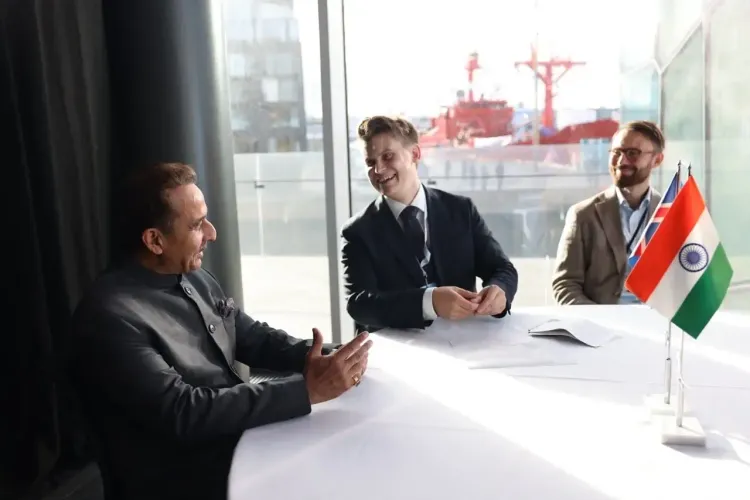
Union Minister of State for External Affairs and Environment, Forest and Climate Change, Kirti Vardhan Singh, met Iceland's Minister for the Environment, Energy and Climate, Johann Pall Johannsson, in Reykjavik on 9 October 2025 to explore avenues for deepening bilateral cooperation in clean and renewable energy, climate action, and sustainable development. The meeting comes on the sidelines of the Arctic Circle Assembly in Iceland, where India participated as an Observer State.
Key Developments from Reykjavik
Singh noted that Johannsson had just returned from India after attending the 2nd India-EFTA Prosperity Summit, underscoring the momentum building in the bilateral relationship. 'Had a productive exchange on opportunities to strengthen bilateral cooperation in clean/renewable energy, climate action and sustainable development,' Singh posted on X, adding that he looked forward to 'deepening our engagement in these important areas and advancing practical cooperation between our two countries.'
Geothermal Energy: Lessons from Hellisheiði
A highlight of the visit was Singh's tour of the Hellisheiði Power Plant in Iceland, described as one of the world's leading geothermal energy facilities. The minister called it 'an insightful visit showcasing Iceland's innovative use of geothermal resources for clean and sustainable energy,' and flagged the experience as offering 'valuable lessons for strengthening India-Iceland cooperation in geothermal energy and the broader clean energy transition.' Geothermal energy remains a relatively untapped resource in India, making Iceland's expertise particularly relevant for the country's clean energy ambitions.
India at the Arctic Circle Assembly
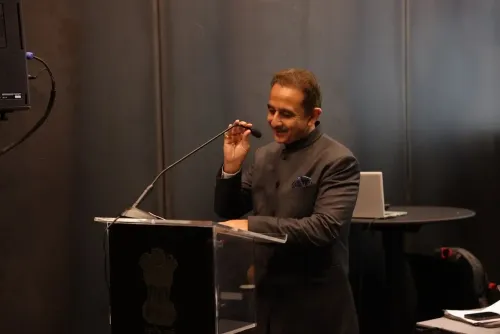
Singh also delivered the opening statement at the session titled 'Arctic and Climate Change: Perspectives from Observer States', hosted by India at the Arctic Circle Assembly. He outlined India's science-first approach to Arctic engagement, emphasising expanding research, fostering sustainable development, and deepening international collaboration. India has held Observer State status at the Arctic Council since 2013, and this appearance signals a continued push to raise its scientific and diplomatic profile in the region.
'Ek Ped Maa Ke Naam' Initiative Reaches Iceland
In a symbolic gesture, Singh planted an English Oak sapling at Lake Hvaleyrarvatn in Hafnarfjörður as part of Prime Minister Narendra Modi's 'Ek Ped Maa Ke Naam' (One Tree in Mother's Name) initiative. 'A small step with a lasting message — renewing our collective commitment to protecting nature and building a greener, more sustainable future for generations to come,' the minister posted. This is among the first international plantings under the initiative, which was launched domestically to encourage mass tree planting across India.
What This Means for India's Clean Energy Diplomacy
The Reykjavik engagements reflect a broader Indian diplomatic push to build partnerships with smaller, technically advanced nations on clean energy. Iceland generates nearly 100% of its electricity from renewable sources — predominantly geothermal and hydropower — making it a natural knowledge partner for India as it works toward its own renewable energy targets. This comes amid India's ongoing effort to diversify clean energy partnerships beyond traditional bilateral heavyweights, positioning the country as a serious player in global climate diplomacy ahead of upcoming multilateral forums.
Point of View
Which has abundant geothermal potential — particularly in the Himalayas and Deccan Trap — that remains almost entirely unharnessed. What mainstream coverage misses is that the meeting follows the 2nd India-EFTA Prosperity Summit, suggesting India is deliberately sequencing clean energy diplomacy with trade diplomacy. The 'Ek Ped Maa Ke Naam' planting in Iceland, while symbolic, also signals an intent to internationalise a domestic campaign — a soft-power move worth watching as India courts climate credibility ahead of multilateral negotiations.
NationPress
9 Oct 2026
Frequently Asked Questions
What did India and Iceland discuss in Reykjavik on 9 October 2025?
India's Minister of State Kirti Vardhan Singh and Iceland's environment minister Johann Pall Johannsson discussed opportunities to strengthen bilateral cooperation in clean and renewable energy, climate action, and sustainable development. The meeting took place on the sidelines of the Arctic Circle Assembly in Reykjavik.
What is the significance of India visiting the Hellisheiði Power Plant?
The Hellisheiði Power Plant is one of the world's largest geothermal energy facilities, and India's interest signals a desire to learn from Iceland's near-total reliance on renewables. Geothermal energy is largely untapped in India despite significant potential, making Iceland a valuable knowledge partner for the country's clean energy transition.
What is India's role at the Arctic Circle Assembly?
India participates in the Arctic Circle Assembly as an Observer State and hosted a dedicated session on 'Arctic and Climate Change: Perspectives from Observer States.' Singh outlined India's science-first approach to Arctic engagement, focusing on research, sustainable development, and international collaboration.
What is the 'Ek Ped Maa Ke Naam' initiative?
'Ek Ped Maa Ke Naam' — meaning 'One Tree in Mother's Name' — is a tree-planting initiative launched by Prime Minister Narendra Modi to encourage mass afforestation across India. Singh's planting of an English Oak sapling in Iceland represents one of its first international extensions.
How does the India-Iceland meeting connect to broader India-EFTA relations?
Iceland is a member of the European Free Trade Association (EFTA), and its minister had just returned from India after attending the 2nd India-EFTA Prosperity Summit. The Reykjavik talks suggest India is using trade diplomacy with EFTA nations as a springboard for deeper clean energy and climate partnerships.