Global Fund team to visit Pakistan over HIV surge in children, 618 new Islamabad cases
Synopsis
Over 300 children in Taunsa infected through reused syringes, 618 new HIV cases in Islamabad in 15 months, and now a Global Fund review team heading to Pakistan — the country's HIV crisis is escalating in ways that echo the 2019 Rato Dero disaster, raising hard questions about whether systemic failures in injection safety and blood screening have ever truly been addressed.
Key Takeaways
A Global Fund team is expected to visit Islamabad soon to review Pakistan's HIV crisis , according to a senior health ministry official.
More than 300 children in Taunsa reportedly contracted HIV through the reuse of syringes.
618 new HIV cases were reported in Islamabad between January 2025 and March 2026 .
The Global Fund has invested over USD 1 billion in Pakistan over the past two decades.
Pakistan's health ministry has directed DRAP and CMU to devise a strategy to stop HIV transmission via syringe reuse.
189 individuals registered HIV-positive since October 2025 ; 11 new cases in the first 20 days of April 2026 .
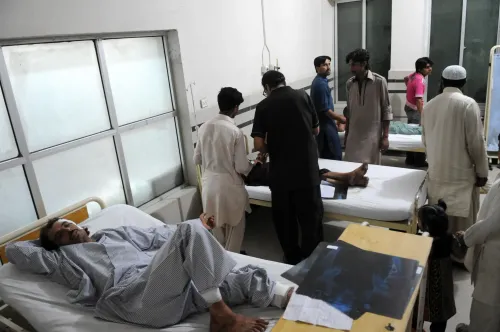
A Global Fund (GF) team is expected to visit Islamabad soon to review Pakistan's worsening HIV crisis, according to a senior Pakistani health ministry official cited by Dawn. The visit comes amid a sharp rise in infections, including more than 300 HIV cases among children linked to the reuse of syringes in Taunsa, and 618 new cases reported in Islamabad between January 2025 and March 2026.
Why the Global Fund Visit Is Significant
The anticipated visit carries considerable weight given the scale of the Global Fund's financial commitment to Pakistan. According to Dawn, the fund invests up to USD 5 billion annually worldwide to combat HIV, tuberculosis, and malaria, and has invested over USD 1 billion in Pakistan alone over the past two decades. A senior Pakistani health ministry official, speaking on condition of anonymity, confirmed that authorities had been informed of the upcoming review. This is not a routine monitoring trip — it signals growing international concern over how Pakistan is managing its HIV response.
Syringe Reuse and Blood Screening Failures Identified as Root Causes
Former special assistant on health to Pakistan's Prime Minister, Zafar Mirza, last week identified the reuse of contaminated syringes and inadequate blood screening prior to transfusion as the primary drivers of the disease's spread. The outbreak in Taunsa, where over 300 children reportedly contracted HIV through reused syringes, has drawn particular alarm from public health experts. This is not an isolated incident — Pakistan has previously seen large-scale HIV outbreaks linked to unsafe injection practices, most notably in Rato Dero, Sindh, in 2019, when hundreds of children were infected.
Government Response and Emergency Directives
Following reports of the Global Fund team's planned visit, Pakistan's health ministry directed the Drug Regulatory Authority of Pakistan (DRAP) and the Common Management Unit (CMU) to formulate a strategy specifically aimed at halting HIV transmission through syringe reuse. The urgency of the directive suggests the government is moving to demonstrate action ahead of the international review.
Experts Raise Alarm Over Children and Under-Reporting
Medical experts at the HIV Centre of Pakistan Institute of Medical Sciences (PIMS) have voiced serious concern over rising patient numbers, warning that the presence of HIV cases among children is particularly alarming. They cautioned that cover-ups and reluctance to undergo testing are compounding the crisis, with more cases being detected among men. Zubair Abdullah, Programme Manager of the AIDS Control Programme, noted that the apparent rise in cases at the PIMS HIV Centre is partly attributable to more people coming forward for testing — framing increased testing as a positive development while stressing the urgent need for widespread prevention education.
Latest Case Data
Data released by Pakistan's Ministry of National Health Services, Regulations, and Coordination shows that 189 individuals have been registered as HIV-positive since October 2025, with 11 new cases reported in just the first 20 days of April 2026. Male patients outnumber female patients, cases have also been identified among transgender individuals, and HIV detection among children remains a persistent concern, according to the ministry data. With the Global Fund review imminent, Pakistan faces mounting pressure to demonstrate measurable progress on both prevention and containment.
Point of View
Reused syringes, delayed official response. The Global Fund's impending visit is less a routine review and more a signal that international financiers are losing confidence in Pakistan's ability to self-correct. With over USD 1 billion invested over two decades, the Fund has every reason to demand accountability. The deeper problem is structural: unsafe injection practices persist across both public and private healthcare settings, and blood screening protocols remain inconsistently enforced. Until Pakistan treats syringe safety as a non-negotiable baseline rather than a crisis-response measure, these outbreaks will keep happening.
NationPress
19 Sept 2026
Frequently Asked Questions
Why is the Global Fund visiting Pakistan?
The Global Fund team is visiting Islamabad to review Pakistan's handling of a worsening HIV crisis, triggered by over 300 child infections in Taunsa linked to syringe reuse and 618 new cases in Islamabad between January 2025 and March 2026. The visit signals growing international concern over Pakistan's HIV response management.
How did children in Taunsa contract HIV?
More than 300 children in Taunsa reportedly contracted HIV due to the reuse of contaminated syringes, according to reports cited by Dawn. Former health official Zafar Mirza also identified inadequate blood screening before transfusions as a major contributing cause.
How much has the Global Fund invested in Pakistan?
The Global Fund has invested over USD 1 billion in Pakistan over the past two decades, as part of its global annual outlay of up to USD 5 billion to fight HIV, tuberculosis, and malaria.
What is Pakistan's government doing to address the HIV outbreak?
Pakistan's health ministry has directed the Drug Regulatory Authority of Pakistan (DRAP) and the Common Management Unit (CMU) to develop a strategy to halt HIV transmission, particularly through syringe reuse. The directives followed the announcement of the Global Fund's planned review visit.
Are HIV cases in Pakistan rising or is it just more testing?
Both factors appear to be at play. AIDS Control Programme Manager Zubair Abdullah attributed part of the increase at the PIMS HIV Centre to more people coming forward for testing. However, the Taunsa outbreak and 618 new Islamabad cases point to genuine transmission increases beyond improved detection alone.