Armed Gunman Storms White House Dinner Security Checkpoint
Synopsis
A heavily armed gunman carrying a shotgun, handgun, and multiple knives breached a Secret Service checkpoint at the Washington Hilton during the White House Correspondents' Dinner on April 26. One agent was shot but survived. The suspect — believed to be a hotel guest — was tackled and arrested before reaching thousands of guests inside.
Key Takeaways
April 26, 8:36 p.m.: A gunman armed with a shotgun, handgun, and multiple knives charged a Secret Service checkpoint at the Washington Hilton during the WHCA dinner .
One Secret Service officer was shot but survived after the bullet was stopped by his protective vest ; he was hospitalised in good condition.
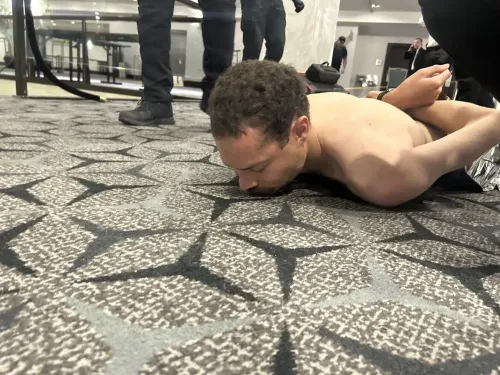
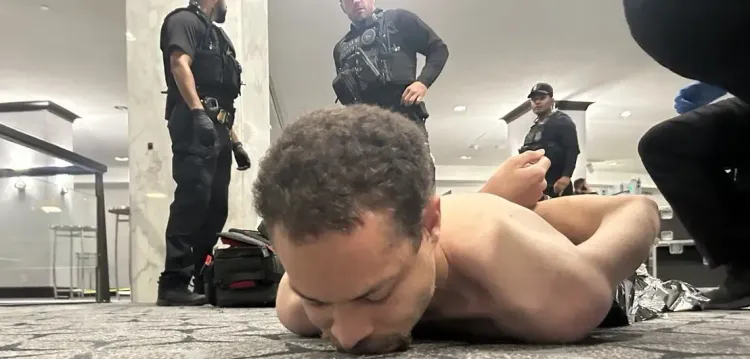
The suspect was tackled, handcuffed, and arrested at the checkpoint — he never reached the ballroom where thousands of guests were gathered.
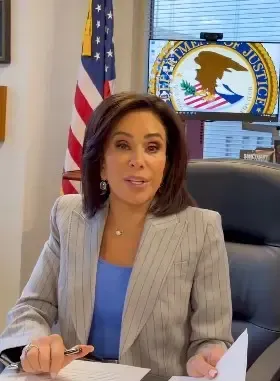
US Attorney Jeanine Pirro filed two federal charges: using a firearm during a crime of violence and assault on a federal officer with a dangerous weapon; more charges are expected.
The FBI's Joint Terrorism Task Force and evidence response teams have been deployed; investigators are reviewing hotel surveillance footage and have secured a room linked to the suspect.
Authorities including Washington Mayor Muriel Bowser and interim Police Chief Jeff Carroll confirmed the suspect is believed to have acted alone, with no ongoing public threat.
A heavily armed gunman carrying a shotgun, a handgun, and multiple knives stormed a Secret Service security checkpoint at the Washington Hilton on April 26, triggering a gunfight with federal agents just outside the White House Correspondents' Association (WHCA) dinner. The suspect was physically subdued and taken into custody before reaching the ballroom where thousands of guests — including senior government officials — had gathered. One Secret Service officer was struck by a bullet but survived because it was stopped by his protective vest.
How the Attack Unfolded
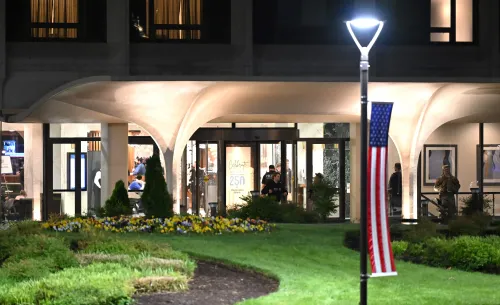
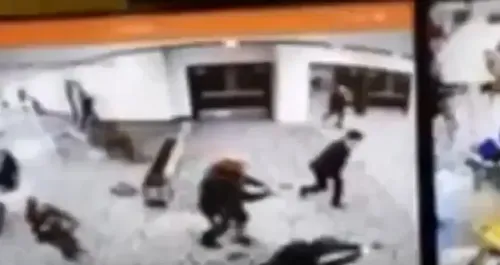
The incident began at approximately 8:36 p.m. inside the hotel lobby, where multiple layers of security had been established for the high-profile annual event. Washington's interim Police Chief Jeff Carroll confirmed that the suspect ran directly at the checkpoint without hesitation. "He was armed with a shotgun, a handgun, and multiple knives as he ran through that checkpoint," Carroll told reporters at a press briefing.
Secret Service agents immediately intercepted the individual, and gunfire was exchanged in the lobby. The suspect was ultimately tackled, forced to the ground, and handcuffed by officers. "They actually took him to the ground and handcuffed him," Carroll said, describing the arrest sequence.
Despite the dramatic confrontation, the suspect himself was not struck by gunfire. He was nonetheless transported to a local hospital for medical evaluation, while the injured Secret Service officer was also hospitalised and described as being "in good spirits."
Security Layers Prevented a Mass-Casualty Event
US Attorney Jeanine Pirro was unequivocal in her assessment of the suspect's intent. "It is clear that this individual was intent on doing as much harm and as much damage as he could where thousands of people were situated," she stated. Pirro credited the layered security architecture for averting what could have been a catastrophic mass-casualty incident.
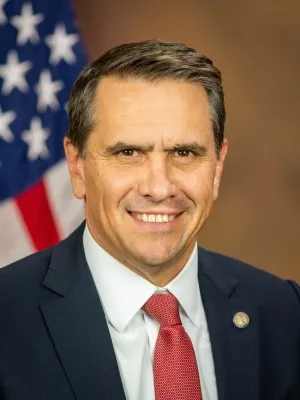
"That checkpoint worked," Pirro said, underlining that the suspect never penetrated the inner security perimeter or reached the ballroom. Secret Service Director Sean Kern echoed this, stating: "It shows that our multi-layered protection works."
This incident highlights a critical truth about large-scale federal security operations — the outermost perimeter is often the decisive line of defence. The fact that agents neutralised the threat at the first checkpoint, rather than deeper inside the venue, is being viewed internally as a validation of existing protocols.
Federal Charges Filed, More Expected
The suspect is already facing serious federal charges. US Attorney Pirro confirmed: "The defendant is being charged with two counts — using a firearm during a crime of violence and assault on a federal officer using a dangerous weapon." She added that additional charges are anticipated as the investigation deepens.
The suspect is expected to be arraigned in federal court within the coming days. Authorities have not yet publicly identified a motive, nor have they confirmed whether the sitting president was a specific target — both remain active lines of inquiry.
Investigators have also secured a hotel room believed to be occupied by the suspect. "We do believe he was a guest here at the hotel… we have secured a room here," Carroll said. Surveillance footage across the property is being reviewed to determine how the weapons were smuggled into the building.
FBI and Joint Terrorism Task Force Deployed
The FBI has activated its Joint Terrorism Task Force (JTTF) and deployed evidence response teams to the scene. FBI Assistant Director Darren Cox stated: "There will be no stone unturned during this investigation." He also praised the law enforcement response, saying: "The American public should be proud of the quick response and heroic actions from law enforcement officers tonight."
Washington Mayor Muriel Bowser confirmed that authorities currently have no reason to believe any accomplices were involved. "We have no reason to believe at this time that anyone else was involved," she said, reinforcing the working theory that the attacker acted alone.
This is not the first time the Washington Hilton — the traditional venue of the WHCA dinner — has been at the centre of a security incident. The hotel was the site of the 1981 assassination attempt on President Ronald Reagan, making Saturday's breach a haunting echo of one of American history's most dramatic moments of presidential peril.
Broader Implications for Presidential and Event Security
The attack raises pointed questions about how a guest — if confirmed — was able to check into the hotel with a shotgun, a handgun, and multiple bladed weapons. Federal protocols typically include rigorous screening for events of this magnitude, and the breach will likely trigger a comprehensive security review by the Secret Service and Department of Homeland Security.
Critics and security analysts will scrutinise whether intelligence warnings were missed, whether hotel staff screening was adequate, and how weapons of this scale evaded detection prior to the event. The answers will shape future protocols for protecting large gatherings attended by the president and cabinet-level officials.
As the investigation progresses, authorities are expected to release further details on the suspect's identity, background, and motive. Additional federal charges are likely, and a formal arraignment is imminent — with the case poised to become a landmark test of federal security law enforcement in the post-January 6 era of heightened domestic threat awareness.
Point of View
A handgun, and multiple knives into one of America's most security-intensive annual events is not just a law enforcement failure; it is a systemic intelligence and screening breakdown that demands accountability. The Washington Hilton is not an ordinary venue — it is the same hotel where Reagan was shot in 1981, and its security legacy should command the highest vigilance. While officials are rightly praising the checkpoint that held, the harder question — how those weapons entered the building in the first place — is being conspicuously sidestepped in early briefings. In an era of elevated domestic threat levels post-January 6, this incident exposes a dangerous gap between the optics of security and its operational reality.
NationPress
18 Sept 2026
Frequently Asked Questions
What happened at the White House Correspondents' Dinner on April 26?
A lone gunman armed with a shotgun, a handgun, and multiple knives charged a Secret Service checkpoint at the Washington Hilton during the White House Correspondents' Association dinner on April 26. Agents exchanged gunfire with the suspect, one officer was wounded but survived, and the attacker was tackled and arrested before reaching the ballroom.
Was anyone killed in the Washington Hilton shooting?
No fatalities were reported. One Secret Service officer was struck by a bullet, but his protective vest prevented serious injury and he was hospitalised in good condition. The suspect was also taken to hospital for evaluation but was not shot.
What charges is the White House Correspondents' Dinner gunman facing?
The suspect has been charged with two federal counts: using a firearm during a crime of violence, and assault on a federal officer using a dangerous weapon. US Attorney Jeanine Pirro confirmed additional charges are expected as the investigation continues.
Was the US President targeted in the Washington Hilton attack?
Authorities have not confirmed whether the president was a specific target. That question remains an active line of investigation, and officials say no motive has been established yet.
How did the gunman get weapons into the Washington Hilton?
Investigators are currently reviewing hotel surveillance footage and conducting searches to determine how the suspect smuggled a shotgun, handgun, and multiple knives into the venue. Authorities believe the suspect was a registered hotel guest, and a room linked to him has been secured.