Sheikh Hasina flags 2.1 million job losses in Bangladesh Labour Day message

Synopsis
Sheikh Hasina used International Labour Day to launch a pointed attack on Muhammad Yunus's interim government, claiming 2.1 million workers lost jobs and 3 million fell into extreme poverty since August 2024 — framing Bangladesh's economic slide as a direct consequence of political retribution rather than structural failure.
Key Takeaways
Sheikh Hasina issued a Labour Day statement on 1 May 2025 alleging major industrial setbacks in Bangladesh since 5 August 2024 .
She claimed 2.1 million workers lost jobs within one year due to factory closures, including in the garment sector .
By September 2025 , according to her statement, 3 million people had fallen into extreme poverty.
Hasina blamed the Muhammad Yunus -led interim government's "retaliatory actions" for thousands of factory shutdowns.
She cited Awami League-era labour reforms, including the Bangladesh Labour (Amendment) Act 2018 and National Labour Policy 2012 , as foundational achievements now at risk.
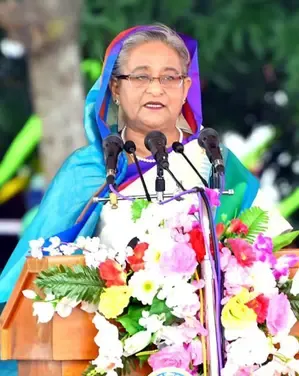
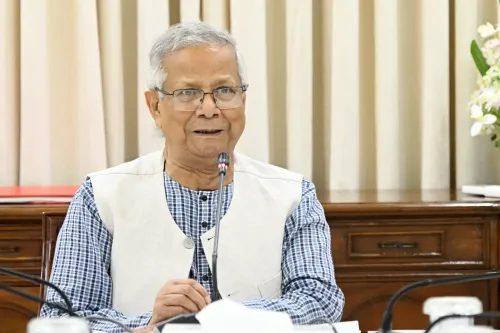
Former Bangladesh Prime Minister Sheikh Hasina issued a sharp warning on International Labour Day, 1 May 2025, alleging that the country's industrial and agricultural gains of the past one and a half decades have been systematically reversed since 5 August 2024, when she departed power. In a statement posted by the Awami League on its official X (formerly Twitter) account, Hasina claimed that 2.1 million workers lost their jobs within a single year under the interim administration led by Muhammad Yunus.
Key Allegations Against the Yunus Administration
Hasina directly attributed the economic deterioration to what she described as the
Point of View
Worded, and distributed through Awami League channels to keep her narrative alive while she remains outside Bangladesh. The claim of 2.1 million job losses is striking but unverified by independent sources; attributing it solely to 'retaliatory actions' of the Yunus government sidesteps deeper structural vulnerabilities in Bangladesh's garment-dependent economy, including global demand softness and buyer diversification away from Dhaka. What the statement does reveal is that the Awami League intends to fight its political battle on economic terrain — positioning the post-August 2024 period as a man-made crisis, not an organic correction. Whether that framing gains traction will depend on whether independent data corroborates the scale of losses she describes.
NationPress
26 Sept 2026
Frequently Asked Questions
What did Sheikh Hasina say in her Labour Day 2025 message?
Sheikh Hasina alleged that Bangladesh's industrial and agricultural progress of the past one and a half decades has been reversed since 5 August 2024, claiming 2.1 million workers lost jobs and 3 million fell into extreme poverty by September 2025. She blamed the interim government led by Muhammad Yunus for what she called 'retaliatory actions' that shut down thousands of factories.
How many workers does Hasina claim lost jobs in Bangladesh?
According to her statement, 2.1 million workers lost their jobs within one year following the change in government on 5 August 2024. The claim was made in a statement posted by the Awami League on X and has not been independently verified.
Who is Muhammad Yunus and why does Hasina blame him?
Muhammad Yunus is the head of Bangladesh's interim government that assumed power after Sheikh Hasina's departure on 5 August 2024. Hasina refers to his administration as an 'unelected Yunus government' and holds it responsible for factory closures and economic deterioration through what she terms retaliatory actions against workers and industry.
What labour reforms did Hasina highlight from her tenure?
Hasina cited several initiatives from the Awami League government, including the Bangladesh Labour (Amendment) Act 2018, National Labour Policy 2012, National Child Labour Elimination Policy 2010, National Occupational Health and Safety Policy 2013, Bangladesh Labour Rules 2015, and Domestic Workers Protection and Welfare Policy 2015.
What is the significance of International Labour Day in this context?
International Labour Day, observed on 1 May each year, honours workers' rights movements globally. Hasina used the occasion to draw a contrast between her government's labour record and the current economic conditions in Bangladesh, framing it as a call to restore the country's development trajectory.