Hegseth: Iran ceasefire 'pauses' 60-day war authorization clock
Synopsis
With the War Powers Act's 60-day clock expiring on 1 May, Defence Secretary Pete Hegseth's claim that a ceasefire 'pauses' the statutory deadline has no clear legal precedent — and Senator Tim Kaine's sharp rebuttal signals a constitutional showdown between the Trump administration and Congress over the Iran war.
Key Takeaways
Defence Secretary Pete Hegseth said on 1 May that the Iran ceasefire "pauses" the 60-day War Powers Act clock on congressional authorisation.
Senator Tim Kaine disputed this, warning that the 60-day deadline likely expired on 1 May and poses a "really important legal question" for the administration.
The US-Israel joint military campaign against Iran began on 28 February ; President Trump notified Congress on 2 March .
The attacks reportedly killed Iran's then Supreme Leader Ali Khamenei , senior commanders, and civilians.
Russian President Vladimir Putin told Trump in a phone call that extending the ceasefire was "the right move" but warned of "extremely dire consequences" if force is used again.
The Trump administration has not yet confirmed whether it will seek formal congressional authorisation for the war.
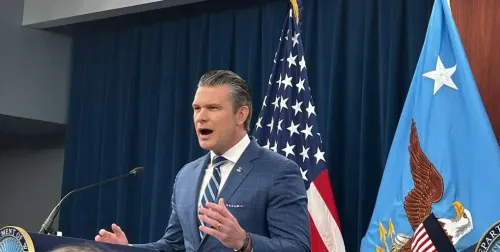
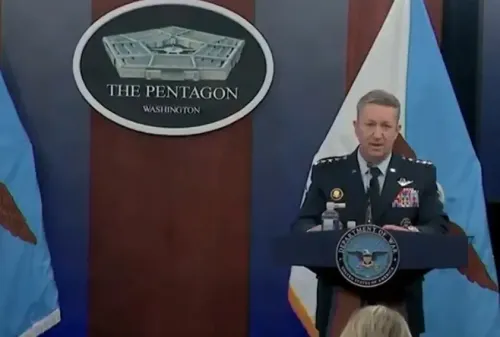
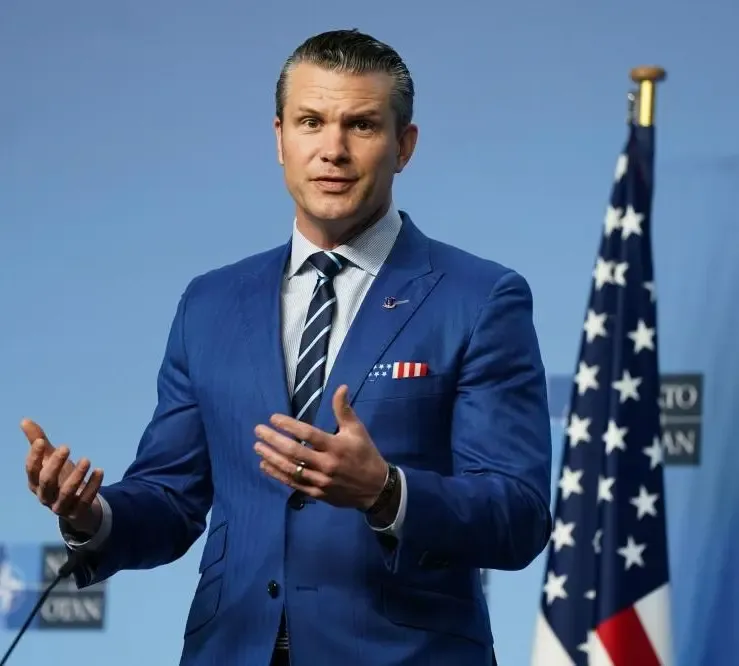
US Defence Secretary Pete Hegseth said on Thursday, 1 May that he believes the ongoing ceasefire with Iran effectively "pauses" the 60-day clock mandated under the US War Powers Act for congressional authorisation of the military campaign. The remarks came as the Trump administration faces a critical legal deadline over its war with Iran, with Democratic lawmakers pushing back sharply.
What Hegseth Said at the Hearing
Hegseth made the comments during a congressional hearing when Democratic Senator Tim Kaine asked whether the Trump administration intended to seek formal congressional authorisation at the 60-day mark, as required by law. "Ultimately, I would defer to the White House and White House counsel on that. However, we are in a ceasefire right now, which our understanding means the 60-day clock pauses or stops in a ceasefire," Hegseth said.
Kaine pushed back immediately, stating: "I do not believe the statute would support that. I think the 60 days runs (out) maybe tomorrow, and that's going to pose a really important legal question for the administration there."
Background: How the War with Iran Began
On 28 February, Israel and the United States launched joint attacks on Tehran and other Iranian cities, reportedly killing Iran's then Supreme Leader Ali Khamenei, senior military commanders, and civilians. President Donald Trump formally notified Congress of the military campaign on 2 March, making 1 May the 60-day milestone under the War Powers Act — the point at which a president must begin winding down hostilities unless Congress grants authorisation, according to media reports.
This is the first time in decades that the War Powers Act's 60-day provision has been tested against an active, large-scale US military engagement in the Middle East, raising questions about the statute's enforceability when a ceasefire is in effect.
The Legal Dispute at the Heart of the Debate
The core disagreement is whether a ceasefire suspends or merely delays the statutory clock. Hegseth's position — that the ceasefire "pauses or stops" the timeline — has no explicit precedent in the text of the War Powers Resolution of 1973, critics argue. Senator Kaine's challenge signals that congressional Democrats are prepared to escalate the legal confrontation, potentially through the courts or a formal resolution demanding withdrawal.
Notably, the administration has not yet indicated whether it will seek retroactive congressional authorisation, leaving open the question of whether the US military presence remains legally grounded beyond 1 May.
Putin-Trump Call: Iran and Ukraine on the Agenda
Separately, earlier this week, Russian President Vladimir Putin and President Trump held a phone call lasting over an hour and a half, according to the Kremlin. The two leaders discussed the situation in Iran and the Persian Gulf, the Ukraine crisis, and the recent shooting at the White House Correspondents' Association Dinner.
Russian presidential aide Yuri Ushakov said Putin strongly condemned the assassination attempt against Trump at the dinner, stressing "the unacceptability of any form of politically motivated violence." Putin also reportedly viewed Trump's decision to extend the ceasefire as "the right move," while warning of "inevitable, extremely dire consequences" for Iran, its neighbours, and the broader international community should the US and Israel resort to force again.
What Comes Next
The legal standoff over the War Powers Act is expected to intensify in the coming days. Congressional Democrats may formally challenge the administration's interpretation, while the White House counsel's office is likely to issue a legal opinion on the ceasefire-clock question. Whether the ceasefire holds — and whether Congress ultimately authorises or blocks the continuation of hostilities — will shape both US domestic politics and the trajectory of the broader Iran conflict.
Point of View
Any future president could theoretically freeze the 60-day timer indefinitely through a series of short ceasefires, effectively nullifying the statute. Senator Kaine's pushback is not just partisan — it is constitutionally significant. The deeper question mainstream coverage is underplaying: with Khamenei reportedly killed and Iranian cities struck, this is not a limited engagement. The scale demands a formal authorisation debate, not a White House counsel's opinion issued quietly behind closed doors.
NationPress
16 Sept 2026
Frequently Asked Questions
What is the 60-day War Powers Act clock and why does it matter for the Iran war?
Under the US War Powers Resolution of 1973, a president must notify Congress within 48 hours of deploying military force and must begin winding down hostilities within 60 days unless Congress grants formal authorisation. President Trump notified Congress on 2 March, making 1 May the 60-day deadline for the Iran military campaign.
What did Pete Hegseth say about the Iran ceasefire and congressional authorisation?
Hegseth said he believes the ceasefire with Iran 'pauses or stops' the 60-day War Powers Act clock, deferring the final legal determination to the White House and White House counsel. He made the remarks at a congressional hearing on 1 May 2025.
Why does Senator Tim Kaine disagree with Hegseth's interpretation?
Senator Kaine argued that the War Powers Act statute does not support the idea that a ceasefire pauses the 60-day clock, warning that the deadline likely expired on 1 May and will pose a critical legal question for the Trump administration.
How did the US-Iran war begin and what happened in the initial strikes?
On 28 February, Israel and the United States launched joint attacks on Tehran and other Iranian cities, reportedly killing Iran's then Supreme Leader Ali Khamenei, senior military commanders, and civilians. It marked a dramatic escalation in US military involvement in the Middle East.
What was discussed in the Putin-Trump phone call regarding Iran?
Russian President Vladimir Putin and President Trump discussed the Iran situation and the Persian Gulf in a call lasting over 90 minutes. Putin reportedly endorsed Trump's decision to extend the ceasefire as stabilising, while warning of dire consequences for the region and the international community if military force is resumed.