Hindi Divas at UN: How Indian diaspora languages shaped Jamaica, Fiji, Guyana
Synopsis
At the UN's Hindi Divas observance, diplomats from six nations revealed just how far Hindi and its dialects travelled — and transformed. Fiji now constitutionally mandates Fiji Hindi in primary schools; Suriname has its own hybrid language born from Bhojpuri; and Jamaica traces its multicultural motto partly to Indian settlers. These aren't nostalgic footnotes — they are living legal and social realities across continents.
Key Takeaways
Diplomats from Jamaica , Guyana , Suriname , Mauritius , Fiji , and Trinidad and Tobago spoke at the Hindi Divas observance at the United Nations on 9 October 2026 .
Fiji 's constitution makes Fiji Hindi a compulsory subject in every primary school; the language evolved over 147 years from Awadhi and Bhojpuri carried by 463 migrants who arrived on 14 May 1879 .
Suriname developed Sarnami Hindustani , a distinct language that grew from the Bhojpuri and Awadhi of early Indian settlers.
Mauritius migrants established Baithkas (community evening schools) that preserved Hindi across multiple generations.
Guyana's Deputy Permanent Representative noted that Indians arrived in 1938 with 'very little in the way of physical possessions' but left a cultural inheritance that defines Guyanese national identity today.
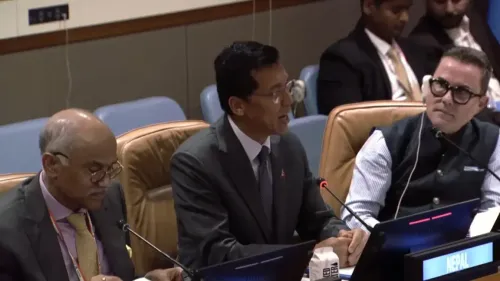
At a Hindi Divas observance at the United Nations on 9 October 2026, diplomats from Jamaica, Guyana, Suriname, Mauritius, Fiji, and Trinidad and Tobago recalled how the linguistic and cultural heritage carried by Indian migrants across oceans grew, evolved, and became inseparable from the identities of their nations. The gathering offered a rare multilateral tribute to the enduring reach of Hindi and its dialects far beyond India's borders.
Jamaica: Woven into the National Motto
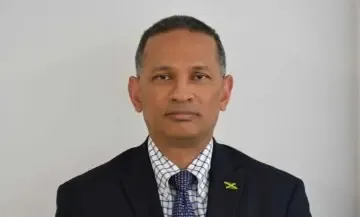
Brian Christopher Manley Wallace, Jamaica's Permanent Representative to the UN, said the Hindi language and Indian cultural traditions 'helped shape the multicultural identity that Jamaicans proudly embrace today, and which is reflected in our national motto, “Out of Many, One People.”' He said the connection between Jamaica and India is 'not abstract; it is woven into the fabric of our society,' with Indian influences enriching Jamaican music, cuisine, religious life, and vocabulary across generations.
Guyana and Fiji: Languages Preserved Across Centuries
Trishala Persaud, Deputy Permanent Representative of Guyana, noted that when the first Indians arrived in her country in 1938, 'they brought very little in the way of physical possessions, but they carried with them the invaluable legacy of their languages, their culture, their music, their faith, and their stories.' Nearly two centuries later, she said, 'that inheritance is woven into who we are as a Guyanese nation.'
From Fiji, Rhoda Banner, First Secretary at Fiji's UN Mission, described how 463 people from British India who arrived on 14 May 1879 carried Awadhi and Bhojpuri across the ocean, preserved community to community through recitations of the Ramcharitmanas. Over 147 years, those dialects absorbed iTaukei and English words to produce a wholly new tongue. 'We call it Fiji Hindi,' she said, adding that it 'is not a lesser Hindi; it is not Hindi that went wrong on a long voyage.' Fiji's constitution now mandates that iTaukei and Fiji Hindi be taught as compulsory subjects in every primary school.
Suriname and Mauritius: New Languages Forged from Old Roots
Suriname's Permanent Representative Michel Orlando Kerpens recalled how Sarnami Hindustani — a language that emerged from the Bhojpuri and Awadhi spoken by early Indian immigrants — 'became an important expression of the identity of the Indo-Surinamese community.' Standard Hindi and Sanskrit, he added, continued to anchor religious ceremonies, music, and literature alongside it.
Mauritius Permanent Representative Milan JN Meetarbhan noted that mid-19th century migrants largely spoke Bhojpuri, but many shifted over the years to what he termed 'Shubhad Hindi.' The establishment of Baithkas — community evening schools — by early migrants 'played a significant role in maintaining Hindi as a language studied and spoken by several generations of Mauritians,' he said.
Trinidad and Tobago: Hindi Lives in Prayer and Celebration
Trinidad and Tobago's Deputy Permanent Representative Venessa Ramhit-Ramroop said that in her country, 'Hindi lives in our prayers, it lives in our rituals, it lives in our music, our ceremonies, and our celebrations.' She recalled that elders once held the Ramcharitmanas reader as the most respected figure in a village, and observed that words of Hindi, Bhojpuri, and related origins 'have become so deeply embedded in Trinidad and Tobago that we often use them without thinking about where they came from.'
A Living Legacy Beyond India
The accounts collectively illustrate a pattern: languages carried under duress by indentured and voluntary migrants did not merely survive — they transformed, hybridised, and became constitutional and cultural cornerstones in nations far from the subcontinent. As global discussions on multilingualism and cultural preservation gain traction at the UN, the Hindi Divas observance underscored that India's linguistic diaspora is not a relic but a living, evolving heritage with documented legal and social standing in multiple countries.
Point of View
The diaspora's linguistic legacy represents an underused strategic asset — one that six UN member states just publicly affirmed.
NationPress
9 Oct 2026
Frequently Asked Questions
What is Hindi Divas and why was it observed at the UN?
Hindi Divas is an annual observance marking the importance of the Hindi language and its global reach. At the United Nations on 9 October 2026, representatives from multiple nations with significant Indian diaspora communities gathered to reflect on how Hindi and related Indian languages shaped their national identities and cultures.
What is Fiji Hindi and where did it come from?
Fiji Hindi is a distinct language that evolved over 147 years from the Awadhi and Bhojpuri dialects carried by 463 migrants from British India who arrived in Fiji on 14 May 1879. It absorbed iTaukei and English words over generations and now has its own grammar, broadcast presence, and literature. Fiji's constitution mandates it be taught as a compulsory subject in all primary schools.
What is Sarnami Hindustani?
Sarnami Hindustani is a language that emerged in Suriname from the Bhojpuri and Awadhi spoken by early Indian immigrants. According to Suriname's Permanent Representative Michel Orlando Kerpens, it became a key marker of Indo-Surinamese community identity, while standard Hindi and Sanskrit continued to serve religious and cultural roles alongside it.
How did Indian migrants preserve Hindi in Mauritius?
Mid-19th century Indian migrants to Mauritius established 'Baithkas' — community evening schools — that served as centres of learning for the children of labourers. According to Mauritius Permanent Representative Milan JN Meetarbhan, these institutions played a significant role in maintaining Hindi across several generations of Mauritians.
Which countries sent representatives to the UN Hindi Divas event?
Representatives from Jamaica, Guyana, Suriname, Mauritius, Fiji, and Trinidad and Tobago all spoke at the Hindi Divas observance at the United Nations on 9 October 2026, each describing how Indian languages and cultural traditions have become integral to their national identities.