RSS Built on Trust & Teamwork, Says Dattatreya Hosabale in Washington
Synopsis
RSS General Secretary Dattatreya Hosabale told a Washington audience on April 24 that trust, teamwork, and sacrifice — not institutional design — are the true secrets behind the RSS's century-old scalable social model. His remarks drew surprising parallels with modern corporate thinking, positioning India's grassroots philosophy as a global blueprint.
Key Takeaways
RSS General Secretary Dattatreya Hosabale addressed a gathering of prominent Indian Americans in Washington on April 24, 2025 .
Hosabale identified trust, teamwork, and sacrifice as the three core pillars behind the RSS's scalable social model.
He argued that family values can be extended to any social group, forming the basis of cohesive and effective organisations.
Hosabale drew a parallel between the RSS philosophy and modern corporate thinking, noting that many global companies now advocate working as a "one human family." Foreign policy scholar Walter Russell Mead and RSS academic Walter Andersen also participated in the same Washington dialogue.
The discussion was part of a broader conversation on India's global role and the international applicability of its social and organisational models.
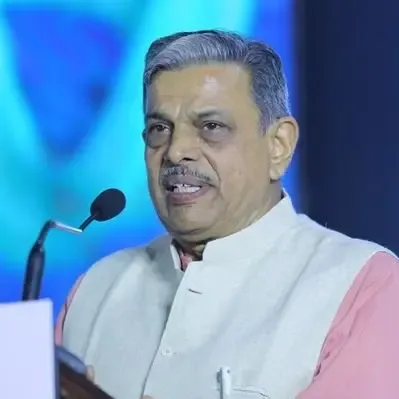
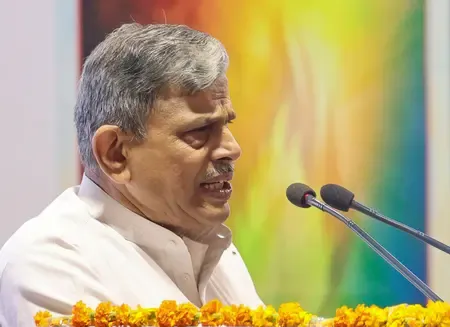
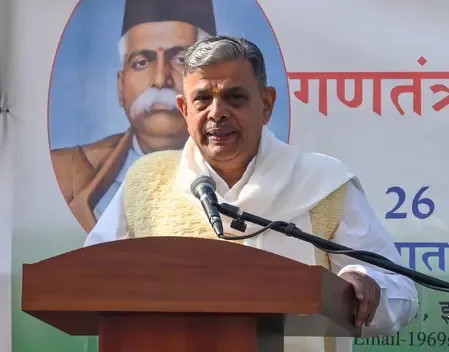
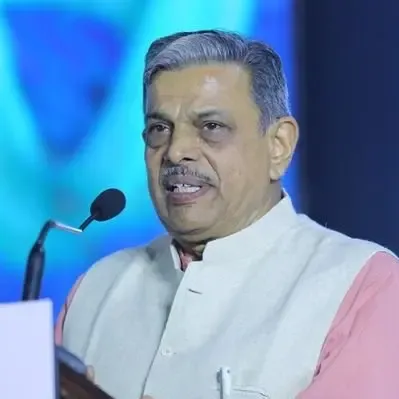
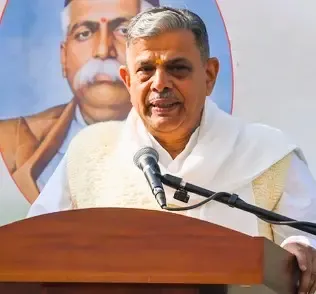
Washington, April 24: RSS General Secretary Dattatreya Hosabale declared that the Rashtriya Swayamsevak Sangh's capacity to build scalable, socially impactful organisations is rooted in three foundational values — trust, teamwork, and a spirit of sacrifice. Speaking at a high-level dialogue with prominent Indian Americans in Washington, Hosabale argued that these principles hold lessons not just for India, but for institutions across the world.
Youth and Lived Experience at the Core
During the discussion focused on practical and scalable solutions for society, Hosabale stressed the indispensable role of the younger generation and real-world experience in shaping effective social models. "The younger generation, the youth, and also learn from experience," he said, highlighting that values-driven engagement is more durable than purely structural or institutional design.
He emphasised that the RSS model is not built on top-down directives but on a shared sense of purpose cultivated from the ground up — beginning with the values instilled within families and extended outward into communities and organisations.
Family Values as a Blueprint for Social Cohesion
Hosabale articulated that the RSS draws its organisational philosophy from the concept of family values applied at scale. "The values family can extend to any group of people," he said, suggesting that the bonds of trust and mutual responsibility that hold families together can be replicated within larger social structures.
This framework, he noted, has enabled RSS-affiliated organisations to function independently while remaining aligned with a common value system — a model of decentralised yet cohesive action that many modern institutions struggle to replicate.
Teamwork and Sacrifice: The Secret Behind RSS's Scale
Identifying teamwork as the operational secret behind the RSS's reach, Hosabale said, "The spirit of this teamwork, that is their secret." He added that such collaboration is only sustainable when it is supported by mutual trust and a willingness to subordinate individual interests to collective goals.
"That is possible because there is a trust and ready to sacrifice," he said, underlining that commitment to a cause larger than oneself is what keeps organisations effective, cohesive, and resistant to fragmentation over time.
This philosophy, he argued, has inspired a wide network of affiliated bodies spanning education, healthcare, tribal welfare, disaster relief, and rural development — all operating under shared values rather than centralised control.
Convergence with Corporate and Academic Thinking
Hosabale also drew attention to a growing convergence between the RSS's traditional social philosophy and contemporary thinking in global corporations and universities. "Many corporates are also saying that we should work as a one human family," he observed, pointing to how modern organisations are increasingly recognising the limits of purely transactional relationships.
This convergence is significant. As institutions globally grapple with declining social trust, workforce disengagement, and fragmented communities, the RSS model — built over nearly a century since its founding in 1925 — offers an empirically tested alternative rooted in voluntary participation and shared identity.
Broader Context: India's Social Models on the Global Stage
The discussion formed part of a wider dialogue on India's global role and the applicability of its social and organisational frameworks in other parts of the world. The session also featured foreign policy scholar Walter Russell Mead, who spoke about the role of technology and "infostructure" in making services like healthcare more accessible to ordinary citizens.
Academic Walter Andersen, a noted scholar of the RSS, addressed prevailing misconceptions about the organisation and its broader societal contributions — lending international academic credibility to the discussion.
Notably, Hosabale's remarks came in direct response to a question about how American institutions could develop solutions that are "innovative, but practical, scalable, and capable of reaching ordinary people" — a question that itself reflects growing global interest in India's grassroots organisational models.
As India's soft power continues to expand and its diaspora grows more influential in global policy conversations, the RSS's model of values-based, decentralised social organisation is likely to attract increasing international scrutiny — both as a subject of academic study and as a potential template for community-building in fragmented Western societies.
Point of View
Community-driven problem-solving. Whether one agrees with the RSS's politics or not, dismissing the operational lessons of a century-old, volunteer-driven network of millions would be intellectually dishonest.
NationPress
18 Sept 2026
Frequently Asked Questions
What did RSS General Secretary Dattatreya Hosabale say in Washington?
Dattatreya Hosabale said the RSS's ability to build scalable and socially impactful models is founded on trust, teamwork, and a spirit of sacrifice. He made these remarks during a dialogue with prominent Indian Americans in Washington on April 24, 2025.
What is the RSS model for social organisation?
The RSS model extends family values — trust, mutual responsibility, and shared purpose — to larger social structures. It operates through decentralised affiliated organisations guided by common values rather than centralised control.
Why is Dattatreya Hosabale's Washington speech significant?
The speech is significant because it positions the RSS's century-old grassroots model as a globally relevant blueprint for scalable social solutions. It also reflects India's growing soft power and the international academic interest in its civil society frameworks.
Who else spoke at the Washington dialogue with Hosabale?
Foreign policy scholar Walter Russell Mead and RSS academic Walter Andersen also participated in the session. Mead spoke on technology's role in healthcare access, while Andersen addressed misconceptions about the RSS.
How does the RSS model compare to modern corporate thinking?
Hosabale noted that many global corporations are now advocating for a 'one human family' approach to teamwork, which mirrors the RSS's foundational philosophy. This convergence suggests that values-based organisational models are gaining traction beyond traditional community settings.