IAEA Confirms No Radiation Threat After Missile Event Near Dimona, Calls for Caution Around Nuclear Facilities
Synopsis
The IAEA has confirmed that it is monitoring a missile incident in Dimona, Israel, with no damage reported to its nuclear facilities. Director General Rafael Grossi emphasizes the importance of restraint in areas near nuclear sites to prevent potential crises.
Key Takeaways
The IAEA is monitoring a missile incident in Dimona.
No damage has been reported at the nuclear research facility.
Director General Grossi calls for military restraint around nuclear sites.
Regional tensions are heightened due to attacks on Iranian nuclear facilities.
Iran urges condemnation of attacks on its nuclear sites.
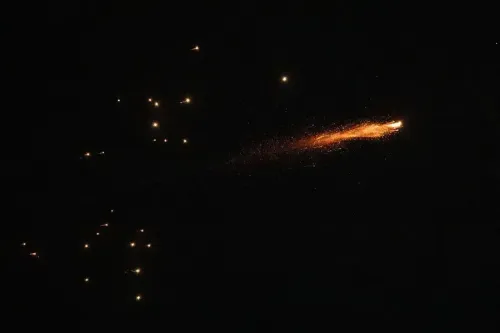
Vienna, March 22 (NationPress) The International Atomic Energy Agency (IAEA) has reported that it is diligently observing the situation following a missile event in Dimona, confirming that no harm has been observed at Israel's crucial nuclear research facility.
In a message shared on X, the agency acknowledged the reports regarding a missile strike in the area but indicated that there has been “no indication of damage to the Negev nuclear research center.” This facility is significantly linked to Israel's nuclear endeavors.
Moreover, the IAEA highlighted that information from neighboring nations has shown no unusual radiation levels post-incident. Director General Rafael Grossi called for “utmost military restraint,” especially near nuclear sites, to avert any escalation that could trigger a nuclear safety emergency.
This advisory comes in the wake of rising tensions in the region and follows reports of new assaults on nuclear infrastructure in Iran.
Earlier on Saturday, the IAEA received notifications from Iranian authorities about an attack on the Natanz nuclear facility. The agency is currently investigating the matter and has not been informed of any increased off-site radiation levels.
Grossi reiterated his plea for restraint, cautioning that ongoing military operations close to nuclear sites could lead to severe and potentially irreversible outcomes.
The Atomic Energy Organization of Iran has accused the United States and Israel of orchestrating the attack on the Natanz uranium-enrichment facility earlier that day. Iranian officials asserted that there were no radioactive leaks and that local residents were safe.
Iranian nuclear facilities have faced numerous attacks since a joint campaign by the U.S. and Israel reportedly commenced on February 28. Earlier this week, strikes were reported near the Bushehr nuclear power plant along the Persian Gulf coast. Iranian authorities have described this as the third incident involving nuclear-related sites, following previous attacks on Natanz and Isfahan.
Tehran has urged the IAEA to vehemently denounce these actions, warning that continued assaults near nuclear facilities present a “very grave and serious situation” with potential global ramifications.
Point of View
The IAEA's assurance of no damage to nuclear facilities is a crucial development. The emphasis on restraint is essential to prevent further escalation in a region already fraught with tension. Maintaining nuclear safety should be paramount.
NationPress
25 Sept 2026
Frequently Asked Questions
What did the IAEA report about the missile incident in Dimona?
The IAEA reported that it is closely monitoring the situation and confirmed that no damage has been detected at the nuclear research facility in Dimona.
Why is the IAEA calling for military restraint?
The IAEA's Director General Rafael Grossi emphasized the need for maximum military restraint to prevent any escalation that could lead to a nuclear safety crisis.
What recent events have increased tensions in the region?
The tensions have escalated due to recent attacks on nuclear infrastructure in Iran, including an attack on the Natanz facility.
How has Iran responded to attacks on its nuclear sites?
Iran has accused the United States and Israel of orchestrating attacks on its nuclear facilities and is urging the IAEA to condemn these actions.
What are the implications of military actions near nuclear facilities?
Continued military actions near nuclear sites could lead to severe and potentially irreversible consequences, as warned by the IAEA.