IAEA Chief: Iran's Nuclear Expertise Endures Despite Military Strikes
Synopsis
In a recent interview, IAEA Director-General Rafael Grossi emphasized that while military actions have impacted Iran's nuclear program, they cannot erase Tehran's essential knowledge and capabilities. The ongoing situation raises critical concerns about the future of Iran's nuclear ambitions and the role of international diplomacy in addressing them.
Key Takeaways
Military actions have impacted Iran's nuclear program but cannot erase its knowledge and capabilities .
Iran's stockpile of 60% enriched uranium poses a significant risk.
Diplomacy remains crucial for addressing the challenges of Iran's nuclear ambitions.
IAEA inspections are necessary for understanding the current status of the program.
The potential for Iran to rebuild its nuclear capabilities persists despite military efforts.
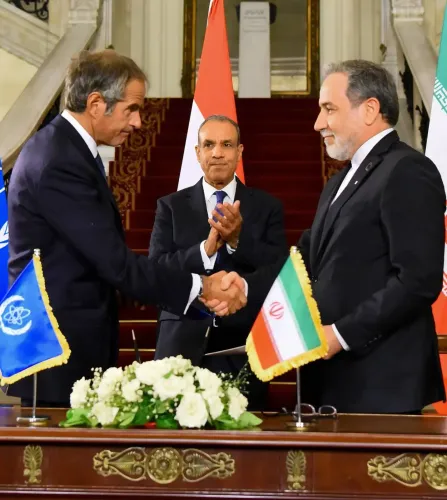
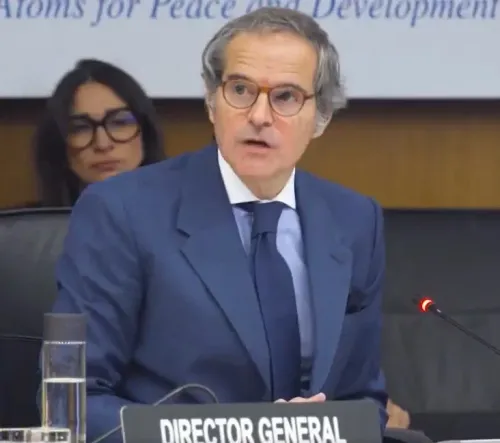
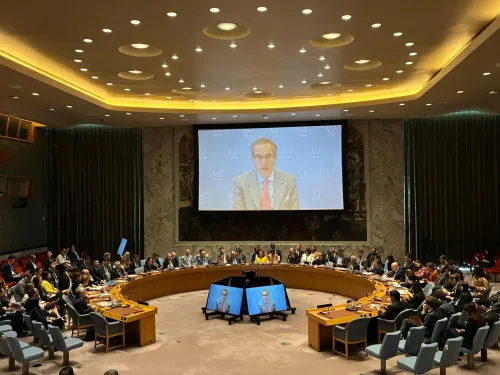
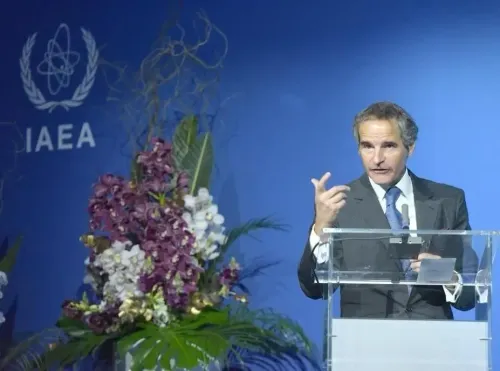
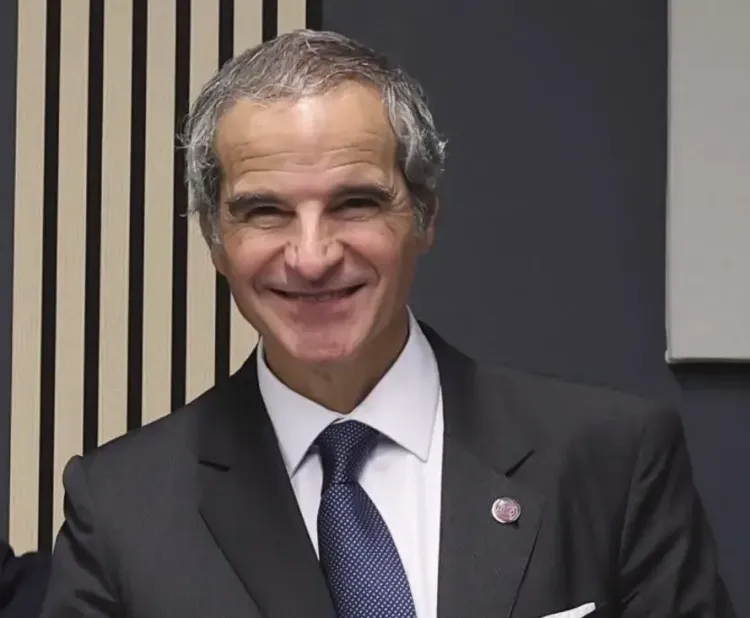
Washington, March 19 (NationPress) Although military actions have significantly impacted Iran's nuclear program, they cannot eliminate the knowledge, materials, and industrial capacity that would enable Tehran to rebuild, stated Rafael Grossi, the Director-General of the International Atomic Energy Agency, during an interview on Thursday.
Grossi noted that while the attacks have considerably rolled back the program, he echoed concerns that critical issues will persist once hostilities cease.
“It’s undeniable that this has truly diminished the program substantially,” he remarked. However, he cautioned that “when the military actions conclude, we will still face several significant challenges.”
Foremost among these challenges is Iran’s stockpile of uranium enriched to 60 percent, which is perilously close to weapons-grade.
“That will remain unaltered,” Grossi added, indicating that in some instances, it could be “buried under rubble, and in others, completely intact.”
He also mentioned that certain infrastructure and equipment might have withstood the strikes, albeit possibly damaged. The complete assessment will only be possible when IAEA inspectors are able to revisit the sites.
Grossi made a clear distinction between physical destruction and scientific capability.
“You cannot unlearn what has been learned,” he remarked, pointing out that Iran now possesses “the most advanced, rapid, and effective machinery available” and understands how to manufacture it.
He emphasized that the centrifuge program could be reinstated, as it relies on industrial and metallurgical expertise that is difficult to erase. “This capability remains intact,” he asserted.
Grossi also warned against the notion that military conflict alone could extinguish Iran’s nuclear aspirations.
“I would argue that any military engagement,” he said, adding that only a catastrophic nuclear conflict could obliterate such a program “in an incomprehensible manner, which we sincerely hope never occurs.”
He highlighted that the Iranian nuclear file still necessitates an agreed-upon international framework and renewed inspections. “We need to establish a framework, a mutually accepted framework, that provides us with the necessary visibility and a clear understanding of their current status and future intentions,” he noted.
Grossi indicated that the IAEA hasn't detected any major Iranian efforts to resume enrichment activities during the ongoing military operations. “We don’t observe significant activity, which is reasonable,” he stated. Nevertheless, he stressed that the lack of visible activity does not imply that the threat has been eliminated.
“A lot still persists,” he mentioned. “They hold the capabilities, knowledge, and industrial potential to proceed.”
He also remarked that retrieving or eliminating enriched materials would be exceedingly challenging. The materials are stored in cylinders containing uranium hexafluoride gas enriched to 60 percent.
“It’s very complex to manage,” he remarked, referring to any operation of that nature as “extremely demanding.”
Grossi noted that he has been in communication with officials from Washington and Iran, expressing hope that inspectors can return once conditions permit. Iran, he emphasized, remains obligated under the Nuclear Non-Proliferation Treaty.
He underscored the importance of diplomacy despite the ongoing conflict. “For a lasting solution, we must find ourselves again at the negotiating table,” he stated.
Iran’s nuclear program has long been a source of friction with the United States, Israel, and European nations.
The 2015 nuclear agreement, known as the JCPOA, had imposed restrictions on Iran’s enrichment endeavors, but that structure has gradually eroded following the U.S. withdrawal and the ensuing tensions between Tehran and the West.
The IAEA has for years expressed concerns regarding unresolved queries, restricted access, and undisclosed nuclear materials.
Grossi has consistently maintained that inspections, verification, and diplomacy are the only viable means to ascertain what Iran possesses, what it can reconstruct, and the future trajectory of its program.
Point of View
The underlying expertise remains a concern for global stability. A diplomatic approach is essential to navigate these complexities and ensure a clear understanding of Iran's future intentions.
NationPress
22 Sept 2026
Frequently Asked Questions
What did Rafael Grossi say about Iran's nuclear program?
Rafael Grossi stated that military actions have significantly impacted Iran's nuclear program but have not erased the essential knowledge and capabilities that Iran possesses to rebuild it.
What is the current status of Iran's uranium enrichment?
Iran currently has a stockpile of uranium enriched to 60 percent, which is close to weapons-grade.
Why is diplomacy important in the context of Iran's nuclear ambitions?
Diplomacy is essential to establish a framework for inspections and to address concerns regarding Iran's nuclear program effectively.
What challenges remain after military actions against Iran's nuclear program?
Key challenges include the remaining stockpile of enriched uranium, potential surviving infrastructure, and the knowledge Iran has retained.
What has the IAEA observed regarding Iran's enrichment activities during military operations?
The IAEA has not observed significant Iranian efforts to resume enrichment activities during the current military campaign.