IMF adds 11 new conditions to Pakistan's $7 billion EFF bailout programme

Synopsis
The IMF has tacked 11 new conditions onto Pakistan's $7 billion bailout, demanding SEZ overhauls and procurement transparency — even as the UAE quietly pulled $3.5 billion in deposits. Pakistan is caught between projecting diplomatic relevance on the world stage and scrambling for financial survival at home.
Key Takeaways
The IMF has added 11 new conditions to Pakistan's $7 billion Extended Fund Facility (EFF) programme.
A key condition requires amendments to the SEZ Act and Special Technology Zones Authority Act , phasing out profit-based fiscal incentives.
The government reportedly plans to lease 6,000 acres in Karachi to SEZ developers without charge — flagged as "extremely disturbing" by Business Recorder .
The UAE withdrew $3.5 billion in deposits, putting immediate pressure on Pakistan's foreign exchange reserves.
High interest rates — maintained on IMF advice — have trapped Pakistan in a low-growth cycle, according to reports.
The next IMF review will test whether Islamabad can meet expanded conditionality amid domestic political pressures.
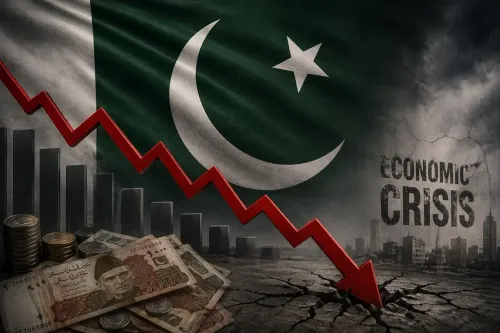
The International Monetary Fund (IMF) has added 11 new conditions to Pakistan's ongoing $7 billion Extended Fund Facility (EFF) programme, deepening the financial pressure on an economy already struggling with depleted reserves, high interest rates, and a sudden withdrawal of foreign deposits. The development was reported by Business Recorder, citing the latest review documentation.
Key New Conditions Imposed
Among the most significant new requirements is the enactment of amendments to the Special Economic Zones (SEZ) Act and the Special Technology Zones Authority Act. The IMF wants Pakistan to phase out existing fiscal incentives and shift from profit-based to cost-based incentives — a structural overhaul that critics say will unsettle investor expectations built over years.
Business Recorder flagged a particularly contentious detail: the government reportedly intends to lease 6,000 acres in Karachi to SEZ developers without charge. "What was extremely disturbing was the report that the government intends to give 6000 acres in Karachi on lease to developers of SEZs without charge," the publication noted.
The October 2024 IMF documents on the EFF approval had already observed that Pakistan's tax system had been "extensively used to provide non-transparent support through exemptions for privileged sectors like real estate, agriculture, manufacturing, and energy, as well as through the proliferation of Special Economic Zones." The earlier condition stipulated that existing SEZs would be phased out over a decade, with no new zones permitted.
Transparency and Procurement Reforms
A second new condition requires Pakistan to establish a regulatory registry to improve the business climate. This mirrors a pledge made in the October 2024 EFF documents, in which Islamabad committed to ensuring "the highest level of transparency in all public procurement at the federal and provincial levels" through the electronic Pakistan Acquisition and Disposal System (e-PADS), set up with technical assistance from the World Bank.
UAE Deposit Withdrawal Adds to Pressure
Pakistan's fragile economic footing has come into sharper focus amid shifting geopolitical dynamics. According to a report by Dawn, the United Arab Emirates withdrew $3.5 billion in deposits, creating immediate pressure on Pakistan's foreign exchange reserves. The withdrawal exposed the country's deep dependence on bilateral financial support to maintain reserve adequacy.
This comes amid a period when Islamabad was projecting itself as a diplomatic actor during heightened tensions linked to the US-Israel conflict with Iran — a contrast that analysts say underscores the disconnect between Pakistan's foreign policy ambitions and its domestic fiscal reality.
Structural Vulnerabilities Persist
Inflation has moderated in recent months, but high interest rates — maintained on IMF advice — have dampened investment and export competitiveness, reportedly trapping the economy in a prolonged low-growth cycle. Pakistan's external position remains particularly fragile, with reserves heavily reliant on multilateral disbursements and bilateral rollovers.
Notably, this is not the first time the IMF has expanded conditionality mid-programme; each successive review has added layers of structural benchmarks that successive Pakistani governments have struggled to implement without political cost.
With the next IMF review expected in the coming months, Islamabad's ability to meet the expanded set of conditions — while managing domestic political pressures and a restive business community — will be the defining test of whether the EFF programme stays on track.
Point of View
Which in turn requires the next disbursement to absorb the political cost of compliance. The SEZ conditionality is particularly revealing — Islamabad simultaneously wants to phase out incentives as the IMF demands, while reportedly handing out 6,000 acres of Karachi land for free, which is precisely the kind of non-transparent support the Fund has criticised. The UAE deposit withdrawal is the more alarming signal: bilateral buffers are thinning just as multilateral demands are rising. Pakistan's real crisis is not the IMF programme — it is the absence of a domestic revenue base large enough to make external support optional.
NationPress
19 Sept 2026
Frequently Asked Questions
What are the new IMF conditions added to Pakistan's EFF programme?
The IMF has added 11 new conditions to Pakistan's $7 billion Extended Fund Facility, including amendments to the SEZ Act to phase out profit-based fiscal incentives and the establishment of a regulatory registry to improve the business climate. These build on structural benchmarks set during the October 2024 EFF approval.
Why did the UAE withdraw $3.5 billion in deposits from Pakistan?
According to a Dawn report, the UAE withdrew $3.5 billion in deposits amid shifting geopolitical and financial dynamics, creating immediate pressure on Pakistan's foreign exchange reserves. The withdrawal highlighted Pakistan's deep dependence on bilateral financial support.
What is the Pakistan Extended Fund Facility (EFF)?
The EFF is a $7 billion IMF bailout programme extended to Pakistan to help stabilise its economy, conditional on a series of fiscal, structural, and governance reforms. It was formally approved in October 2024 and is subject to periodic reviews that can add new conditions.
How does the SEZ condition affect Pakistan's economy?
The IMF wants existing Special Economic Zones phased out over a decade and no new ones created, arguing they enable non-transparent tax exemptions for privileged sectors. Critics warn this will unsettle investor expectations, while the government's reported plan to lease 6,000 acres in Karachi for free contradicts the spirit of the reform.
What is Pakistan's current economic outlook?
Pakistan's economy remains fragile, with high interest rates dampening investment and export competitiveness, trapping growth at low levels. Reserves are dependent on multilateral disbursements and bilateral rollovers, and the latest UAE deposit withdrawal has further narrowed the country's financial buffer.