Immigrant US lawmakers deliver bipartisan message on America's 250th
Synopsis
A Cuban-born Republican and a Dominican-born Democrat set aside party lines on America's 250th birthday to call for immigration reform and celebrate the legal immigrant experience — a striking moment of bipartisan unity on one of Washington's most fractious issues.
Key Takeaways
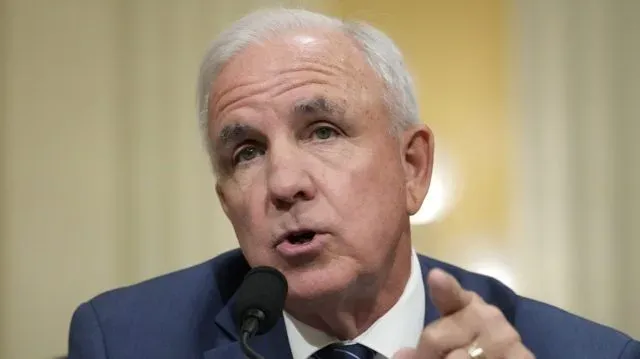
Republican Congressman Carlos Gimenez (Florida) and Democratic Congressman Adriano Espaillat (New York) appeared jointly on CBS Face the Nation on 6 July .
Gimenez fled Cuba at nearly seven years old after the rise of Fidel Castro's regime; Espaillat emigrated from the Dominican Republic at age nine .
Both lawmakers called for a pathway to normalise long-settled undocumented migrants, reform for Dreamers , farm workers, and family reunification.
Both stressed that aspiring immigrants should follow legal pathways .
The United States hosts the world's largest immigrant population, with immigration remaining one of the most contested issues in US politics.
On the occasion of the United States' 250th Independence Day, two immigrant members of Congress — Republican Congressman Carlos Gimenez of Florida and Democratic Congressman Adriano Espaillat of New York — appeared together on CBS's Face the Nation on 6 July to share their personal journeys and deliver a rare bipartisan message: legal immigration remains foundational to America's identity and future.
Two Journeys, One Stage
Gimenez, a naturalised American citizen who left Cuba with his family at nearly seven years old following the rise of Fidel Castro's communist regime, recalled the weight of that departure. 'My parents were seeking freedom, not only for themselves, but for us, his children, my sister and I, to give us the opportunity to live in a land of freedom,' he said. He described arriving in Florida, sharing a crowded home with relatives, and attending school without a word of English.
Espaillat, who emigrated from the Dominican Republic at age nine, recounted arriving in New York City in the middle of winter and adapting to an unfamiliar world. 'We lived with our grandparents... We got there in December. And, of course, we went to school. Remember sitting in the back of the classroom and... not knowing really a word of English. But, surely and slowly, we acclimated, and here we are,' he said.
Family, Faith, and the American Promise
Both lawmakers credited their families' belief in America as the force that shaped their trajectories. Espaillat spoke warmly of his grandmother — the first in the family to become a US citizen — who 'was so proud of it' and frequently spoke about 'how great this nation is and how it gave us a new opportunity of moving forward.' This generational pride, both men suggested, is a thread running through immigrant communities across the country.
Common Ground on Immigration Reform
Despite representing opposing parties, Gimenez and Espaillat found notable agreement on the need for immigration reform once border security is established. Gimenez argued that long-settled migrants deserve a path out of legal limbo: 'Those that have been here for years that have been working, are part of the community, that are part of the economy, we need to find a way to normalize them. They can come out of the shadows, pay taxes, and then live their life without having fear.'
Espaillat called for bipartisan action on Dreamers, farm workers, and family unification. 'A family that's divided, that's fractured is a weak family, and many weak families make up a weak nation,' he said — framing immigration not merely as a policy issue but as a matter of national cohesion.
Message to Aspiring Immigrants
Asked what they would say to those hoping to come to America, both lawmakers stressed legal pathways. 'My message is to do it the right way. And then you will be welcomed with open arms,' said Gimenez, adding that immigrants bring 'new ideas, new perspectives' that help make America 'the greatest country in the world.' Espaillat struck a similarly optimistic note: 'This nation, as we celebrate the 250th anniversary, still has promise. Bring your ideas. Bring your innovativeness. Bring your talent. Bring your energy... There's been no period in American history that has not been pushed by immigration forward.'
The Broader Context
Immigration remains among the most divisive issues in US politics, with sharp disagreements over border security, asylum, deportation, and legal migration pathways. Yet the United States continues to host the world's largest immigrant population, with successive generations of newcomers contributing to its economic growth, scientific advancement, and cultural fabric. The appearance of a Republican and a Democrat together — speaking not from a debate stage but from shared personal experience — offered a contrast to the usual partisan tenor of the debate, even as the policy divide remains wide.
Point of View
But the policy substance is thinner than the symbolism suggests. Both men called for 'normalising' long-settled migrants, yet neither detailed a mechanism — and that vagueness has historically been where bipartisan immigration deals collapse. The 250th anniversary framing is useful political cover, but the hard legislative arithmetic on Dreamers, farm workers, and border security has not changed. Shared personal narrative is not the same as shared legislative will.
NationPress
5 Oct 2026
Frequently Asked Questions
Who are Carlos Gimenez and Adriano Espaillat?
Carlos Gimenez is a Republican Congressman from Florida who was born in Cuba and came to the US as a child. Adriano Espaillat is a Democratic Congressman from New York who emigrated from the Dominican Republic at age nine. Both are naturalised American citizens.
What did the two lawmakers say about immigration reform?
Both called for a pathway to bring long-settled undocumented migrants 'out of the shadows' so they can pay taxes and live without fear. Espaillat also pushed for bipartisan action on Dreamers, farm workers, and keeping immigrant families together.
Why did they appear together on CBS Face the Nation?
The joint appearance was part of a special Independence Day edition of CBS's Face the Nation on 6 July , marking the United States' 250th anniversary . The format was designed to highlight bipartisan perspectives on immigration.
What message did they send to aspiring immigrants?
Both lawmakers urged aspiring immigrants to follow legal pathways. Gimenez said, 'My message is to do it the right way. And then you will be welcomed with open arms.' Espaillat said America 'still has promise' and encouraged newcomers to bring their talent and energy.
Why does immigration remain contentious in US politics?
Immigration divides US politicians on border security, asylum policy, deportation, and legal migration. Despite the US hosting the world's largest immigrant population, there has been no comprehensive immigration reform legislation passed in decades, leaving millions in legal uncertainty.