Historic India-Egypt Navy Talks Held in Cairo: Key Maritime Pacts Signed
Synopsis
India and Egypt held their first-ever Navy-to-Navy Staff Talks in Cairo alongside the 11th Joint Defence Committee meeting, agreeing on a 2026-27 defence plan. With India's defence production crossing $20 billion and Red Sea instability mounting, this maritime partnership carries urgent strategic and economic significance for both nations.
Key Takeaways
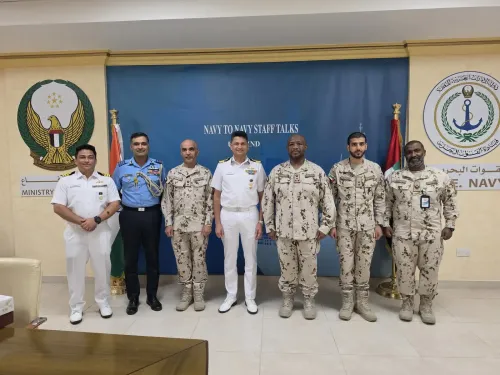
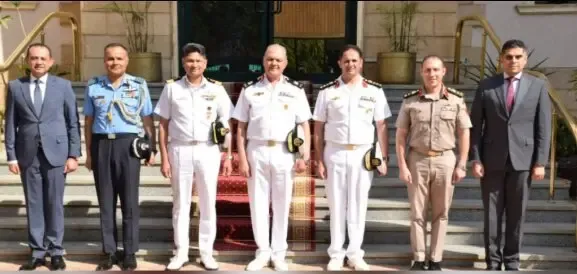
India and Egypt held their inaugural Navy-to-Navy Staff Talks (NNST) in Cairo on April 24, 2025 , marking a historic first in bilateral naval relations.
The talks were held alongside the 11th India-Egypt Joint Defence Committee (JDC) meeting, with discussions on operational coordination, joint training, and naval technology collaboration.
Both nations agreed on a bilateral defence cooperation plan for 2026-27 , covering military exercises, maritime security, and defence production collaboration.
India's defence production has crossed US $20 billion , with exports valued at US $4 billion going to over 100 countries — a key pitch made to Egypt for co-production partnerships.
The Indian delegation was led by Joint Secretary Amitabh Prasad ; both sides agreed to jointly develop a defence industry cooperation plan .
Maritime cooperation and defence industry collaboration have emerged as the two central pillars of the evolving India-Egypt strategic relationship.
In a landmark development for India-Egypt defence relations, the two nations conducted their inaugural Navy-to-Navy Staff Talks (NNST) in Cairo on April 24, 2025, running parallel to the 11th India-Egypt Joint Defence Committee (JDC) meeting. The Ministry of Defence confirmed the milestone event, describing it as a transformative step in bilateral maritime cooperation between the two strategically positioned nations.
Inaugural NNST: A Milestone in Maritime Cooperation
The Indian Embassy in Egypt officially characterised the Navy-to-Navy Staff Talks as a "milestone in maritime cooperation", underscoring the growing strategic alignment between New Delhi and Cairo. The discussions spanned critical areas including operational coordination, joint training programmes, maritime domain awareness, and emerging opportunities in naval technology and shipbuilding collaboration.
This inaugural edition of the NNST signals that maritime security has graduated from a peripheral topic to a central pillar of India-Egypt defence ties, reflecting the broader geopolitical importance of the Red Sea corridor and Indian Ocean Region (IOR) — both of which sit at the intersection of the two nations' strategic interests.
11th JDC Meeting: Key Outcomes and the 2026-27 Defence Plan
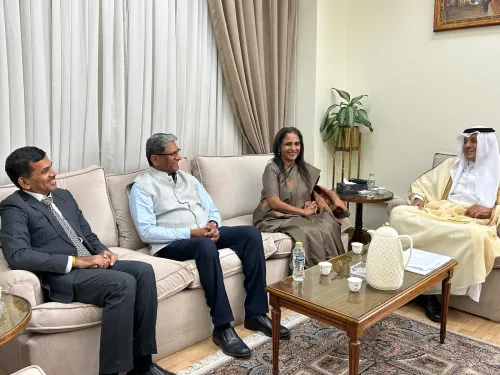
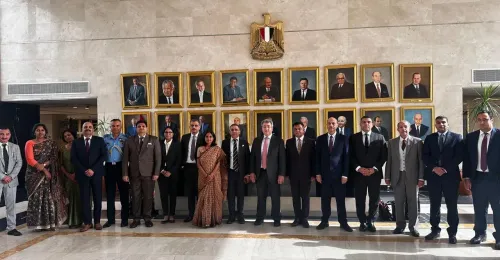
During the JDC meeting held earlier in the week in Cairo, delegations from both countries conducted a comprehensive review of progress achieved since the previous JDC session. The Indian delegation was led by Joint Secretary (International Cooperation) Amitabh Prasad, accompanied by senior officials from the Ministry of Defence and the Indian Armed Forces. The Egyptian side was headed by senior defence ministry and military officials.
The two sides formally agreed upon a bilateral defence cooperation plan for 2026-27, built around five strategic pillars: expanding structured military interaction mechanisms, strengthening joint training exchanges, enhancing maritime security cooperation, increasing the scale and complexity of joint military exercises, and promoting collaboration in defence production and technology transfer.
India's Defence Industry: A $20 Billion Powerhouse on Display
A significant highlight of the JDC meeting was a dedicated presentation by the Indian delegation showcasing India's rapidly expanding defence manufacturing ecosystem. The presentation revealed that India's defence production has surpassed US $20 billion, with exports of defence products valued at approximately US $4 billion reaching over 100 countries globally.
This positions India not merely as a buyer in the global arms market but as an increasingly credible defence exporter and co-production partner. Both nations agreed to jointly develop a defence industry cooperation plan, with co-development and co-production in defence manufacturing emerging as a new and critical dimension of the bilateral relationship.
Notably, this push aligns with India's Atmanirbhar Bharat (self-reliant India) defence initiative, under which the government has set ambitious targets for domestic production and exports. Egypt, which has been modernising its military at scale over the past decade, represents a significant potential market and co-production partner for Indian defence firms.
Strategic Context: Why India-Egypt Maritime Ties Matter Now
The timing of these talks carries considerable geopolitical weight. The Red Sea has witnessed escalating instability due to Houthi attacks on commercial shipping since late 2023, directly impacting global trade routes that both India and Egypt depend upon. Egypt's Suez Canal — a critical artery for Indian exports to Europe — has seen traffic disruptions, making maritime coordination between the two nations not just strategic but economically imperative.
India has been steadily deepening its naval footprint across the Indian Ocean Region, having already signed logistics support agreements with multiple nations. Egypt's geographic position — straddling the Mediterranean Sea, the Red Sea, and the African continent — makes it an indispensable partner in India's expanding maritime security architecture.
This comes amid India's broader effort to diversify its strategic partnerships across the Middle East and North Africa (MENA) region, reducing over-reliance on any single partner while building a web of interlocking bilateral defence relationships.
What Comes Next
The formalisation of the NNST framework means that India and Egypt now have an institutionalised channel for naval dialogue — a structure that will likely produce regular, scheduled engagements going forward. The agreed 2026-27 defence cooperation roadmap sets clear benchmarks, and both sides are expected to begin work on the defence industry cooperation plan in the near term.
As India continues to expand its global defence export footprint and Egypt accelerates military modernisation, the bilateral relationship is poised to deepen significantly — with naval technology, shipbuilding, and joint exercises likely to headline future engagements. Analysts will watch closely whether this translates into concrete co-production agreements or technology transfer deals in the coming months.
Point of View
India is methodically building an interlocking network of maritime partnerships that stretches from the Gulf to the Mediterranean. What makes this moment particularly telling is the defence industry angle: India isn't just seeking security cooperation, it is actively marketing itself as a co-production partner — a shift from buyer to seller that redefines India's place in the global defence order. The mainstream narrative will call this a bilateral milestone; the sharper read is that India is quietly assembling the architecture of a new maritime security order, one bilateral agreement at a time.
NationPress
19 Sept 2026
Frequently Asked Questions
What were the India-Egypt Navy-to-Navy Staff Talks about?
The inaugural India-Egypt Navy-to-Navy Staff Talks (NNST), held in Cairo on April 24, 2025, focused on operational coordination, joint training, maritime domain awareness, and collaboration in naval technologies and shipbuilding. They were held alongside the 11th India-Egypt Joint Defence Committee meeting.
What is the India-Egypt bilateral defence cooperation plan 2026-27?
The 2026-27 India-Egypt bilateral defence cooperation plan covers five areas: structured military interactions, joint training exchanges, maritime security cooperation, expanded military exercises, and collaboration in defence production and technology. Both sides also agreed to develop a dedicated defence industry cooperation plan.
How large is India's defence export sector?
India's defence production has crossed US $20 billion, with exports of approximately US $4 billion reaching over 100 countries globally. This was highlighted during the India-Egypt JDC meeting in Cairo as part of India's pitch for co-development and co-production partnerships.
Why is India-Egypt maritime cooperation strategically important?
Egypt controls the Suez Canal, a critical trade route for Indian exports to Europe, while both nations have overlapping interests in Red Sea and Indian Ocean security. Escalating Houthi attacks on Red Sea shipping since 2023 have made maritime coordination between India and Egypt increasingly urgent.
Who led the Indian delegation at the 11th India-Egypt JDC meeting?
The Indian delegation at the 11th India-Egypt Joint Defence Committee meeting in Cairo was led by Joint Secretary (International Cooperation) Amitabh Prasad, supported by senior officials from the Ministry of Defence and the Indian Armed Forces.