India Funds NPR 58 Million School in Nepal's Jhapa District
Synopsis
India is funding a NPR 58 million school building at Shree Janata Secondary School in Nepal's Jhapa district under the HICDP framework — a quiet but powerful example of how India is winning hearts in Nepal one classroom at a time, even as geopolitical competition with China intensifies in the region.
Key Takeaways
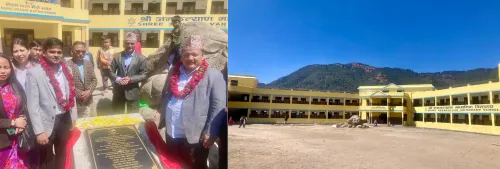
India is funding a new school building at Shree Janata Secondary School in Gauradaha Municipality, Jhapa district , eastern Nepal, with a grant of approximately NPR 58 million .
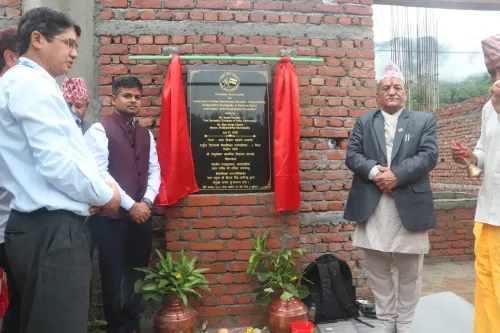
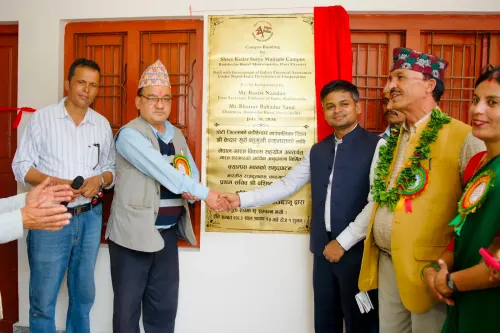
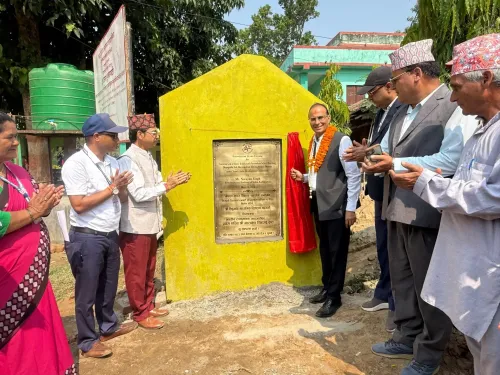
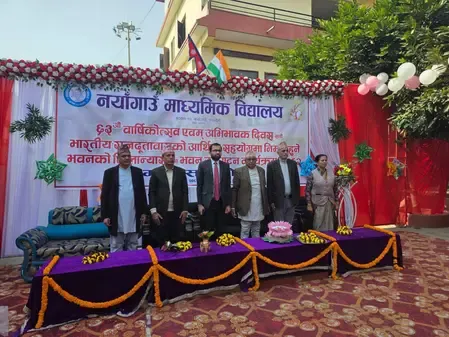
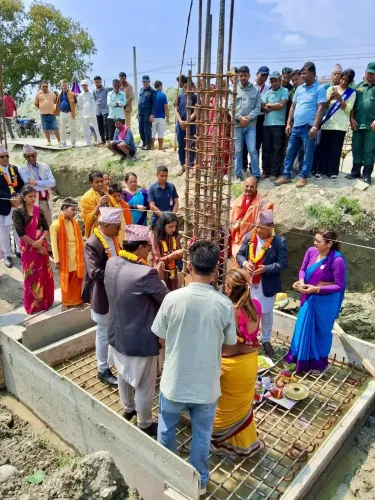
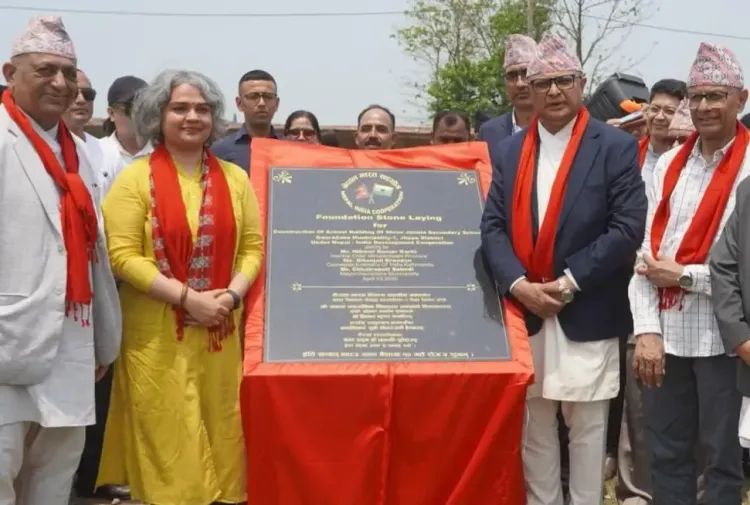
The foundation stone was laid on Thursday, April 24 by Koshi Province Chief Minister Hikmat Kumar Karki , Indian Embassy Counsellor Gitanjali Brandon , and Mayor Chhatrapati Subedi .
The project is implemented under the High Impact Community Development Project (HICDP) framework, a key pillar of the India–Nepal development partnership since 2003 .
A January 2024 agreement raised the HICDP per-project funding ceiling from NPR 5 million to NPR 20 million , enabling larger infrastructure investments.
The HICDP programme covers priority sectors including education, health, drinking water, sanitation, rural electrification, and hydropower across Nepal.
Stakeholders including Chief Minister Karki praised India's continued developmental support, with the embassy reaffirming broad-based India–Nepal cooperation across multiple sectors.
Kathmandu, April 23: India is funding the construction of a new school building at Shree Janata Secondary School in Gauradaha Municipality, Jhapa district, eastern Nepal, with a financial grant of approximately NPR 58 million from the Government of India. The foundation stone was laid on Thursday, April 24, marking a significant milestone in India–Nepal bilateral development cooperation. The project is being executed under the High Impact Community Development Project (HICDP) framework.
Foundation Stone Laid by Senior Officials
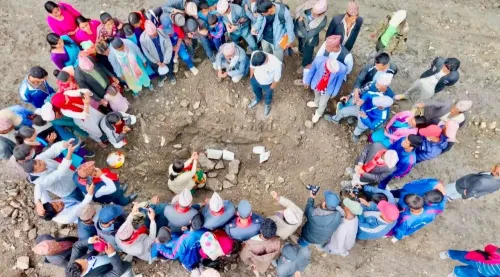
Hikmat Kumar Karki, Chief Minister of Koshi Province; Gitanjali Brandon, Counsellor at the Embassy of India in Kathmandu; and Chhatrapati Subedi, Mayor of Gauradaha Municipality, jointly laid the foundation stone for the new school infrastructure. The ceremony was officially acknowledged through a press release issued by the Indian Embassy in Kathmandu.
The event brought together key stakeholders from both the Indian diplomatic mission and local Nepali governance, signalling the grassroots-level impact of the bilateral partnership. Chief Minister Karki and other attendees publicly appreciated India's sustained developmental commitment to Nepal.
Project Details and HICDP Framework
The school construction project will be implemented through Gauradaha Municipality in Jhapa district and is financed entirely through Indian grant assistance. The HICDP programme, originally launched in 2003 under the name Small Development Projects, has evolved into one of the most impactful pillars of the India–Nepal development partnership.
The programme channels funds through local authorities to support small-scale infrastructure across Nepal. Priority sectors include health, education, drinking water, sanitation and drainage, rural electrification, hydropower, and river training works — all identified as critical by the Government of Nepal.
In a landmark policy upgrade, a new agreement signed in January 2024 raised the ceiling of Indian financial assistance per project to NPR 20 million, a fourfold increase from the earlier cap of NPR 5 million. The NPR 58 million allocated for the Jhapa school project suggests it may span multiple HICDP sub-components or represents a consolidated infrastructure grant.
What Indian Embassy Said
The Indian Embassy in Kathmandu stated that India and Nepal, as close neighbours, continue to maintain broad-based cooperation across multiple sectors. It emphasised that community development projects like this one reflect India's ongoing support to Nepal's development priorities, particularly in the education sector.
The embassy further noted that the HICDP scheme has become a cornerstone of the bilateral relationship, directly benefiting communities at the grassroots level across Nepal. Officials expressed confidence that the new school building would significantly improve the learning environment for students and teachers in Gauradaha Municipality.
Strategic Significance of India–Nepal Education Ties
This project is not an isolated gesture — it is part of a broader, systematic effort by India to strengthen people-to-people ties with Nepal through tangible infrastructure delivery. Since the HICDP programme's inception in 2003, hundreds of such projects have been completed across Nepal, spanning schools, health posts, water supply systems, and community halls.
The timing is also notable. India–Nepal relations have navigated complex diplomatic terrain in recent years, including border disputes and shifting geopolitical alignments. Investments in community-level infrastructure like schools serve as soft-power anchors, reinforcing India's role as Nepal's most consequential development partner at the local level — where Chinese Belt and Road investments have largely focused on large-scale national infrastructure.
For Jhapa district in Koshi Province — one of Nepal's more economically active eastern districts with strong cross-border trade ties with India — improved school infrastructure directly addresses the educational needs of a growing student population. Analysts note that quality education infrastructure in border districts can reduce migration pressures and improve long-term human development indices.
Impact on Students and Local Community
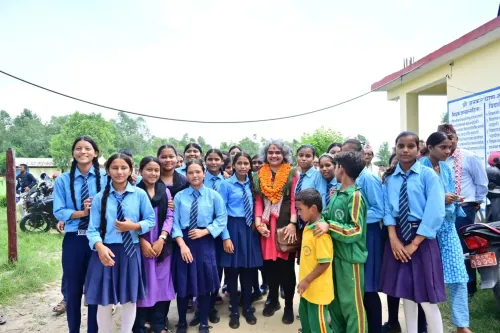
The new building at Shree Janata Secondary School is expected to provide safer, more spacious, and better-equipped classrooms for hundreds of students in Gauradaha Municipality. Inadequate school infrastructure remains a persistent challenge across Nepal's municipalities, and Indian-funded projects under HICDP have helped fill critical gaps where state budgets fall short.
With the January 2024 agreement now enabling higher per-project funding, more ambitious infrastructure interventions — like the Jhapa school — are likely to become the new norm under the HICDP framework, potentially accelerating Nepal's progress toward its education sector targets under national development plans.
As India and Nepal continue to deepen their development partnership, more HICDP projects are expected to be announced across Nepal's provinces in the coming months, with education and health remaining the top priority sectors.
Point of View
New Delhi is building classrooms and health posts, embedding itself into the daily lives of ordinary Nepalis. The January 2024 upgrade to the HICDP funding ceiling signals that India is serious about scaling this community-level engagement. The real question is whether India can sustain this momentum consistently across all provinces — or whether political transitions in Kathmandu will once again disrupt the delivery pipeline.
NationPress
19 Sept 2026
Frequently Asked Questions
What is India building in Nepal's Jhapa district?
India is funding the construction of a new school building at Shree Janata Secondary School in Gauradaha Municipality, Jhapa district , eastern Nepal. The project is financed through an Indian government grant of approximately NPR 58 million under the HICDP framework.
What is the HICDP programme between India and Nepal?
The High Impact Community Development Project (HICDP) is an Indian-funded initiative launched in 2003 , formerly known as Small Development Projects, that supports grassroots infrastructure in Nepal through local authorities. It covers priority sectors including education, health, drinking water, sanitation, and rural electrification.
How much financial assistance is India providing for the Nepal school project?
India is providing approximately NPR 58 million in grant assistance for the construction of the new school building at Shree Janata Secondary School in Jhapa. This is significantly above the earlier per-project cap of NPR 5 million, which was raised to NPR 20 million per project in January 2024.
Who attended the foundation stone laying ceremony for the Jhapa school?
Hikmat Kumar Karki , Chief Minister of Koshi Province; Gitanjali Brandon , Counsellor at the Indian Embassy in Kathmandu; and Chhatrapati Subedi , Mayor of Gauradaha Municipality, jointly laid the foundation stone. The event was officially confirmed by the Indian Embassy in a press release.
Why is India investing in school infrastructure in Nepal?
India invests in Nepal's school infrastructure as part of its broader bilateral development partnership, with education identified as a priority sector by the Government of Nepal. Such projects under the HICDP framework strengthen people-to-people ties and reflect India's role as Nepal's largest development partner at the community level.