India at UNESCAP CED9: Climate push, ISA, CDRI and finance for developing nations
Synopsis
At UNESCAP's 9th Committee on Environment and Development session in Bangkok, India's First Secretary Jagpreet Kaur spotlighted four of New Delhi's flagship climate platforms — ISA, CDRI, LiFE, and GBA — while pressing for reliable climate finance for developing nations. The statement signals India's continued push to lead Global South climate diplomacy ahead of major upcoming multilateral negotiations.
Key Takeaways
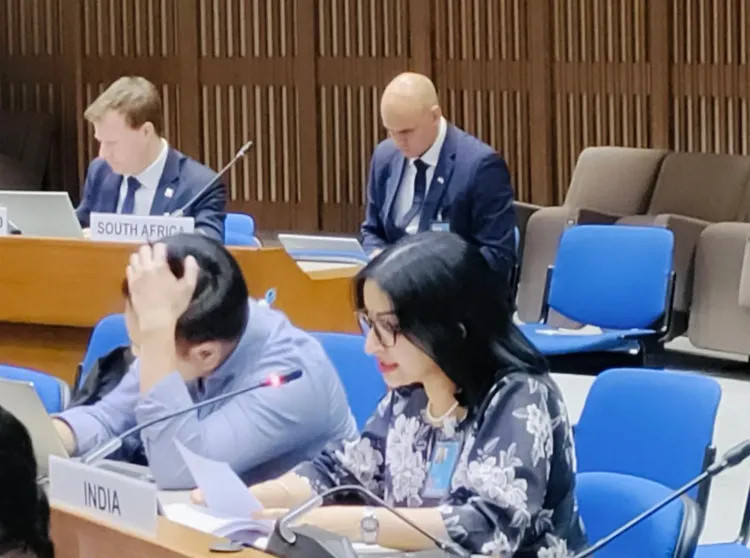
Jagpreet Kaur , First Secretary of the Embassy of India in Bangkok , delivered India's country statement at UNESCAP CED9 on 2 July .
India highlighted four global initiatives: the International Solar Alliance (ISA) , Lifestyle for the Environment (LiFE) , Coalition for Disaster Resilient Infrastructure (CDRI) , and Global Biofuels Alliance (GBA) .
India stressed the need for adequate, timely, and predictable climate finance for developing countries for adaptation.
CED9 is reviewing progress on the CED7 Ministerial Declaration and addressing the triple planetary crisis : climate change, biodiversity loss, and pollution.
The Committee meets every two years , with ministerial-level sessions held every four years .
Jagpreet Kaur, First Secretary of the Embassy of India in Bangkok, on Thursday, 2 July presented India's country statement at the 9th session of the Committee on Environment and Development (CED9) of the United Nations Economic and Social Commission for Asia and the Pacific (UNESCAP), laying out New Delhi's multi-level commitments to combatting climate change. The statement covered national, regional, and international initiatives and stressed the urgent need for climate finance for developing nations.
Key Initiatives India Highlighted
In her address, Kaur drew attention to four flagship platforms championed by India on the global stage: the International Solar Alliance (ISA), the Lifestyle for the Environment (LiFE) movement, the Coalition for Disaster Resilient Infrastructure (CDRI), and the Global Biofuels Alliance (GBA). Each of these represents a distinct strand of India's climate diplomacy — from clean energy coalitions to disaster-proofing critical infrastructure across the Global South.
Notably, the statement also underscored the need for adequate, timely, and predictable finance for developing countries to fund climate adaptation — a demand that has repeatedly surfaced in multilateral forums but remains inadequately addressed by developed economies.
What CED9 Is and Why It Matters
The Committee on Environment and Development is a subsidiary body of UNESCAP, convened every two years to review regional environmental and development trends across the Asia-Pacific. It facilitates dialogue among governments, civil society, the private sector, and the broader UN system, and provides formal recommendations to the Commission. Every four years, the Committee meets at ministerial level for high-level policy guidance.
According to UNESCAP, CED9 is specifically reviewing progress against the priority areas set out in the CED7 Ministerial Declaration, with a sharper focus on synergistic policymaking and the integrated implementation of efforts to advance the Sustainable Development Goals (SDGs). The session also addresses the so-called triple planetary crisis — climate change, biodiversity loss, and pollution in its multiple dimensions.
India's Broader Climate Posture
India's participation in CED9 reflects a consistent diplomatic strategy: positioning itself as a bridge between the developed world's climate ambitions and the developing world's financing constraints. Through ISA — co-founded with France in 2015 — India has sought to build a coalition of solar-energy-rich nations. The CDRI, launched at the 2019 UN Climate Action Summit, focuses on making infrastructure in vulnerable nations more resilient to climate shocks.
This comes amid growing pressure on the Asia-Pacific region, which according to UNESCAP faces disproportionate exposure to climate-related disasters. The region accounts for a significant share of global greenhouse gas emissions while also hosting the majority of the world's climate-vulnerable populations.
What Comes Next
The recommendations emerging from CED9 will feed into the broader UNESCAP Commission process, with potential implications for regional climate cooperation frameworks. For India, the session is also a platform to build consensus ahead of upcoming global climate negotiations, where the question of developed-country finance commitments to the Global South is expected to dominate the agenda.
Point of View
Then pivot to the financing gap that developed nations have consistently failed to close. The ISA and CDRI are genuine institutional achievements, but the call for 'adequate, timely, and predictable finance' is a phrase that has appeared in virtually every developing-country statement at every climate forum for a decade without producing binding commitments. The real test of India's climate diplomacy is whether it can convert this coalition-building into concrete finance flows before the next COP cycle resets expectations again.
NationPress
2 Jul 2026
Frequently Asked Questions
What did India say at the UNESCAP CED9 session in Bangkok?
India's First Secretary Jagpreet Kaur presented the country statement at the 9th session of UNESCAP's Committee on Environment and Development on 2 July in Bangkok, highlighting India's climate efforts through the ISA, LiFE movement, CDRI, and GBA, while emphasising the need for adequate and timely climate finance for developing nations.
What is the UNESCAP Committee on Environment and Development (CED)?
The Committee on Environment and Development is a subsidiary body of UNESCAP, convened every two years to review regional environmental trends, promote dialogue among governments and civil society, and provide recommendations to the Commission. Every four years, it meets at the ministerial level for high-level policy guidance.
What is CED9 focused on?
CED9 is reviewing progress on priorities set out in the CED7 Ministerial Declaration and addressing the triple planetary crisis — climate change, biodiversity loss, and pollution. It also focuses on synergistic policymaking to advance the Sustainable Development Goals (SDGs) across the Asia-Pacific region.
Which Indian climate initiatives were highlighted at CED9?
India spotlighted four platforms: the International Solar Alliance (ISA), the Lifestyle for the Environment (LiFE) movement, the Coalition for Disaster Resilient Infrastructure (CDRI), and the Global Biofuels Alliance (GBA), all of which represent India's multilateral climate diplomacy.
Why did India raise the issue of climate finance at UNESCAP?
India stressed the need for adequate, timely, and predictable finance for developing countries to fund climate adaptation — a longstanding demand in multilateral forums that reflects the financing gap between what vulnerable nations need and what developed economies have committed.