India-Japan Army Talks Reaffirm Free Indo-Pacific Vision
Synopsis
India and Japan wrapped up high-level army-to-army staff talks in Tokyo, reaffirming their shared vision for a free and open Indo-Pacific. Backed by sustained diplomat-level engagement — from G7 sidelines to foreign secretary meetings — the bilateral defence axis is rapidly deepening amid rising Indo-Pacific tensions.
Key Takeaways
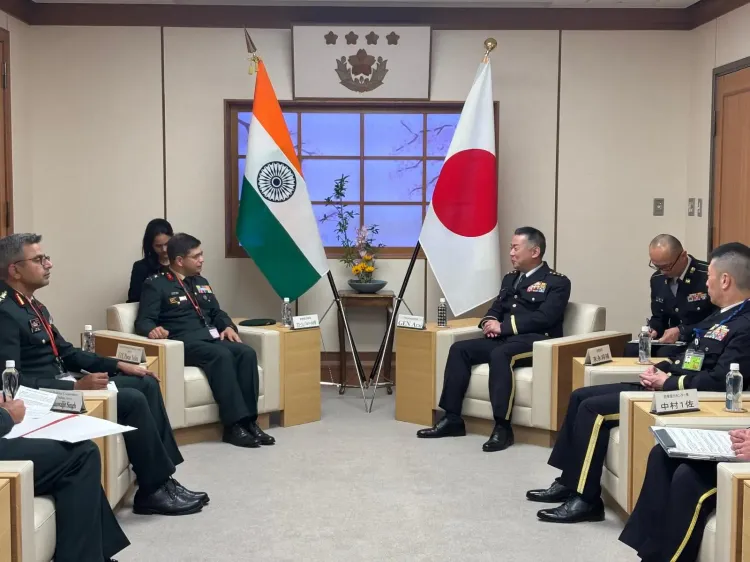
The 8th India–Japan Army-to-Army Staff Talks (AAST) are being held from April 22–24, 2025 in Japan , covering defence cooperation and future bilateral interactions.
Both nations reaffirmed commitment to a free, open, and inclusive Indo-Pacific , a central pillar of the India-Japan Special Strategic and Global Partnership .
The Indian delegation called on the Chief of Staff of the Japan Ground Self-Defence Force during the talks.
On April 10 , EAM S.
Jaishankar and FM Toshimitsu Motegi discussed West Asia developments and maritime security in the Strait of Hormuz .
On March 6 , Foreign Secretary Vikram Misri met Sadamasa Oue , Special Advisor to Japan's PM, to discuss defence technology and economic security .
The sustained multi-level India-Japan engagement reflects deepening strategic alignment amid rising Indo-Pacific and West Asian geopolitical tensions.
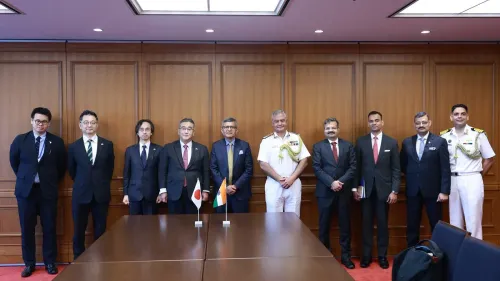
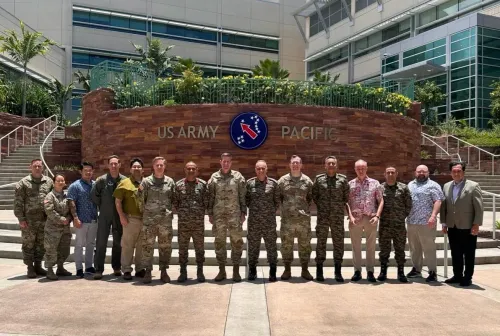
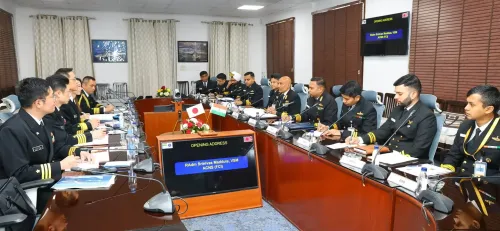
Tokyo, April 23: The 8th India–Japan Army-to-Army Staff Talks (AAST), held from April 22–24, 2025 in Japan, have reinforced both nations' shared commitment to a free, open, and inclusive Indo-Pacific. Senior military representatives from both sides engaged in structured dialogue, reviewing existing defence cooperation frameworks and charting a course for future bilateral engagements across multiple strategic domains.
Key Outcomes of the 8th Army-to-Army Staff Talks
The Indian Army's Additional Directorate General of Public Information (ADGPI) confirmed that both delegations held a "productive exchange of views" during the talks. The two sides reviewed ongoing defence cooperation measures and outlined future interactions across diverse operational and strategic domains.
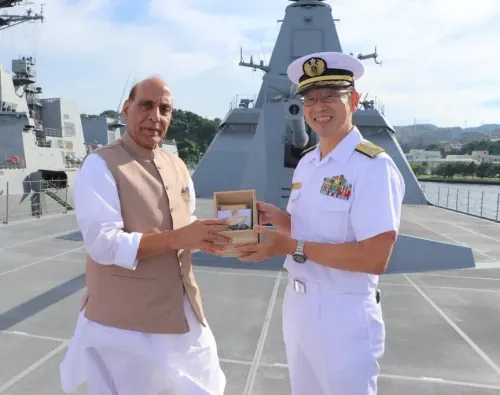
The Indian delegation also called on the Chief of Staff of the Japan Ground Self-Defence Force (JGSDF), signalling the high-level nature of the engagement. Both nations formally reaffirmed their commitment to a free, open, and inclusive Indo-Pacific — a cornerstone principle of the India-Japan Special Strategic and Global Partnership.
Diplomatic Momentum: Jaishankar-Motegi Engagements
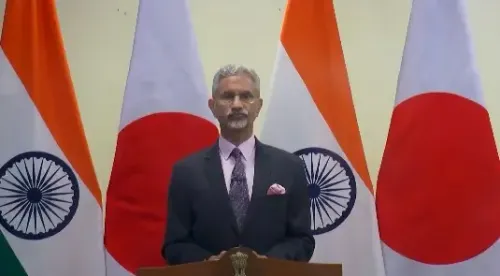
The military-level talks build upon sustained diplomatic engagement between the two countries. On April 10, External Affairs Minister (EAM) S. Jaishankar held a telephonic conversation with his Japanese counterpart Foreign Minister Toshimitsu Motegi, focusing on developments in West Asia, including international shipping through the Strait of Hormuz.
EAM Jaishankar noted: "Good to speak with FM Toshimitsu Motegi of Japan. Discussed developments in West Asia, including international shipping through the Strait of Hormuz. Appreciate his condolences for the Indian lives lost in the conflict."
The Strait of Hormuz is a strategically critical maritime chokepoint connecting the Persian Gulf to the Arabian Sea. It serves as the primary transit route for a significant portion of the world's seaborne crude oil, making any disruption a serious concern for energy-dependent economies like India and Japan.
G7 Sidelines and Foreign Secretary-Level Talks
Last month, EAM Jaishankar met FM Motegi on the sidelines of the G7 Foreign Ministers Meeting in France, further deepening the bilateral diplomatic cadence. Jaishankar described the meeting as a warm engagement with a trusted counterpart.
On March 6, Foreign Secretary Vikram Misri met Sadamasa Oue, Special Advisor to Japan's Prime Minister, to discuss strengthening the defence technology and economic security pillars of the bilateral partnership. MEA spokesperson Randhir Jaiswal confirmed the meeting produced a "productive exchange of views" on these critical strategic dimensions.
Strategic Significance: Why This Matters
The regularity and breadth of India-Japan engagements — spanning army staff talks, foreign minister calls, G7 sideline meetings, and foreign secretary-level discussions — underscore a deepening strategic alignment between Asia's two largest democracies. Both nations share concerns over regional stability, maritime security in the Indo-Pacific, and supply chain resilience.
Notably, this military engagement comes against the backdrop of rising tensions in the South China Sea and ongoing instability in West Asia, both of which directly affect energy security and trade routes critical to India and Japan. The emphasis on a "free and open Indo-Pacific" is widely understood as a coordinated response to assertive Chinese maritime posturing in the region.
The India-Japan Special Strategic and Global Partnership, elevated to its current status in 2014, has progressively expanded from economic ties to encompass deep defence-industrial cooperation, including joint exercises, technology transfer discussions, and equipment co-development initiatives.
What to Watch Next
With the 8th AAST concluding on April 24, both sides are expected to formalize interaction calendars for joint training exercises and defence technology exchanges in the coming months. Observers will also watch for any joint statement or structured outcome document that could signal deeper operational cooperation between the Indian Army and the Japan Ground Self-Defence Force. As geopolitical pressures intensify across the Indo-Pacific, the India-Japan defence axis is poised to become an increasingly central pillar of regional security architecture.
Point of View
Ministerial calls, G7 sidelines, and foreign secretary meetings — all within weeks of each other — is not coincidental. It reflects a deliberate strategic choreography by both New Delhi and Tokyo to project a united front in the Indo-Pacific at a time when China's maritime assertiveness and West Asian instability are simultaneously threatening regional order. What mainstream coverage misses is the economic dimension: both India and Japan are heavily energy-import dependent, and their shared anxiety over Strait of Hormuz disruptions is as much about fuel prices and inflation as it is about geopolitics. The India-Japan axis is quietly becoming one of the most consequential bilateral relationships in Asia — and it deserves far more analytical attention than it currently receives.
NationPress
16 Sept 2026
Frequently Asked Questions
What were the outcomes of the 8th India-Japan Army-to-Army Staff Talks?
The 8th India-Japan Army-to-Army Staff Talks, held from April 22–24 in Japan, resulted in both sides reviewing ongoing defence cooperation measures and outlining future interactions across diverse domains. Both nations reaffirmed their commitment to a free, open, and inclusive Indo-Pacific, and the Indian delegation called on the Chief of Staff of the Japan Ground Self-Defence Force.
Why did EAM Jaishankar and Japan's FM Motegi discuss the Strait of Hormuz?
EAM Jaishankar and FM Motegi discussed the Strait of Hormuz because it is a critical maritime chokepoint for global oil supplies, and disruptions there directly affect energy-importing nations like India and Japan. The conversation on April 10 also covered broader developments in West Asia amid ongoing regional conflict.
What is the India-Japan Special Strategic and Global Partnership?
The India-Japan Special Strategic and Global Partnership is the highest framework of bilateral relations between the two countries, elevated to this status in 2014. It encompasses cooperation across defence, technology, economic security, and strategic alignment on issues like Indo-Pacific stability.
How often do India and Japan hold army-to-army staff talks?
India and Japan hold Army-to-Army Staff Talks (AAST) periodically, with the most recent being the 8th edition held in April 2025 in Japan. These talks are part of a broader institutional framework of defence dialogue between the two nations.
What is India and Japan's shared position on the Indo-Pacific?
Both India and Japan are committed to a free, open, and inclusive Indo-Pacific, a principle that underpins their strategic partnership. This shared stance is widely seen as a coordinated response to assertive maritime behaviour by China in the South China Sea and broader regional waters.