Historic Carbon Market Pact: India & South Korea Sign Article 6.2 Deal

Synopsis
India and South Korea signed a historic Article 6.2 Paris Agreement carbon market deal during the South Korean President's India visit, enabling cross-border ITMO trading. With India targeting net-zero by 2070 and South Korea by 2050, the pact unlocks billions in climate finance and positions India as a global carbon credit powerhouse.
Key Takeaways
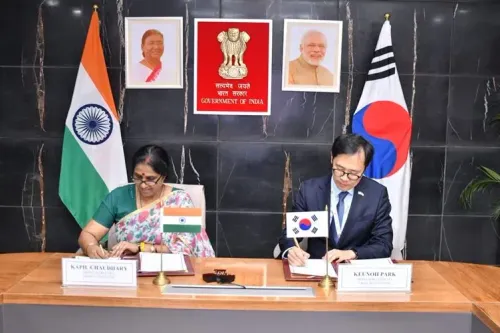
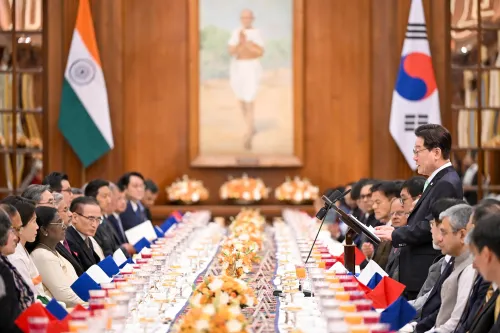
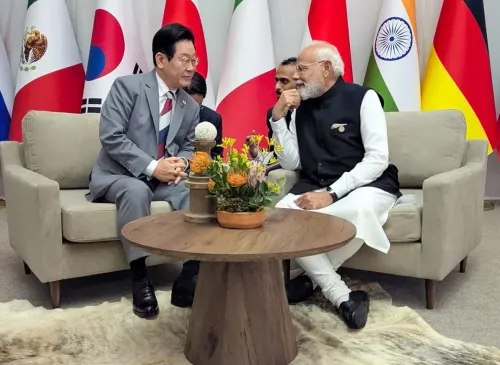
India and South Korea signed a bilateral carbon market agreement under Article 6.2 of the Paris Agreement during the South Korean President's state visit to New Delhi in April 2025 .
The deal enables cross-border trading of Internationally Transferred Mitigation Outcomes (ITMOs) , where each unit equals one tonne of CO2 equivalent reduced or removed.
India targets net-zero emissions by 2070 while South Korea targets 2050 , a complementary gap that makes bilateral carbon investment financially viable for both sides.
The pact includes mandatory corresponding adjustments to prevent double-counting of emission reductions, ensuring market integrity.
The agreement is part of a broader package of over a dozen bilateral pacts covering clean energy, trade, and industrial collaboration signed during the summit.
India's domestic Carbon Credit Trading Scheme (CCTS) , notified in 2023 , provides the regulatory backbone that makes international carbon linkages credible for foreign investors.
New Delhi, April 24: India and South Korea have signed a landmark bilateral agreement under Article 6.2 of the Paris Agreement, officially launching a framework for cross-border carbon credit trading between the two major Asian economies. The deal was finalised during the South Korean President's state visit to India and marks a pivotal moment in climate diplomacy for both nations. According to a Carbon Credits report, the pact is among more than a dozen agreements signed covering clean energy, trade, and industrial cooperation.
What the India-South Korea Carbon Market Deal Covers
At the heart of the agreement is the Article 6.2 framework, which enables participating countries to jointly implement emissions reduction projects and exchange carbon credits across borders. These tradeable units, formally called Internationally Transferred Mitigation Outcomes (ITMOs), each represent one tonne of carbon dioxide equivalent reduced or removed from the atmosphere.
The mechanism allows one country to invest in emissions-cutting projects in another and apply those verified reductions toward its own Nationally Determined Contributions (NDCs). This creates a financially efficient pathway for both nations to accelerate decarbonisation without bearing the full domestic cost.
A critical safeguard built into the system is the requirement for corresponding adjustments, an accounting rule that ensures the same emission reduction is not counted by two countries simultaneously, preserving the environmental integrity of the market.
Why This Agreement Matters Strategically
The timing of this deal is significant. Global carbon markets under Article 6 gained formal rules only at COP29 in Baku in November 2024, after years of stalled negotiations. With the rulebook now in place, bilateral agreements like this India-South Korea pact are among the first to operationalise the new framework at scale.
India has committed to achieving net-zero emissions by 2070, while South Korea targets net-zero by 2050. This 20-year gap in timelines creates a strategically complementary dynamic. South Korea, which faces high domestic abatement costs and limited land for large-scale renewable projects, can channel climate finance into cost-effective mitigation projects in India.
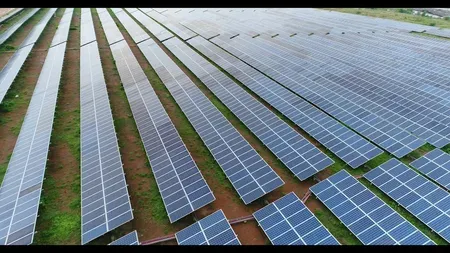
India, in turn, gains critical investment to accelerate its clean energy transition, particularly in solar, green hydrogen, and energy efficiency sectors. This is not merely an environmental agreement but a climate finance instrument with direct implications for India's green industrialisation and South Korea's corporate net-zero compliance obligations.
Global Carbon Market Context
The India-South Korea deal arrives as international carbon markets are experiencing rapid expansion. Dozens of bilateral Article 6.2 agreements have already been signed globally, notably between Switzerland and Ghana, Japan and multiple Southeast Asian nations under its Joint Crediting Mechanism, and Singapore with several partners.
Notably, India's domestic Carbon Credit Trading Scheme (CCTS) was formally notified by the Ministry of Environment in 2023, laying the regulatory groundwork that makes international linkages like this pact more credible and bankable for foreign investors.
Critics of carbon markets argue that such mechanisms can allow wealthy nations to delay domestic emissions cuts by outsourcing reductions. However, proponents counter that Article 6.2's corresponding adjustment rules make this generation of carbon markets fundamentally more robust than the discredited Clean Development Mechanism (CDM) of the Kyoto Protocol era.
Economic and Diplomatic Implications for India
Beyond the climate dimension, this agreement deepens the India-South Korea Special Strategic Partnership, which has been expanding across semiconductors, defence, and manufacturing. South Korean conglomerates including Samsung, Hyundai, and LG are already deeply embedded in India's industrial ecosystem.
The carbon market pact adds a new layer where South Korean firms with aggressive ESG commitments can source verified Indian carbon credits to meet investor and regulatory expectations back home. This could unlock significant private capital flows into Indian renewable energy and forestry projects.
For India, the ability to monetise its emissions reductions through internationally recognised ITMOs could generate billions of dollars in climate finance over the coming decade, funds that can be channelled into grid infrastructure, electric mobility, and rural clean energy access.
What Happens Next
The agreement now enters an implementation phase where both governments will need to establish project-level protocols, registry linkages, and verification standards to operationalise ITMO transfers. Pilot projects are expected to be identified in sectors such as solar energy, energy efficiency, and sustainable land use.
As more countries formalise Article 6.2 partnerships following COP29's rulebook clarity, India's growing portfolio of bilateral carbon agreements positions it as a central node in the emerging global carbon market architecture. The next major milestone will be the operationalisation of the Article 6.4 centralised crediting mechanism under UN oversight, expected to launch in phases through 2025 and 2026.
Point of View
India has been cast as a passive recipient in global climate negotiations. This deal flips the script, positioning New Delhi as a sovereign supplier of verified emissions reductions in a market that could be worth trillions by 2035. The critical question the mainstream narrative ignores is whether India's nascent domestic carbon infrastructure can scale fast enough to absorb international demand without integrity risks.
NationPress
19 Sept 2026
Frequently Asked Questions
What is the India-South Korea Article 6.2 carbon market agreement?
India and South Korea signed a bilateral agreement under Article 6.2 of the Paris Agreement, enabling cross-border carbon credit trading between the two nations. The deal allows both countries to jointly implement emissions reduction projects and exchange Internationally Transferred Mitigation Outcomes (ITMOs) to meet their respective climate targets.
What are ITMOs and how do they work in this deal?
ITMOs or Internationally Transferred Mitigation Outcomes are carbon credits traded between countries under the Paris Agreement's Article 6.2 framework. Each ITMO represents one tonne of CO2 equivalent reduced or removed, and the India-South Korea deal allows these units to be exchanged so that reductions achieved in one country can count toward the other's national climate goals.
Why is the India-South Korea carbon deal significant globally?
The deal is among the first major bilateral carbon market agreements operationalised after COP29 in November 2024 finalised the Article 6 rulebook. It signals India's emergence as a key player in international carbon markets and could serve as a template for similar agreements with other economies.
What are India's and South Korea's net-zero targets?
India has pledged to achieve net-zero carbon emissions by 2070, while South Korea targets net-zero by 2050. This 20-year difference creates a complementary dynamic where South Korea can invest in India's cost-effective clean energy projects to meet its earlier deadline.
How does the corresponding adjustment rule protect the carbon market?
The corresponding adjustment requirement ensures that when an emission reduction is transferred from one country to another as an ITMO, it is subtracted from the seller country's national accounts and added only to the buyer's. This prevents the same tonne of CO2 reduction from being claimed by two countries simultaneously, maintaining market integrity.