Nuclear Energy and Natural Gas: Pillars of India-US Energy Partnership, Says Expert

Synopsis
Explore how nuclear power and natural gas are set to transform India-US energy relations. Discover the expert insights on opportunities, challenges, and the importance of diversification in energy security.
Key Takeaways
Nuclear power is essential for advancing India-US energy collaboration.
Cost reduction in nuclear components can enhance bilateral cooperation.
Policy reforms in India can make natural gas more accessible.
Diversification is crucial for India's energy security strategy.
Indian Americans are becoming increasingly influential in US politics.
Washington, April 21 (NationPress) The future of India-US energy collaboration may heavily rely on nuclear power and natural gas, as both nations aim to reduce expenses, diversify supply chains, and enhance long-term energy security, as stated by an expert from the United States.
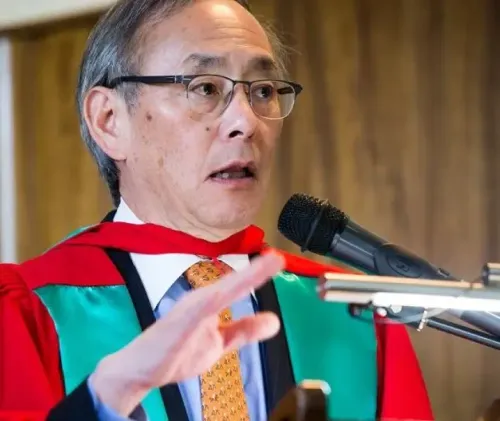
“Numerous opportunities exist at this moment,” remarked Dinsha Mistree, affiliated with the Hoover Institution at the esteemed Stanford University, emphasizing the importance of nuclear energy for future partnerships between India and the United States.
He pointed out that the significant civil nuclear agreement of 2008 established a basis for collaboration but “was never completely realized due to various liability laws enacted in India shortly afterward.” He acknowledged recent legislative updates, stating, “there’s now considerable potential for the US and India to closely collaborate on nuclear.”
Mistree observed a shift in the US perspective. “Another critical factor… is that the US also needs to expand its own energy projects,” he added, noting that nuclear power enjoys widespread bipartisan backing in Washington. He identified cost as a major hurdle and suggested that India could play a pivotal role. “India manufactures nuclear component parts… This could significantly lower costs compared to domestic production in the US or imports from other nations.”
However, he warned that progress remains cautious. “It’s still very early stages… I see many industry players observing and waiting to see what develops,” he stated, mentioning that Indian companies have yet to convincingly demonstrate that the US market would be viable for them.
Regarding natural gas, Mistree predicted an increase in bilateral trade. “I believe it will grow even more. I hope for greater expansion,” he said, highlighting that the US is “one of the world’s top producers.”
He pointed out existing structural challenges in India, including “taxation and distribution,” but noted that these could be resolved through policy reforms. Modifications to the tax structure, such as potential GST reforms, could “lower gas prices,” making India “a significantly more appealing market” for US suppliers.
Mistree emphasized the necessity of diversification. “If you're depending on just one or two nations… the logical approach for India is undoubtedly to broaden its supply chains,” he stated, adding that incorporating the US is “not merely advantageous… it’s essential.”
He also mentioned the environmental advantages of gas. “Gas is a major reason we have clean air in the US,” he said, referring to the transition from coal. He explained that gas complements renewable energy. “With gas, you can easily adjust supply based on demand… it seamlessly supports the existing renewable energy initiatives that India has been pursuing.”
Reflecting on recent geopolitical shifts, he described the present situation as a pivotal moment for India. “This represents India’s first significant energy crisis,” he noted, urging policymakers to adopt a more structured energy strategy. “Consider energy security more profoundly, develop a clear energy security strategy, diversify partnerships, and seek new resources.”
He added that US experiences could serve as a valuable lesson. “American policymakers have been contemplating energy security for decades… we possess more energy than we have ever had,” he observed, indicating a “natural compatibility” for collaboration between the two nations.
Beyond energy, Mistree noted that US academic and policy institutions are increasingly recognizing India's emergence, though there are still disparities. At Stanford, he mentioned that India “hasn't received the same level of focus” as China, calling it “a genuine disappointment.” Nonetheless, he acknowledged that “visionary leaders… are very optimistic about India” and wish to place India-US relations “at the forefront” of long-term American strategy.
Regarding the Indian American community, Mistree portrayed its trajectory as “very promising,” noting that Indians are “the wealthiest national origin group in the United States.” He attributed this to integration and shared values. “It's not separate from us; it’s part of us,” he stated.
However, he cautioned that success brings new challenges. “With success… comes a level of envy,” he remarked, adding that perceptions of Indian Americans could affect how India is perceived in certain parts of the US.
He highlighted emerging concerns across the political spectrum. “This is increasingly a bipartisan issue of concern,” he mentioned, pointing to instances of policy backlash and negative sentiment.
Mistree emphasized the significance of Indian expertise in the US innovation ecosystem. “When considering America’s STEM and innovation pipeline… we seek the brightest minds… to continue coming here,” he said, cautioning that any feelings of exclusion could have lasting repercussions.
He also pointed out a growing reverse connection. “Approximately a million Americans… reside in India,” he noted, many of whom are children of H-1B visa holders, suggesting that this demographic could influence bilateral relations in the future.
On political involvement, he stated that Indian Americans are becoming increasingly proactive. “Indians are becoming more assertive… they won’t remain passive in discussions,” he expressed, linking this trend to rising representation in US public life and elections.
India is currently the world’s third-largest energy consumer and has been actively enhancing its energy portfolio to align growth with sustainability. Meanwhile, the US has established itself as a major exporter of liquefied natural gas and continues to invest in advanced nuclear technologies.
Point of View
This analysis underscores the critical importance of enhancing India-US energy ties through nuclear and natural gas initiatives, promoting mutual benefits and addressing global energy security challenges.
NationPress
16 Sept 2026
Frequently Asked Questions
What role does nuclear power play in India-US energy cooperation?
Nuclear power is viewed as a critical element for future collaboration, with the potential to significantly reduce costs and enhance energy security.
How can natural gas trade between India and the US increase?
Trade in natural gas is expected to grow as the US is a leading producer, and India can become a more attractive market with policy adjustments.
What are the challenges to India-US energy cooperation?
Key challenges include structural bottlenecks in India’s energy market, such as taxation and distribution issues, which can be mitigated through policy reforms.
Why is diversification important for India's energy security?
Diversification reduces dependency on a limited number of countries, enhancing resilience and stability in energy supply.
What impact does the Indian American community have on US-India relations?
The Indian American community, being the wealthiest ethnic group in the US, plays a vital role in strengthening ties between the two nations.