India-US Trust Deficit: Experts Call for Major Reset in 2025
Synopsis
At Washington's Hudson Institute, former US Deputy Secretary Kurt Campbell admitted India-US ties have caused a 'deep, profound hurt', while Ram Madhav warned of a 'big lack of mutual trust'. Experts say two decades of strategic partnership are now at risk — and a deliberate reset is urgently needed.
Key Takeaways
Ram Madhav warned of a "big lack of mutual trust" in India-US relations at the Hudson Institute's New India Conference on April 23, 2025 .
Former US Deputy Secretary of State Kurt Campbell said the bilateral strain has caused "a deep, profound hurt among Indian friends" , framing it as an emotional rupture beyond policy disagreement.
Elizabeth Threlkeld of the Stimson Centre identified a core perceptual problem: each side views the other's constraints as choices while treating its own as necessities.
India has shown flexibility on tariffs and energy imports and is committed to advancing a bilateral trade agreement despite domestic political pressures, according to Madhav.
Stalled initiatives including the India-Middle East-Europe Corridor (IMEC) and the I2U2 grouping need urgent re-engagement, experts said.
The India-US partnership has grown over two decades to encompass defence, trade exceeding $190 billion , and technology — making the current trust gap a high-stakes strategic concern.
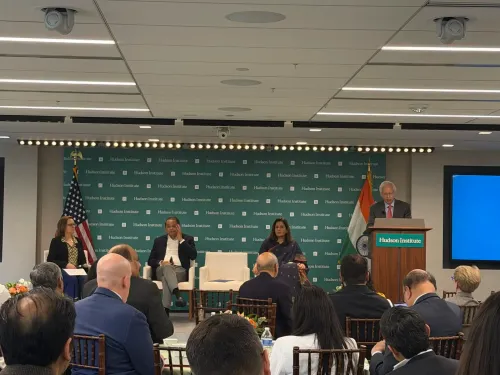
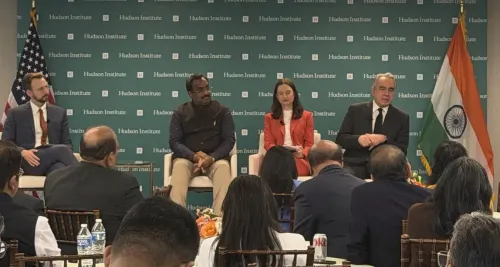
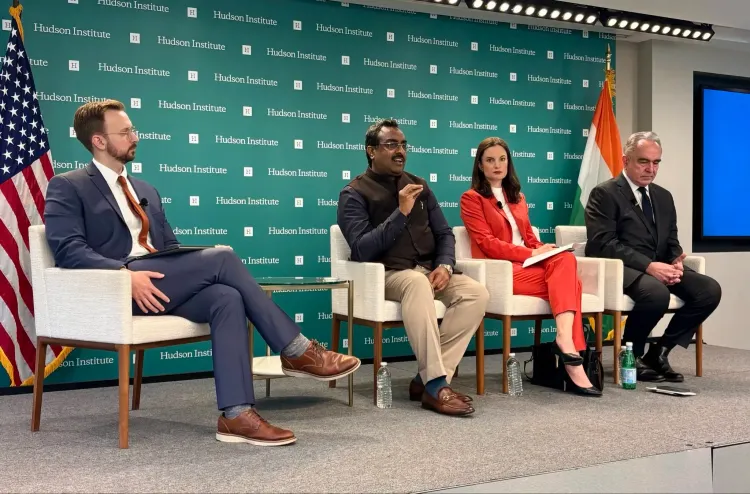
Washington, April 24: A growing trust deficit has emerged as the most critical challenge threatening India-US relations, with senior policymakers and strategic experts warning at the Hudson Institute's New India Conference on April 23, 2025 that the bilateral partnership urgently needs a reset. Despite continued engagement across defence, trade, and technology, both nations are navigating a difficult phase marked by misaligned expectations and policy uncertainty.
Trust Deficit at the Core of India-US Tensions
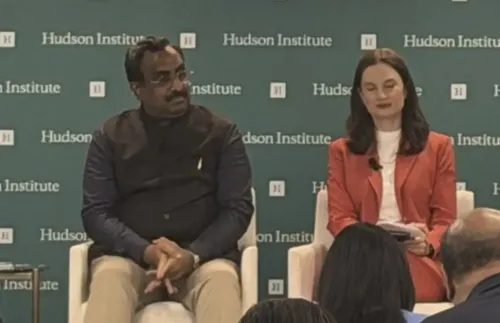
Ram Madhav, a prominent Indian political thinker and former BJP national general secretary, delivered one of the conference's most candid assessments. "There is a big lack of mutual trust today. We need to build that trust once again," he said, signalling a sharp deterioration from the period of close political alignment seen during the 2016–2023 era of strategic convergence.
Madhav's remarks reflect a broader anxiety within Indian policy circles — that the relationship, once projected as the defining geopolitical partnership of the 21st century, has entered a phase of structural friction that cannot be resolved through diplomatic optics alone.
Experts Diagnose the Problem: Misread Constraints and Emotional Fractures
Elizabeth Threlkeld of the Stimson Centre offered a precise diagnosis of the trust gap. "Each side has a tendency to see the others' limits as choices, but their own limits as necessities," she said, arguing that this asymmetry of perception has consistently undermined productive engagement. She called for a candid reassessment focused on "genuine mutual interests" and practical outcomes that reduce friction in cooperation.
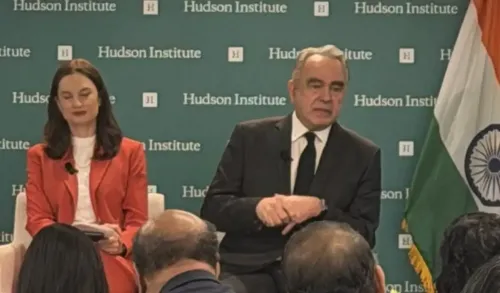
Kurt Campbell, former US Deputy Secretary of State and one of Washington's most influential architects of the Indo-Pacific strategy, went further — framing the current strain as not merely a policy disagreement but an emotional rupture. "This has caused a deep hurt… a deep, profound hurt among Indian friends," he said, acknowledging that political and emotional factors are now actively shaping bilateral perceptions on both sides.
Campbell's remarks carry significant weight. As a key figure behind the Quad revival and the US pivot to Asia, his candid admission of emotional damage in the relationship signals that the strain is being felt at the highest levels of the American foreign policy establishment.
Two Decades of Progress Now at Risk
Campbell noted that India-US ties had expanded dramatically over the past 20 years — spanning defence co-production, technology transfers, space cooperation, and a $190 billion-plus bilateral trade relationship — with widespread expectations that it would become the "dominant relationship" of the century. That historical investment makes the current phase all the more consequential and the stakes of failure all the higher.
The relationship's arc — from the 2005 civil nuclear deal under Prime Minister Manmohan Singh and President George W. Bush, through the DTTI (Defence Technology and Trade Initiative), BECA, LEMOA, and COMCASA foundational agreements — represents decades of painstaking trust-building. Analysts argue that allowing this foundation to erode over unresolved friction points would be a strategic miscalculation for both nations.
Key Friction Points: Trade, Defence, and Bureaucratic Bottlenecks
The conference highlighted several persistent pressure points undermining the partnership. Trade disputes — including tariff disagreements and market access barriers — remain unresolved, even as both nations negotiate a potential bilateral trade agreement. Defence cooperation, while advancing on paper, has been slowed by bureaucratic processes and differing political systems that complicate timely decision-making.
Madhav confirmed that India has shown flexibility on contentious issues, including tariffs and energy imports, and is committed to moving forward on a trade deal despite domestic political pressures. "That wouldn't discourage us… the government will go ahead," he said, signalling New Delhi's intent to prioritise the relationship even when it is politically inconvenient at home.
He also underscored the need to re-energise stalled multilateral initiatives, specifically the India-Middle East-Europe Corridor (IMEC) and the I2U2 grouping (India, Israel, UAE, and US), both of which have faced uncertainty in recent months amid regional geopolitical turbulence, particularly the ongoing Gaza conflict and its ripple effects on the Middle East corridor's feasibility.
What Comes Next: Sustained Political Will Required
Speakers at the conference broadly agreed that rebuilding the India-US partnership will require sustained, high-level political attention — not just bureaucratic engagement — and a renewed alignment on shared strategic priorities. The challenge is compounded by simultaneous global crises, from the Russia-Ukraine war to China's assertiveness in the Indo-Pacific, which are pulling both nations' attention in multiple directions.
Notably, India's continued engagement with Russia on energy and defence — including the purchase of discounted Russian crude oil and the ongoing S-400 missile system deployment — remains a point of quiet tension with Washington, even if rarely addressed publicly. Critics in Washington argue these choices reflect India's strategic autonomy, while New Delhi frames them as necessities driven by energy security and existing defence commitments.
The New India Conference, held on April 23, 2025, brought together top policymakers, former officials, and strategic thinkers to examine India's global trajectory. As both nations head into a critical period — with US elections in 2026 and India's own evolving domestic political landscape — the window for recalibrating the relationship may be narrower than either side acknowledges. The next major test will likely come during high-level bilateral meetings expected later in 2025, where concrete deliverables on trade and defence will be watched closely.
Point of View
Profound hurt' in the India-US relationship, it signals that the strain has moved well beyond routine diplomatic friction into something more structurally concerning. What the mainstream narrative misses is the compounding effect: India's Russia energy ties, the S-400 standoff, and now stalled trade talks are not isolated irritants but symptoms of a deeper strategic divergence that neither side has been willing to confront directly. Ram Madhav's acknowledgment of a 'big lack of mutual trust' is perhaps the most honest public statement from the Indian side in years — and it should serve as a wake-up call that goodwill alone cannot substitute for concrete, delivered outcomes. The real risk is that both nations, distracted by domestic politics and global crises, allow the relationship to drift into managed irrelevance precisely when Indo-Pacific stability demands the opposite.
NationPress
18 Sept 2026
Frequently Asked Questions
Why is the India-US relationship facing a trust deficit in 2025?
The India-US trust deficit in 2025 stems from misaligned expectations, unresolved trade disputes, India's continued ties with Russia, and stalled initiatives like IMEC and I2U2. Experts at the Hudson Institute's New India Conference said both sides tend to misread each other's constraints as deliberate choices rather than genuine limitations.
What did Kurt Campbell say about India-US relations at the Hudson Institute?
Former US Deputy Secretary of State Kurt Campbell said the strain in India-US ties has caused 'a deep, profound hurt among Indian friends', going beyond policy disagreements to emotional and political fractures. He acknowledged that the relationship was expected to become the dominant partnership of the century, making the current phase especially consequential.
What is the Hudson Institute's New India Conference?
The New India Conference is a policy forum held by the Washington-based Hudson Institute, bringing together policymakers, former officials, and strategic experts to examine India's global trajectory and the future of US-India relations. The 2025 edition was held on April 23 in Washington.
Is India still pursuing a trade deal with the United States despite tensions?
Yes, India is actively moving ahead with a potential bilateral trade agreement with the US despite domestic political pressures, according to Ram Madhav. India has shown flexibility on tariffs and energy imports, with Madhav stating, 'The government will go ahead' with the trade negotiations.
What are the key issues slowing down India-US cooperation?
Key friction points include unresolved trade and tariff disputes, delays in defence cooperation due to bureaucratic processes, uncertainty around the India-Middle East-Europe Corridor (IMEC), and India's ongoing defence and energy ties with Russia. Experts say differing political systems and policy coordination gaps further slow momentum.