Brahmaputra dam: India's Yarlung Tsangpo strategy reveals strategic autonomy
Synopsis
India's response to China's Yarlung Tsangpo mega-dam is neither capitulation nor an engineering arms race — it is a studied exercise in strategic autonomy. A Taipei Times analysis argues that New Delhi's dual-track water governance approach, combining basin projects in Arunachal Pradesh with institutional cooperation, reflects the same logic that makes India's foreign policy simultaneously consistent and difficult to categorise.
Key Takeaways
China's Lower Yarlung Tsangpo Hydropower Project , launched last year, has placed the Brahmaputra River at the centre of Sino-Indian strategic competition .
India has not pursued a 'dam for dam' response; instead, it has adopted a dual-track approach combining strategic water governance with institutional cooperation .
India has advanced multiple basin development projects in Arunachal Pradesh to regulate flow, manage floods, and build downstream resilience.
A Taipei Times report argues the Yarlung Tsangpo approach is a 'useful illustration' of the strategic thinking that also shapes India's positions on the Russia-Ukraine war , the India-Pakistan conflict , and US tariff engagement.
India's strategic autonomy, the report argues, is about retaining the ability to define national interests independently — not rejecting power politics.
India's response to China's Lower Yarlung Tsangpo Hydropower Project on the upper course of the Brahmaputra River illustrates how New Delhi pursues strategic autonomy rather than reactive escalation, according to an analysis published in the Taipei Times. The report argues that India's calibrated approach to this transboundary river offers a window into the strategic logic underpinning its broader foreign policy.
The Dam That Shifted the Strategic Calculus
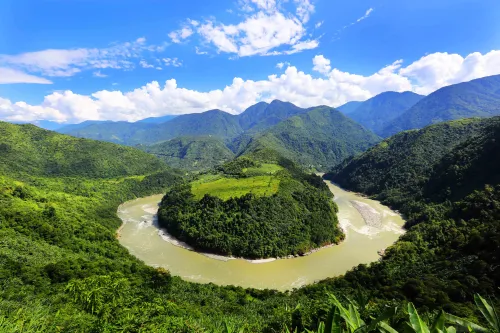
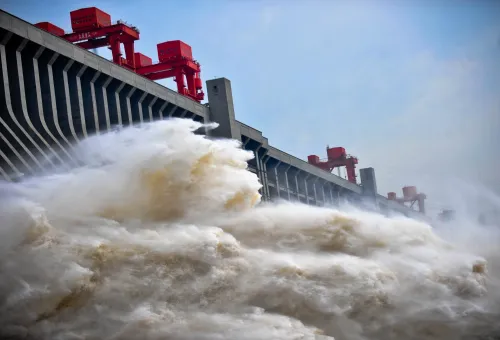
China's launch of construction on the Lower Yarlung Tsangpo Hydropower Project last year brought the river — known as the Brahmaputra once it enters Indian territory — to the centre of Sino-Indian strategic competition. The project, located on the upper course of the river in Tibet, has significant downstream implications for Arunachal Pradesh and Assam, raising concerns about water flow regulation, flood risk, and long-term resource security.
India's Dual-Track Water Governance Approach
According to the report, India has not responded with a 'dam for dam' engineering race. Instead, it has pursued two parallel water governance tracks: one that treats water resources as an extension of strategic capability, and another that emphasises institutional cooperation as a tool for managing uncertainty. The Taipei Times analysis noted that India has advanced a series of basin development projects in Arunachal Pradesh aimed at regulating river flow, improving flood management, and building resilience against external shocks.
What Strategic Autonomy Means in Practice
'India's approach to the Yarlung Tsangpo is not merely a passive response to China. Rather, it reflects how India seeks to exercise strategic autonomy by responding to a changing strategic environment while redefining its regional role,' the report stated. It drew a distinction between rejecting power politics and retaining the flexibility to define national interests independently. 'Whether during the Cold War or today's US-China strategic competition, India's pursuit of strategic autonomy does not imply a rejection of power politics. Rather, it is about retaining the ability to define its own national interests and choose its own development path amid major-power competition,' the report noted.
A Pattern Across Multiple Theatres
The report contextualised India's Brahmaputra posture within a broader pattern of strategic ambiguity. It pointed to India's stance during the Russia-Ukraine war, its security calculations during the India-Pakistan conflict, and its engagement with the United States amid tariff pressures as events that have each generated divergent narratives about Indian foreign policy. 'The more such events unfold, the harder India becomes to understand, because events can describe India's behaviour, but cannot fully explain the strategic thinking that underpins it,' the analysis observed, adding that the Yarlung Tsangpo offers a 'useful illustration of this strategic thinking at the regional level.'
What to Watch
With construction on China's hydropower project ongoing, the downstream implications for India will intensify in the coming years. How New Delhi balances basin development in Arunachal Pradesh with diplomatic engagement on transboundary water-sharing norms will be a key indicator of whether India's dual-track approach can hold — and whether strategic autonomy on water translates into durable leverage.
Point of View
And what mainstream coverage often misses, is that India's strategic ambiguity is not confusion — it is policy. The harder question is whether dual-track water governance can actually deliver downstream security if China operationalises flow control as coercive leverage, something no amount of institutional cooperation has historically prevented when a upstream power chooses to act unilaterally.
NationPress
24 Oct 2026
Frequently Asked Questions
What is the Lower Yarlung Tsangpo Hydropower Project and why does it concern India?
The Lower Yarlung Tsangpo Hydropower Project is a large dam China began constructing last year on the upper course of the Brahmaputra River in Tibet. Because the river flows downstream into Arunachal Pradesh and Assam, India is concerned about China's potential ability to control water flow, increase flood risk, or restrict water availability in the basin.
How has India responded to China's dam on the Yarlung Tsangpo?
India has not pursued a direct 'dam for dam' engineering race. Instead, it has followed a dual-track approach: developing basin projects in Arunachal Pradesh to regulate flow and improve flood resilience, while also emphasising institutional cooperation frameworks to manage transboundary water uncertainty.
What does 'strategic autonomy' mean in the context of India's Brahmaputra policy?
According to the Taipei Times report, strategic autonomy here means India retaining the ability to define its own national interests and development path without being locked into either direct confrontation with China or full dependence on multilateral frameworks. It is an independent posture, not a neutral one.
Why is the Yarlung Tsangpo seen as an illustration of India's broader foreign policy?
The report argues that India's behaviour on the Yarlung Tsangpo mirrors its approach in other strategic theatres — the Russia-Ukraine war, the India-Pakistan conflict, and US tariff negotiations — where New Delhi has consistently avoided being fully aligned with any single power bloc while advancing its own defined interests.
Which Indian region is most directly affected by developments on the Yarlung Tsangpo?
Arunachal Pradesh and Assam are the most directly affected regions, as the Yarlung Tsangpo enters India through Arunachal Pradesh before flowing through Assam as the Brahmaputra. India has focused its basin development and flood management projects primarily in Arunachal Pradesh.