Kautilya Economic Conclave 2026: Global experts back India as top investment hub
Synopsis
At the Kautilya Economic Conclave 2026, economists from Sweden, New Zealand, Japan, and Brazil collectively endorsed India as a standout investment destination — pointing to post-pandemic growth momentum, infrastructure expansion, and rising global credibility. The consensus is notable given how sharply the global economic backdrop has darkened around it.
Key Takeaways
Global economists at the Kautilya Economic Conclave 2026 in New Delhi on 4 October 2026 endorsed India as an attractive investment destination.
Swedish economist Erik Berglof cited India's strong post-pandemic growth momentum and impressive economic trajectory.
Juliano Assunção of the Climate Policy Initiative said climate change requires international cooperation, with India and Brazil playing a key role in global solutions.
Kazuto Suzuki of Japan's Institute of Geoeconomics highlighted the growing convergence of economics and geopolitics in shaping investment decisions.
The three-day conclave addressed geopolitical tensions, trade disruptions, energy security, and the shifting global economic order.
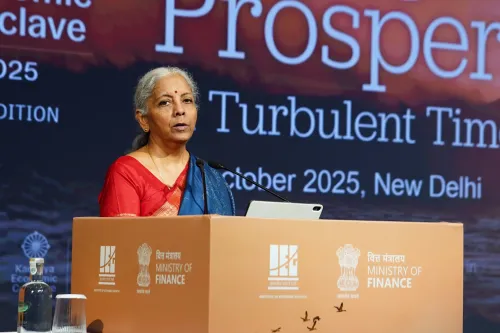
Global economists and policy experts on Sunday, 4 October 2026, described India as an increasingly attractive destination for international investment, citing the country's robust growth outlook, rapidly expanding infrastructure, and rising global credibility. The assessments came on the sidelines of the Kautilya Economic Conclave 2026 in New Delhi, where economists and policymakers from across the world gathered to address the most pressing challenges confronting the global economy.
What the Conclave Covered
The three-day conclave brought together researchers, economists, and senior policymakers to deliberate on a wide range of issues, including geopolitical tensions, trade disruptions, energy security, climate risks, and the shifting contours of the international economic order. Experts noted that the event has grown considerably in stature and reach since its inception.
Swedish economist Erik Berglof observed that the quality of engagement and the breadth of global participation at the conclave had improved markedly over the years, with this year's edition drawing delegates from a larger number of countries than before.
India's Growth Story in Focus
'India's growth prospects are strong and the country has achieved impressive economic momentum since the Covid-19 pandemic,' Berglof said. He added that in the current environment of heightened global uncertainty, discussions on strengthening economic resilience were particularly timely, as nations grapple with vulnerabilities across energy supplies, trade flows, and global supply chains.
Berglof, however, flagged a balancing act facing policymakers: while governments have moved to shield households and businesses from the fallout of global disruptions, sustained fiscal support risks straining public finances. Maintaining economic momentum while managing those fiscal pressures, he said, will be a defining challenge going forward.
Climate Risk and the Case for Cooperation
Juliano Assunção, executive director of the Brazil-based Climate Policy Initiative, identified climate change as one of the most consequential shared risks in the global economy today. 'Climate change is not an issue for any single country and addressing it will require international cooperation,' he said, adding that India and Brazil could serve a dual role — as countries directly affected by climate change and as active contributors to the global solution.
Asia-Pacific Dialogue and Geoeconomics
New Zealand economist Prof John Gibson described the Kautilya Economic Conclave as an increasingly important platform for dialogue between academics and decision-makers, with conversations extending well beyond India to broader developments across the Asia-Pacific region and the wider global economy.
Kazuto Suzuki, director of Japan's Institute of Geoeconomics, highlighted the deepening overlap between economics, geopolitics, and geoeconomics in shaping investment and business decisions globally. His remarks reflect a growing consensus among experts that purely economic frameworks are insufficient to understand modern capital flows and trade patterns.
As global investors look for stability amid widespread uncertainty, India's combination of demographic advantage, infrastructure momentum, and improving institutional credibility appears to be making a compelling case — one that experts at this year's conclave were willing to articulate on the record.
Point of View
Land acquisition bottlenecks, and contract enforcement — were not prominently aired in the reported remarks. India's infrastructure narrative is real, but the distance between 'attractive destination' and 'preferred destination' is still measured in execution. The climate framing by Assunção is also significant: it signals that India's ability to position itself as part of the green solution, not just a developing-world exception, is gaining traction internationally — and that reputational asset has hard economic value if managed well.
NationPress
4 Oct 2026
Frequently Asked Questions
What is the Kautilya Economic Conclave 2026?
The Kautilya Economic Conclave 2026 is a three-day international gathering in New Delhi that brings together economists, policymakers, and researchers from across the world to discuss global economic challenges, including geopolitical tensions, trade disruptions, energy security, and climate risks.
Why are global experts calling India an attractive investment destination?
Experts at the conclave pointed to India's strong post-pandemic growth momentum, expanding infrastructure, and rising international credibility as the primary factors making the country attractive to global investors. Swedish economist Erik Berglof specifically highlighted India's impressive economic trajectory since Covid-19.
What fiscal challenge did experts flag for India?
Erik Berglof cautioned that while government support to households and businesses has helped cushion global disruptions, prolonged fiscal stimulus risks straining public finances. Maintaining growth while managing fiscal pressures was identified as a key challenge for Indian policymakers.
What role do experts see India playing on climate change?
Juliano Assunção of the Climate Policy Initiative said India and Brazil can serve a dual role — as countries directly impacted by climate change and as active contributors to global solutions. He stressed that addressing climate risks requires sustained international cooperation.
How has the Kautilya Economic Conclave evolved over the years?
According to Erik Berglof, the conclave has improved significantly in quality and global participation since its inception, with the 2026 edition drawing delegates from a larger number of countries. New Zealand economist Prof John Gibson described it as an increasingly important platform for dialogue between researchers and policymakers.