India's Economic Outlook: Growth Strong but Energy Risks Persist
Synopsis
Despite a positive growth outlook for India, the IMF warns that escalating global energy prices may threaten economic stability. Discover the insights from Krishna Srinivasan and learn about the potential implications for India's economy.
Key Takeaways
India's growth outlook is positive , with a slight forecast increase.
Global energy price volatility poses risks to economic stability.
Prior tax reforms have contributed to robust domestic demand.
Remittance flows remain strong despite external conflicts.
Fiscal prudence is crucial for mitigating potential risks.
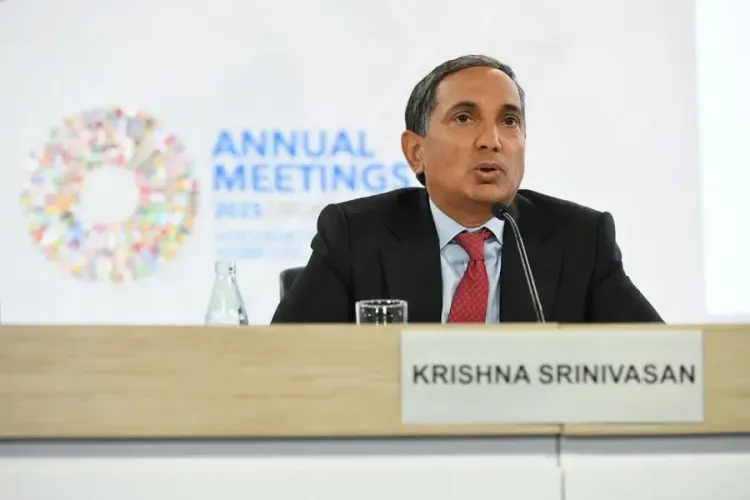
Washington, April 20 (NationPress) The future growth prospects of India appear to be quite robust; however, the International Monetary Fund (IMF) has cautioned that a continuous surge in global energy prices could introduce significant challenges to the economy.
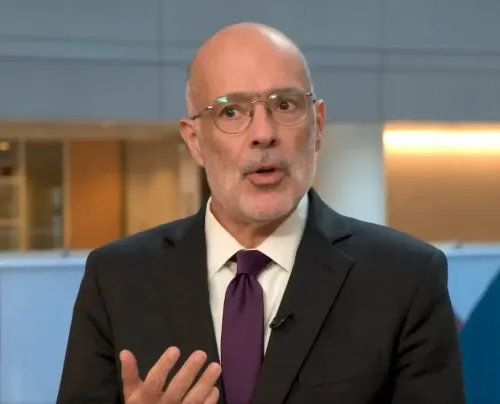
During a press briefing at the Spring Meetings, Krishna Srinivasan, who is the Director of the IMF's Asia and Pacific Department, stated, “We have slightly revised our forecast upward by 0.1 percentage point.”
This adjustment is attributed to the strong economic momentum leading into 2026 as well as reduced tariff pressures. “The momentum heading into 2026 was solid,” he remarked, noting a reduction in tariffs “from 50 to 10 percent,” which has stimulated economic activity.
The IMF acknowledged that India has reaped benefits from prior tax reforms that have bolstered growth alongside domestic demand.
Nonetheless, Srinivasan warned that ongoing risks stemming from conflicts in the Middle East are substantial. “Should this shock escalate in both duration and scope beyond just oil and gas, it could disrupt India’s economy,” he stated.
Similar to numerous Asian nations, India is vulnerable to escalating energy prices due to its reliance on imports. The rise in oil and gas prices can lead to inflation and exacerbate external imbalances.
In terms of policy, the IMF highlighted that India has adopted a cautious fiscal approach. “They have been very judicious with their fiscal policies. Over the years, they have accumulated buffers and have been able to provide support,” Srinivasan explained.
He emphasized that these buffers will be essential if global conditions deteriorate. “If this situation worsens, it will become more challenging for all nations, including India,” he noted.
The IMF reiterated its broader regional policy recommendations, urging governments to permit market adjustments while safeguarding vulnerable populations. Countries should “allow price signals to function” and offer “targeted” and temporary assistance.
Regarding remittances, a crucial element for India’s external sector, the IMF indicated that these flows have remained strong despite the ongoing conflict. “Remittances have proven to be quite resilient,” Srinivasan commented, adding that workers from India and other Asian nations have largely remained in the Middle East.
He further suggested that reconstruction efforts in the region might help sustain remittance flows. “Part of me believes that… remittances are likely to remain robust,” he remarked.
The IMF also cautioned that the broader repercussions of the conflict could influence trade, supply chains, and commodity markets, increasing uncertainty for policymakers.
India has emerged as one of the fastest-growing major economies in recent years, driven by domestic consumption, public investment, and structural reforms. The nation has also focused on enhancing fiscal discipline and accumulating foreign exchange reserves.
However, its significant dependence on imported crude oil has historically rendered it susceptible to global price fluctuations. Prolonged increases in energy prices have previously resulted in heightened inflation, larger current account deficits, and pressure on the currency, making external factors a critical risk for the economy.
Point of View
The latest IMF report underscores significant developments in India's economic landscape. While the growth forecast remains optimistic, the potential risks associated with energy prices cannot be overlooked. A balanced approach is crucial to mitigate these risks while fostering sustainable growth.
NationPress
16 Sept 2026
Frequently Asked Questions
What is the current growth forecast for India according to the IMF?
The IMF has modestly increased its growth forecast for India by 0.1 percentage point, indicating a strong economic momentum.
What risks does India face regarding energy prices?
India faces risks from prolonged global energy price increases, which could lead to inflation and widen external imbalances.
How have past tax reforms impacted India's economy?
Earlier tax reforms in India have supported economic growth and bolstered domestic demand.
What is the significance of remittances for India's economy?
Remittances are a key support for India's external sector, remaining resilient despite ongoing conflicts.
What advice does the IMF provide for India's fiscal policy?
The IMF recommends maintaining a prudent fiscal stance and building buffers to support the economy in challenging global conditions.