Will Inequality Continue to Persist in Bangladesh Without Policy Reform?
Synopsis
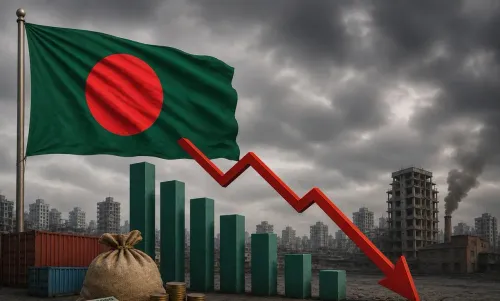
A new report unveils the troubling persistence of inequality in Bangladesh, highlighting the imminent need for significant policy reforms. As the wealth gap widens, economic experts warn that without changes to the tax structure and social safety nets, the rich will continue to thrive while the poor struggle. Discover the implications and necessary steps for a fairer society.
Key Takeaways
Inequality remains a pressing issue in Bangladesh without policy changes.
The top 1% control 24% of wealth and earn 16% of national income .
The tax system heavily relies on regressive VAT , impacting the poor.
Gini coefficient has risen to 0.50 for income and 0.84 for wealth .
Political capture affects the redistribution mechanism .
New Delhi, Jan 10 (NationPress) Without a significant transformation in the policy framework, inequality is poised to remain firmly entrenched in Bangladesh, as there are currently no indications of substantial changes in the supportive policies within the country, according to a recent report.
The wealthiest 1% now controls 24% of the total wealth and collected 16% of the national income in 2024, as highlighted in the ‘World Inequality Report’.
Ahsan Habib notes in The Daily Star that Bangladesh's tax system remains remarkably regressive.
“The nation heavily relies on value-added tax (VAT), a consumption tax that disproportionately affects the poor, rather than income tax. There is no inheritance tax, which is a common tool in the West for curbing dynastic wealth accumulation. In the fiscal year 2023-24, the surcharge-free threshold on wealth was increased to Tk 4 crore from Tk 3 crore, providing further protection for the affluent,” the report states.
Economists argue that changing the government alone will not suffice to address the issue.
Anu Muhammad, the former head of the economics department at Jahangirnagar University, asserts that without a shift in the policy framework, inequality will persist.
“The tax policy should be progressive and focused on income tax. Instead, it heavily relies on VAT. Additionally, the social safety net is inadequate, while education and healthcare remain prohibitively expensive for many,” Muhammad was cited in the report. “If black money and laundered assets were accounted for, inequality would be even more pronounced.”
Bangladesh continues to ascend on the inequality scale. The Gini coefficient, which measures inequality where 0 indicates perfect equality and 1 signifies perfect inequality, has steadily increased, the report indicates.
In 1974, the country had a Gini coefficient akin to Nordic nations at 0.36. By 2022, income inequality had reached 0.50, while wealth inequality escalated to an alarming 0.84.
“The reason for this persistence is political capture. The redistribution mechanism – tax policy – has been appropriated by those it is designed to tax,” the report elaborates.
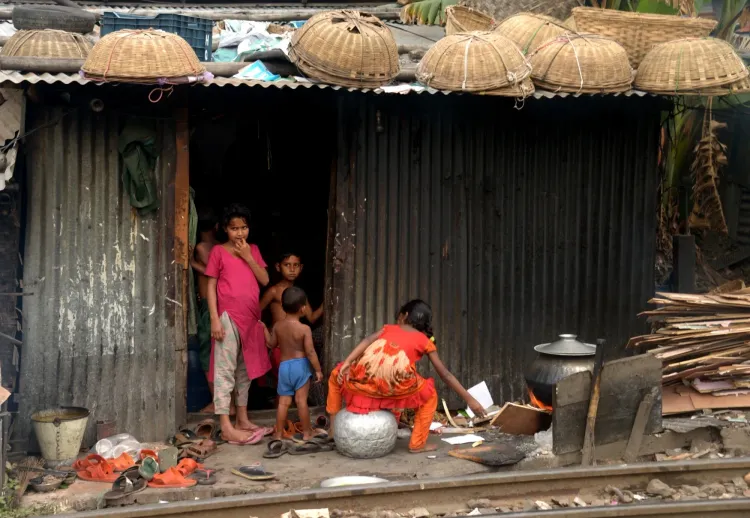
The labor market in Bangladesh mirrors this disparity. Approximately 85% of jobs are sourced from the informal sector, many lacking contracts, job security, or sufficient leave.
Point of View
It is crucial to recognize the alarming trends in inequality within Bangladesh. The current policy framework fails to address the widening wealth gap, which threatens social stability and economic growth. Our commitment remains steadfast in advocating for more equitable policies that can uplift the disadvantaged while ensuring a balanced economic landscape.
NationPress
23 Sept 2026
Frequently Asked Questions
What is the current state of inequality in Bangladesh?
Inequality in Bangladesh is persistently high, with the top 1% holding 24% of the total wealth and earning 16% of the national income as of 2024.
What role does the tax system play in this inequality?
The tax system in Bangladesh is regressive, heavily relying on VAT, which impacts the poorer population more than a progressive income tax would.
How has the Gini coefficient changed over the years?
The Gini coefficient in Bangladesh has risen from 0.36 in 1974 to 0.50 for income inequality and 0.84 for wealth inequality by 2022.
What are the implications of maintaining the current policy framework?
Maintaining the current policy framework will likely result in perpetuating inequality, hindering economic growth and social cohesion.
What measures can be taken to mitigate inequality?
Implementing more progressive tax policies, enhancing social safety nets, and improving access to affordable education and healthcare are essential measures.