Should Bangladesh Reform Its Tariff Regime or Risk Falling Behind?
Synopsis
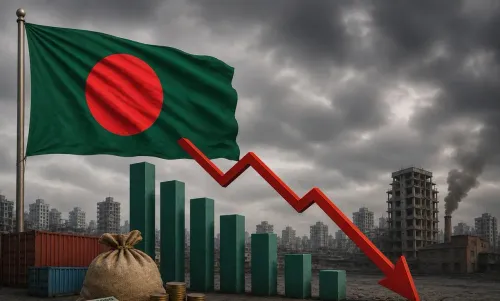
Bangladesh faces a critical juncture as it risks falling behind its peers without urgent tariff reforms. An economist emphasizes the need for modernized trade policies to maintain competitiveness. With its graduation from the LDC category approaching, the call for change becomes even more pressing. Will Bangladesh heed this warning?
Key Takeaways
Urgent reforms in tariffs and trade facilitation are essential.
Current tariff regime is high and complex .
Non-tariff barriers impede trade.
Trade taxes should be reduced to 1% by 2030.
Bangladesh's graduation from LDC status heightens the need for reform.
New Delhi, Jan 27 (NationPress) Without significant reforms in tariffs and trade facilitation, Bangladesh risks lagging behind peer nations and competitive economies within the next five years, warns an economist in a recent report.
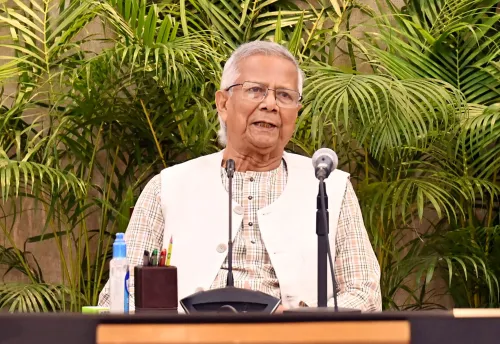
According to the Bangladesh-based media outlet The Daily Star, Zaidi Sattar, chairman of the Policy Research Institute of Bangladesh, has called for immediate reforms, noting that the country has not made substantial trade policy changes in nearly 16 years.
During an event to commemorate International Customs Day 2026 at the National Board of Revenue headquarters in Agargaon, Sattar expressed concern over the accumulation of reform work, which he believes is undermining Bangladesh’s competitiveness in the global value chain.
“In comparison to international benchmarks, Bangladesh's tariff framework is exceedingly high and complicated, which diminishes the country’s competitive edge globally,” Sattar stated, emphasizing that burdensome customs procedures lead to elevated compliance costs, necessitating a comprehensive liberalization of trade policy.
“If transformative changes are not enacted within the next five years—especially regarding tariff rationalization, tariff modernization, and trade facilitation—the nation's economy will fall behind many other competitive markets,” he cautioned.
Sattar remains optimistic that Bangladesh will transition towards a modern customs administration that prioritizes trade facilitation over mere revenue collection, especially since trade taxes currently contribute approximately 2.5% to the GDP.
He advocated for a reduction of trade taxes to a maximum of 1% by the year 2030.
Commerce Secretary Mahbubur Rahman also highlighted ongoing non-tariff barriers that continue to obstruct trade, urging the National Board of Revenue (NBR) to focus on simplifying the trade regime.
He referenced concerns raised by European Commission officials during a recent visit, many of which pertained to customs procedures.
“There is no widespread demand to eliminate high tariffs; rather, there are significant concerns regarding legitimate technical barriers to trade,” Rahman explained.
As Bangladesh approaches its graduation from the UN's Least Developed Country (LDC) category, the urgency for effective trade facilitation increases, particularly as the nation seeks to maintain preferential market access through agreements with key partners, he added.
aar/
Point of View
It is evident that Bangladesh stands at a crossroads. The need for comprehensive tariff reforms is not just a recommendation; it is a necessity for maintaining economic competitiveness. It is crucial for policymakers to prioritize trade facilitation and address the growing concerns surrounding non-tariff barriers. The future of Bangladesh's economy depends on decisive action now.
NationPress
19 Oct 2026
Frequently Asked Questions
What is the status of Bangladesh's tariff regime?
Bangladesh's tariff regime is considered high and complex compared to international standards, which diminishes its competitiveness globally.
Why are reforms in trade facilitation urgent?
Without substantial reforms, Bangladesh risks falling behind its peers and losing competitive advantage in global markets within the next five years.
What has the economist recommended?
The economist recommends radical changes in tariff policies, including rationalization and modernization, to improve trade facilitation.
How significant are trade taxes to Bangladesh's economy?
Trade taxes currently make up about 2.5% of Bangladesh's GDP, and there is a call to reduce this to 1% by 2030.
What impact does graduation from the LDC category have?
Graduation from the UN's LDC category increases the urgency for effective trade facilitation, as Bangladesh aims to retain preferential market access.