What Challenges is Bangladesh Facing in Global Trade Relations?
Synopsis
Bangladesh is grappling with severe trade challenges due to policy flaws by the interim government led by Muhammad Yunus. With the loss of LDC status, the country faces risks in its trade relationships with major economies, including China, India, and the EU. This article investigates the implications of these changes on Bangladesh's economic future.
Key Takeaways
Bangladesh is experiencing significant trade challenges due to policy missteps.
The loss of LDC status increases vulnerabilities in international trade.
Trade relations with China and India are under strain.
The European Union is concerned about Bangladesh's compliance with trade commitments.
Experts warn that these issues could burden future governments.
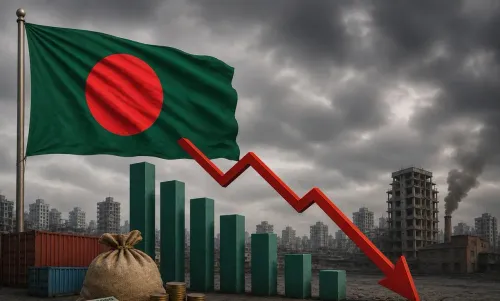
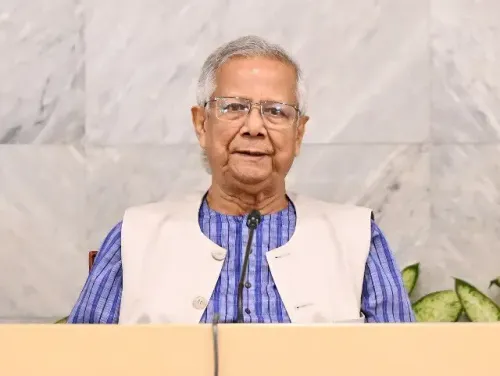
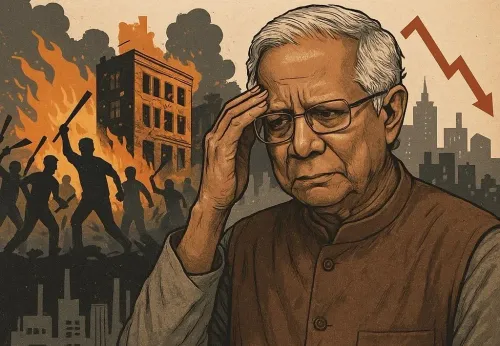
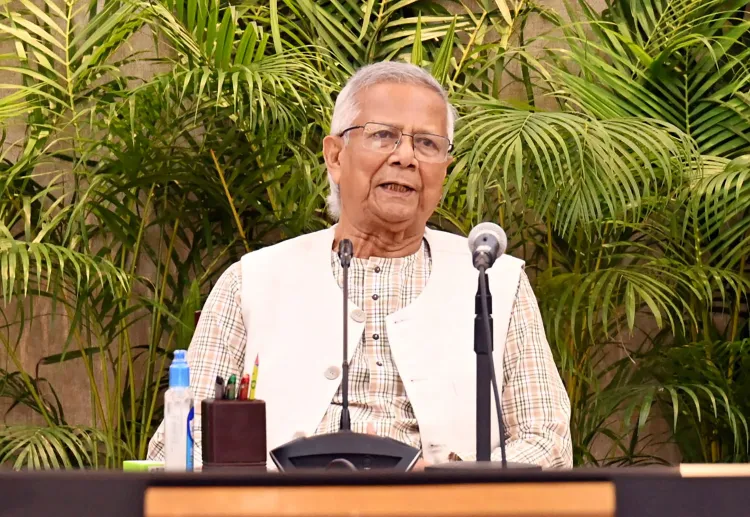
New Delhi, Dec 1 (NationPress) Bangladesh is encountering significant challenges in sustaining its trade relationships with the world's leading economies, primarily due to policy missteps by the interim government led by Muhammad Yunus. Disruptions in business operations and ongoing domestic economic crises have heightened these trade vulnerabilities, as noted in an article published by the Dhaka-based Daily Sun.
The loss of Bangladesh's status as a least developed country (LDC) has increased its exposure, as it will no longer qualify for international trade benefits typically extended to poorer nations.
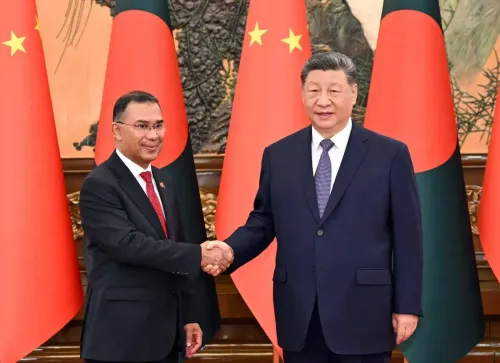
Initially, following the political transition in July, Bangladesh seemed to be bolstering its ties with China, its largest trading partner. However, after securing trade agreements with the United States, China has adopted a more cautious stance regarding trade with Bangladesh, the article indicates.
While China has assured that it would uphold tariff advantages post-Bangladesh's LDC graduation, no written commitments have been provided.
The article further emphasizes that the interim government has found it difficult to maintain robust trade relations with India, Bangladesh's second-largest trading partner.
Since assuming power, the government has faced conflicts over various matters, including trade restrictions on specific goods transported via land routes, which have contributed to a decrease in bilateral trade with India.
This situation has led Bangladesh to incur higher costs for essential imports, such as rice, which it previously procured from India, and now has to source from Singapore.
Bangladesh is also grappling with challenges from Japan, as Tokyo is seeking trade concessions similar to those extended to the United States, complicating the potential signing of an Economic Partnership Agreement (EPA). Japan is pushing for reductions in high import tariffs on vehicles, citing the US agreement as a benchmark.
The article notes that the European Union (EU), Bangladesh's most reliable trade partner, has also expressed concerns. To gain tariff benefits under a reciprocal trade agreement with the United States, Bangladesh has committed to increasing imports and making significant purchases, including Boeing aircraft and LNG.
This has escalated pressure from Europe, where Bangladesh had previously pledged to acquire 10 Airbus planes from France.
The EU is now insisting that Bangladesh honor its prior commitments, warning that failure to do so could jeopardize GSP Plus privileges after LDC graduation. Reports suggest that Germany’s ambassador recently issued an implicit warning at a DICAB event.
Experts believe that the cumulative pressures and stipulations from significant trading partners and development allies pose serious risks to Bangladesh’s international trade.
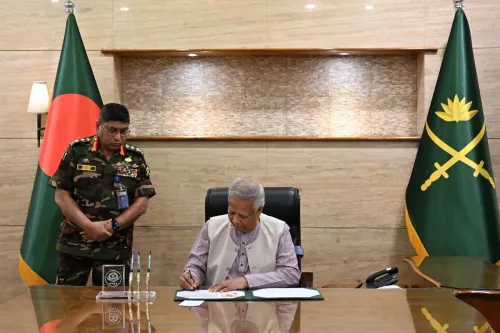
The article quotes MK Muzeri, former director general of the Bangladesh Institute of Development Studies (BIDS), stating that the interim government has made several erroneous decisions that not only threaten trade but could also impose burdens on the next elected government.
The former Chief Economist of Bangladesh Bank remarked, “The understanding forged with the United States will long-term impact Bangladesh’s trade. Other nations may start imposing conditions to attain similar benefits. A substantial portion of Bangladesh’s export revenue is derived from Europe.
Should issues arise with Airbus purchases, European countries will naturally respond. The interim government should not have hastily entered into these long-term agreements without consulting businesses and entrepreneurs,” he added.
Point of View
It is crucial to maintain an unbiased perspective while aligning with national interests. The current trade challenges Bangladesh faces should be viewed with a lens of constructive critique, recognizing the need for better policy-making to strengthen international relations and bolster the economy.
NationPress
1 Oct 2026
Frequently Asked Questions
What is Bangladesh's current trade status?
Bangladesh is currently facing significant challenges in maintaining trade relations with major economies due to policy missteps by the interim government. The loss of LDC status has made the country more vulnerable.
How is Bangladesh's relationship with China affected?
Initially, Bangladesh appeared to strengthen ties with China after a political shift. However, recent agreements with the United States have caused China to become cautious in its trade dealings.
What impact does losing LDC status have on Bangladesh?
Losing LDC status means Bangladesh will no longer qualify for certain trade benefits, making it more vulnerable in the international market.
What are the implications for trade with India?
The interim government has faced disagreements with India, leading to trade restrictions and increased costs for essential imports such as rice.
What challenges does Bangladesh face with the EU?
The EU has expressed concerns over Bangladesh's commitments to purchase aircraft, warning that failure to comply could impact GSP Plus privileges post-LDC graduation.