Should Bangladesh’s New Government Scrap the Controversial US Trade Deal?
Synopsis
As Bangladesh's new government assumes power, it faces the pressing challenge of addressing a contentious trade deal signed by the interim administration with the US. Critics argue that the agreement jeopardizes national interests and sovereignty, urging immediate action for its cancellation. Read on to explore the implications of this significant diplomatic issue.
Key Takeaways
The trade agreement is viewed as infringing on Bangladesh's sovereignty.
Concerns arise regarding the transparency of the signing process.
Strategic conditions could limit Bangladesh's foreign policy choices.
Potential economic repercussions across multiple sectors.
The new government is urged to prioritize national interests by reconsidering the agreement.
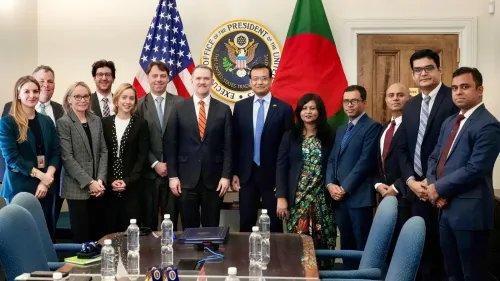
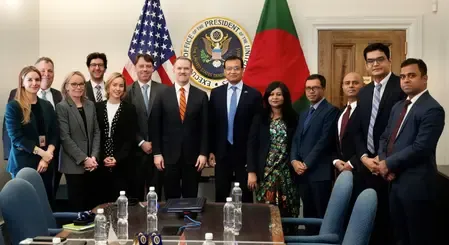
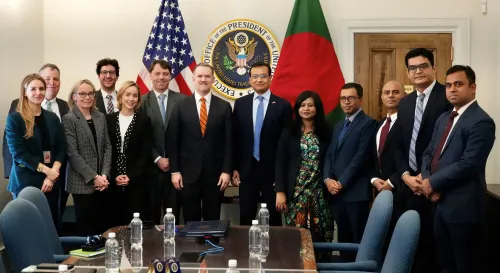
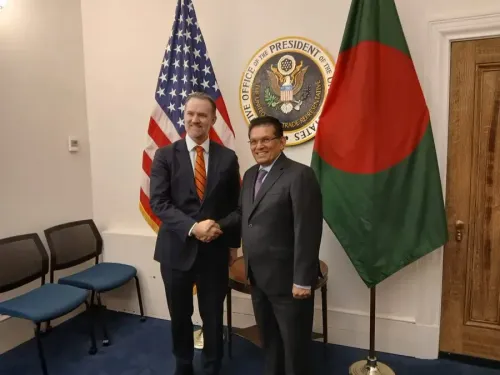
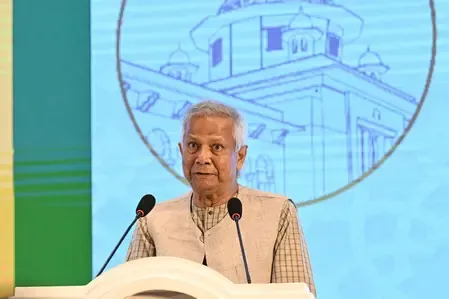
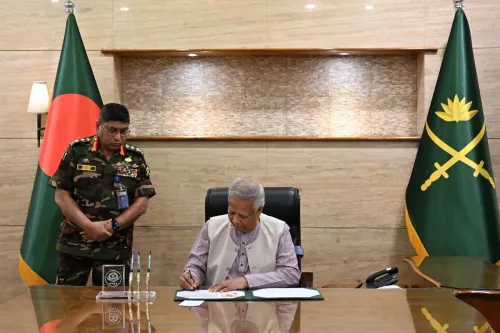
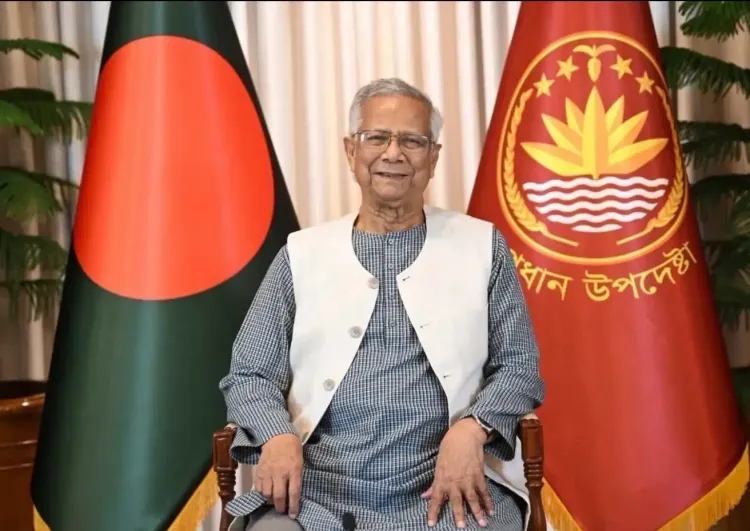
New Delhi, Feb 17 (NationPress) The newly elected government of Bangladesh ought to initiate the revocation of a trade agreement signed by the interim government led by Muhammad Yunus with the United States, as this pact is contrary to the nation's interests and undermines its independence and sovereignty, according to an editorial in Dhaka's media.
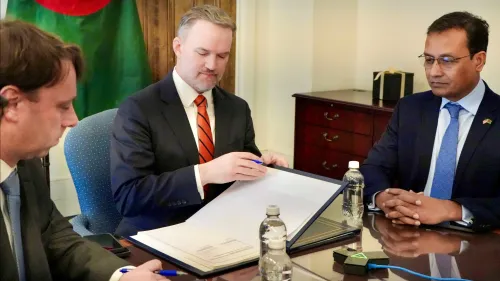
The deal, finalized on February 9, just three days prior to the national elections under a temporary government and in strict secrecy, has raised various concerns, as noted in an opinion piece published in The Daily Star on Tuesday.
Specifically, the incorporation of strategic clauses related to national security and geopolitics alongside tariff concessions has prompted skepticism regarding the extent to which Bangladesh's interests were safeguarded in the agreement.
The article emphasizes that the interim government failed to disclose the concessions Bangladesh is obligated to provide. However, a document released by the Office of the United States Trade Representative (USTR) indicates that Bangladesh has become entangled in a multitude of conditions in exchange for minimal tariff concessions.
Compliance from Dhaka included significant tariff concessions for the United States, the elimination of non-tariff barriers on Washington’s industrial products, the removal of non-tariff barriers on agricultural and biotechnology goods, and the mandated importation of expensive items.
This situation presents a diplomatic quandary that the new government is likely to confront as a result of the agreement.
To favor US interests, the deal incorporates stipulations that may impede Bangladesh’s sovereign decision-making. It restricts Bangladesh from entering into any agreements or understandings with third countries that could harm US exports, particularly those with scientifically unsubstantiated, discriminatory, or biased technical standards, as outlined in Article 2.3 (3), Section 2 of the agreement.
Moreover, Article 3.2, Section 3, states that Bangladesh will be unable to engage in any digital trade agreement with another nation that undermines US interests.
Additionally, if Bangladesh pursues any free trade or preferential economic agreement with a non-market-based nation (such as China and Russia, as deemed by the US) that contravenes this agreement, the US reserves the right to terminate the agreement and reinstate punitive tariffs (Article 4.3 (4), Section 4).
The commentary further indicates that Bangladesh will be prohibited from acquiring nuclear reactors, fuel rods, or enriched uranium from nations categorized as “risky to US interests.” The only exception may occur when no alternative supplier or technology exists or if prior agreements were signed before the enactment of this agreement.
In conclusion, this so-called trade agreement has effectively been structured to establish US dominance over Bangladesh’s economy, trade, and foreign policy. Every sector, from industry and agriculture to energy and infrastructure, has been subordinated to US commercial interests. Bangladesh has been drawn into US geopolitical initiatives, and its capacity to forge relationships with third countries has been curtailed.
Ultimately, the article argues that this agreement contradicts national interests and infringes upon Bangladesh’s independence and sovereignty, asserting that “an agreement signed by a temporary interim government while keeping the public uninformed cannot be deemed legitimate.”
Notably, Article 6.6 of the agreement stipulates that it will become effective 60 days following the completion of all legal formalities. The opinion piece concludes with a call for the newly elected government to take steps to annul this agreement through discussions in the national parliament, as it conflicts with national interests.
Point of View
It is imperative to acknowledge that the current trade agreement poses significant challenges to Bangladesh's autonomy and economic independence. The concerns raised by various stakeholders highlight the importance of prioritizing national interests above external pressures. The new government must engage in thorough discussions to assess the implications of this agreement and make decisions that align with the nation's long-term goals.
NationPress
19 Sept 2026
Frequently Asked Questions
What is the nature of the trade agreement with the US?
The trade agreement was signed by the interim government of Bangladesh and includes various provisions that critics argue undermine the country's sovereignty and independence.
Why do critics want the new government to annul the agreement?
Critics assert that the agreement is detrimental to Bangladesh's national interests and imposes restrictions that could limit the government's ability to make independent decisions in foreign policy.
What are the potential impacts of the agreement on Bangladesh?
The agreement may lead to significant concessions for the US, affecting sectors like agriculture, energy, and trade, while limiting Bangladesh's ability to enter into agreements with other countries.