Could Bangladesh Achieve Tariff Relief in US Discussions?
Synopsis
Bangladesh's interim government claims a breakthrough in trade discussions with the US regarding potential tariff relief on textile exports. This could reshape the trade landscape for Bangladesh, enhancing its market access and supporting its key apparel sector. Could this be the turning point for Bangladesh's export-driven economy?
Key Takeaways
Bangladesh claims a breakthrough in US trade negotiations.
Potential easing of 20% tariff rates on textile exports.
Proposal includes tariff-free access linked to US cotton imports.
Discussions aim to strengthen trade relations between Bangladesh and the US.
Significant implications for Bangladesh’s garment sector and workforce.
Washington, Jan 11 (NationPress) The interim government of Bangladesh has claimed a significant development in trade negotiations with the United States. According to reports, senior US officials have indicated a willingness to consider measures that could reduce tariffs on Bangladeshi exports and broaden market access for the essential textile and apparel industry.
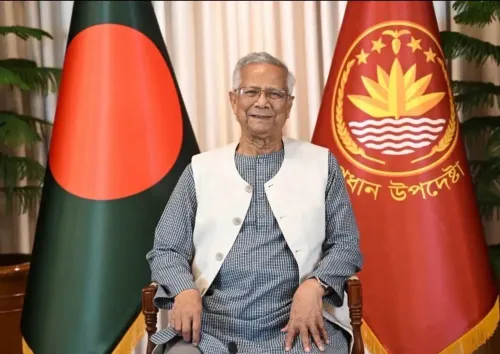
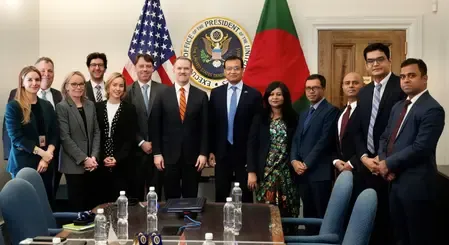
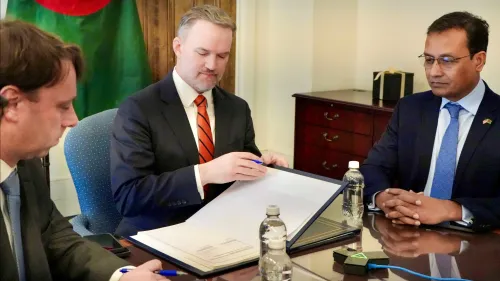
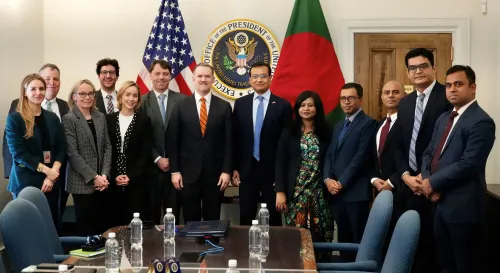
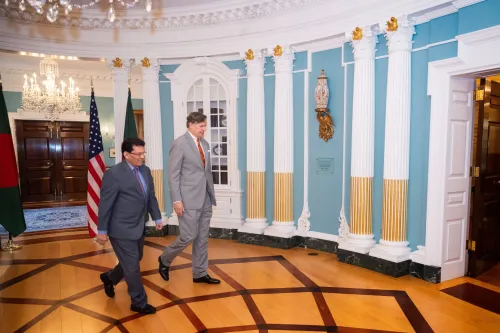
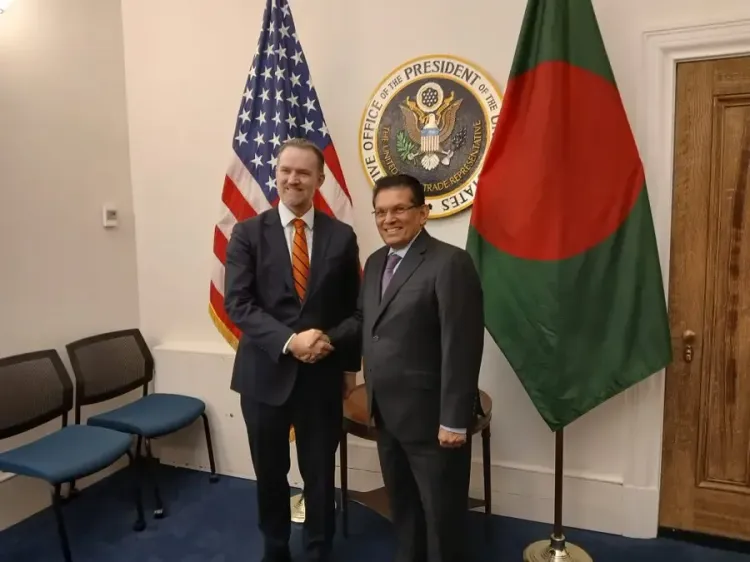
This announcement was shared on X by the Chief Adviser of the Government of Bangladesh, detailing discussions in Washington that included National Security Adviser Dr. Khalilur Rahman and US Trade Representative Ambassador Jamieson Greer. However, there has been no official confirmation or summary of the meeting from the Trump administration.
The post indicated that Ambassador Greer is set to discuss the possibility of lowering Bangladesh's current 20 percent reciprocal tariff rate with US President Donald Trump. The objective is to align Bangladesh's tariff treatment more closely with that of its regional competitors.
According to the post, these discussions were initiated at the request of Dr. Rahman, who is visiting Washington. The engagement is framed as a crucial step toward reinforcing a mutually beneficial trade relationship between the two nations.
The Chief Adviser’s post also highlighted a more comprehensive proposal centered on Bangladesh’s export priorities. Both parties discussed a preferential arrangement that would provide Bangladesh with tariff-free access to the US market for textile and apparel exports, linked to Bangladesh’s imports of US-produced cotton and man-made fiber textile inputs.
The proposed arrangement stipulates that tariff-free access would correlate with trade volumes, matching Bangladesh’s exports to its imports of US cotton and man-made fiber textiles, measured on a square-meter basis.
The post emphasized that this arrangement would support Bangladeshi manufacturers and workers while strengthening supply-chain connections with US producers by promoting purchases of American textile materials.
According to the Chief Adviser’s post, the discussions demonstrated “growing momentum and goodwill,” describing the proposal as a “win-win approach” and a “promising new chapter for Bangladesh’s global trade prospects.”
As of now, there has been no public confirmation from the US Trade Representative's Office, the White House, or other US agencies regarding the discussions mentioned. US officials have yet to issue any statements on the dialogue described.
Bangladesh’s assertion comes as the nation seeks to safeguard its export-driven economy, with the garment sector being its primary source of foreign income and employing millions.
The United States stands as one of Bangladesh’s largest export markets, especially concerning apparel. Any adjustments in US tariff policies would significantly influence the sector, but for the moment, the proposal remains unverified by Washington.
Point of View
It's essential to note that while the claims from Bangladesh's interim government suggest optimism in trade discussions with the US, the lack of confirmation from US officials highlights the uncertainty in international trade relations. The ramifications of potential tariff changes could be significant for Bangladesh's economy and its garment sector, which is vital for its workforce and foreign earnings.
NationPress
30 Sept 2026
Frequently Asked Questions
What is the current tariff rate for Bangladeshi exports to the US?
The current reciprocal tariff rate for Bangladeshi exports to the US is 20 percent.
Who are the key figures involved in the trade discussions?
The discussions involved National Security Adviser Dr. Khalilur Rahman and US Trade Representative Ambassador Jamieson Greer.
What is Bangladesh seeking from the US?
Bangladesh is seeking to ease tariffs on its textile and apparel exports and expand market access.
How does the proposal aim to support Bangladeshi manufacturers?
The proposal aims to provide tariff-free access linked to imports of US cotton and textile inputs, supporting local manufacturers and workers.
What impact could this have on Bangladesh's economy?
Easing tariffs could significantly bolster Bangladesh’s export-driven economy, particularly in the garment sector, which is crucial for employment and foreign earnings.