Is Dhaka Losing More Than Gaining from the US Trade Deal?
Synopsis
The new trade pact between Bangladesh and the US has sparked debate, with analysts questioning whether the benefits truly outweigh the costs. With a modest duty cut and a commitment to extensive purchases, the agreement raises serious concerns about its long-term implications for Bangladesh's economy and geopolitical alliances.
Key Takeaways
Trade Agreement Signed: Bangladesh enters into a new agreement with the US.
Tariff Reduction: Duty cut to 19% comes with conditions.
Geopolitical Implications: The deal may affect ties with China.
Military Purchases: Bangladesh must increase US military equipment purchases.
Long-term Obligations: The agreement imposes significant responsibilities on Bangladesh.
New Delhi, Feb 11 (NationPress) The freshly finalized reciprocal trade agreement with the United States offers Dhaka a limited duty reduction to 19%, but it comes with significant ramifications, including a commitment to make billions of dollars in purchases, as highlighted by an analysis from Bangladesh media.
According to The Daily Star, Bangladesh’s interim government has forged a comprehensive trade pact with the United States towards the end of its term to achieve partial tariff relief, yet this deal is entangled with considerable geopolitical conditions.
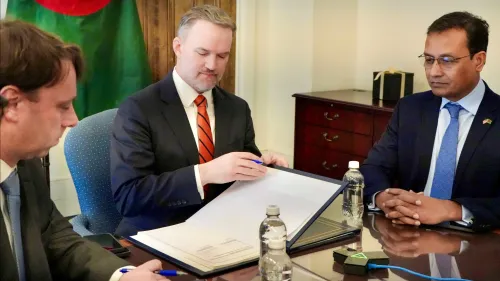
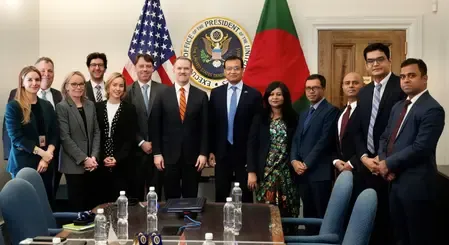
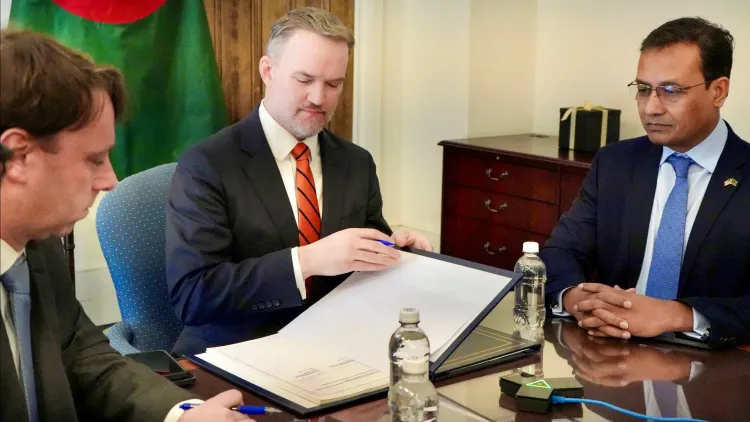
The Agreement on Reciprocal Trade, signed on February 9, extends beyond usual tariff cuts. It establishes a binding framework that incorporates Bangladesh’s defence, energy, trade, and digital infrastructure into the US sphere of influence.
The report indicates that specific clauses might strain Dhaka’s existing relations with Beijing, especially as China has been expanding its interests in Bangladesh following the Awami League government’s decline.
This encompasses trade, infrastructure projects, and even military collaborations, as per available data.
The report from Wednesday also emphasized that the US agreement stipulates that Bangladesh “shall endeavor to amplify purchases of US military equipment” while concurrently restricting acquisitions from “certain countries”.
The reference to “certain countries” has been interpreted as a subtle indication toward Chinese suppliers.
As stated by The Daily Star, under Article 4.3 of the trade agreement, should Bangladesh engage in a free trade or preferential economic agreement with a “non-market country” - a term the US uses to describe both China and Russia - Washington retains the right to “terminate the entire deal and reinstate punitive tariffs”.
The US has also pledged to collaborate with Bangladesh to enhance defence trade.
Expert Mustafizur Rahman from the Centre for Policy Dialogue (CPD) described the agreement as “imposed unfairly” through “the total weaponization of trade”.
The report questioned why the Muhammad Yunus-led interim government felt compelled to rush into signing an agreement that will be enforced by an elected government, especially with elections set for Thursday.
It was noted that Bangladesh must offer zero duty on various US imports and reduce duties on other goods over five to ten years, starting with a 50% reduction from the date the agreement takes effect, which poses significant revenue implications.
Another expert, Selim Raihan, executive director of the South Asian Network on Economic Modeling, pointed out that the agreement is “heavily biased”, placing a significantly longer list of obligations on Bangladesh compared to the US, raising doubts about whether the minimal tariff relief is genuinely worth the cost.
The report further noted that Biman Bangladesh Airlines, the national carrier, will procure 14 Boeing aircraft, effectively steering the nation’s aviation sector away from European rival Airbus.
In the agricultural sector, Dhaka is set to import at least $3.5 billion worth of American farm products, including wheat and soybeans, as highlighted.
The joint statement from the US and Bangladesh mentions “recent and upcoming commercial agreements in agriculture, energy, and technology”, which includes the purchase of aircraft; a commitment to acquire approximately $3.5 billion in American agricultural goods, such as wheat, soy, cotton, and corn; and energy product purchases estimated at $15 billion over the next 15 years.
“By consenting to these purchase quotas, Bangladesh is effectively facilitating the entry of US agricultural commodities, eliminating procedural delays that have previously hindered these imports,” the report concluded.
Point of View
This trade agreement represents a complex intersection of economic necessity and geopolitical strategy. While it offers potential short-term relief, the long-term implications deserve scrutiny. It's vital for Bangladesh to navigate these waters carefully, ensuring that its national interests remain at the forefront.
NationPress
8 Oct 2026
Frequently Asked Questions
What are the main benefits of the US-Bangladesh trade agreement?
The agreement offers a reduced tariff rate of 19% and aims to strengthen trade relations between the two countries.
What are the potential downsides of this agreement?
The deal may impose significant commitments on Bangladesh, including increased purchases of US military equipment and reduced procurement from certain countries.
How might this agreement affect Bangladesh's relationship with China?
Certain clauses in the agreement could strain ties with China, which has been expanding its influence in Bangladesh.
What are the concerns raised by experts regarding this trade deal?
Experts argue that the agreement is heavily skewed in favor of the US, raising questions about whether the minimal tariff relief justifies the extensive obligations imposed on Bangladesh.
How will this agreement impact Bangladesh's economy?
The agreement requires Bangladesh to make significant commitments to purchase US goods, which could have substantial revenue implications.