Bangladesh-US trade deal faces backlash in Dhaka over one-sided terms
Synopsis
A linguistic breakdown of Bangladesh's 32-page trade deal with the US tells a stark story: 'Bangladesh shall' appears 131 times; 'US shall' just six times. With politicians calling for cancellation and the agreement not yet in force, Dhaka's trade calculus with Washington is under serious domestic pressure.
Key Takeaways
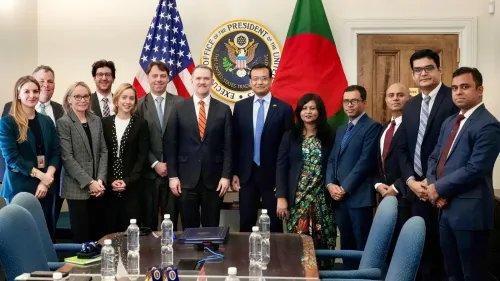
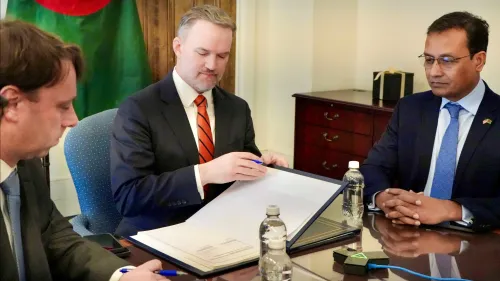
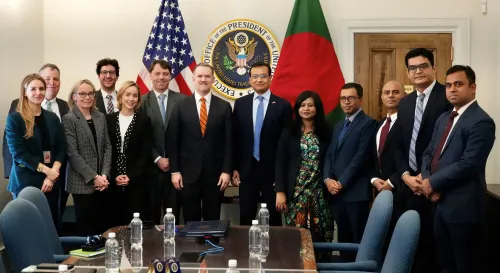
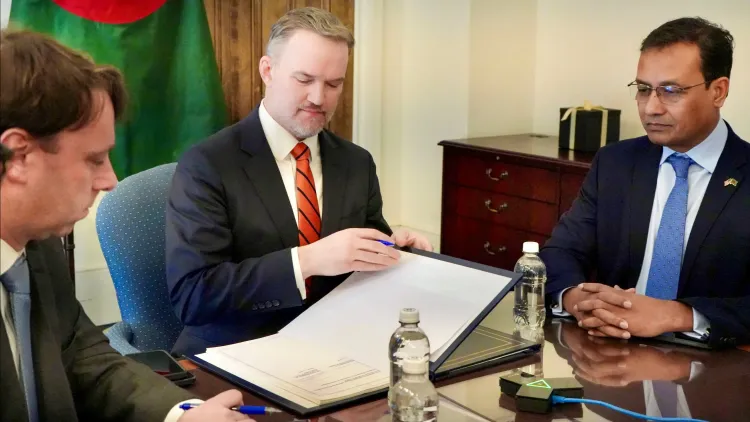
The Agreement on Reciprocal Trade (ART) between Bangladesh and the US was signed on 9 February , three days before Bangladesh's national parliamentary election.
In the 32-page agreement , the word "shall" appears 179 times versus "will" only 3 times ; "Bangladesh shall" appears 131 times against "US shall" just 6 times .
Member of Parliament Rumeen Farhana has called for the deal's cancellation in parliament; multiple political parties and organisations have echoed the demand.
The US Supreme Court annulled the imposition of reciprocal tariffs on 20 February , days after the deal was signed.
The agreement has not yet come into force , but Bangladesh has already begun signing import deals with the US under its provisions.
The bilateral Agreement on Reciprocal Trade (ART) signed between Bangladesh and the United States under the Donald Trump administration has drawn sharp criticism in Dhaka, with politicians, economists, and leading media outlets calling the deal heavily skewed in Washington's favour. According to a report citing Dhaka-based sources, many are now demanding the agreement be scrapped entirely.
What the Numbers Reveal
Leading Bangladeshi newspaper Prothom Alo has published a detailed linguistic analysis of the 32-page agreement, highlighting a stark imbalance in the use of mandatory versus discretionary language. The word
Point of View
Giving it the appearance of a rushed concession rather than a negotiated outcome. The fact that Bangladesh has already begun importing US goods under a deal that has not formally come into force compounds the accountability deficit. Dhaka's economists are right to push for renegotiation — but Washington's leverage, especially on tariff relief for Bangladesh's garment exports, makes that a difficult ask.
NationPress
26 Sept 2026
Frequently Asked Questions
What is the Agreement on Reciprocal Trade (ART) between Bangladesh and the US?
The ART is a bilateral trade agreement signed between Bangladesh and the United States on 9 February, three days before Bangladesh's national parliamentary election. Critics argue the deal disproportionately burdens Bangladesh with mandatory obligations while offering the US far fewer binding commitments.
Why is the Bangladesh-US trade deal being criticised as one-sided?
A linguistic analysis by Prothom Alo found that the word 'shall' — denoting mandatory obligation — appears 179 times in the 32-page agreement, with 'Bangladesh shall' used 131 times compared to 'US shall' just 6 times. Critics say this reflects a fundamental imbalance in the obligations each party must fulfil.
Who is calling for the trade deal to be scrapped?
Member of Parliament Rumeen Farhana has formally called for cancellation in the Bangladeshi parliament. Multiple political parties, civil society organisations, and economists have also demanded the deal be scrapped or renegotiated, according to reports from Dhaka.
Has the Bangladesh-US trade agreement come into force yet?
No, the agreement has not yet come into force. However, Bangladesh has already begun signing deals to import goods from the US under its provisions, which has raised additional questions about the government's handling of the agreement.
What happened to US reciprocal tariffs after the deal was signed?
On 20 February — just 11 days after the ART was signed — the US Supreme Court annulled the imposition of reciprocal tariffs, adding further uncertainty to the deal's practical implications for Bangladesh.