Bangladesh BNP government reviewing US trade deal signed by Yunus interim regime
Synopsis
Bangladesh’s newly elected BNP government has confirmed it is reviewing a US trade deal signed in secret by the Yunus interim administration just three days before national elections. With sovereignty clauses, third-country restrictions targeting China and Russia, and nuclear procurement limits all reportedly embedded in the agreement, the review could reshape Dhaka’s economic and geopolitical alignment.
Key Takeaways
BNP lawmaker Khaled Hossain Mahbub Shyamal confirmed the government is reviewing the US-Bangladesh trade deal signed by the Yunus interim administration.
The deal was signed on February 9 , just three days before Bangladesh’s national election, reportedly in strict secrecy.
Critics allege the agreement includes strategic clauses on national security, geopolitics, and restrictions on dealings with China and Russia .
A USTR -released contract reportedly shows Bangladesh accepted wide-ranging conditions for limited tariff concessions.
The Tarique Rahman government has framed its stance as a review aimed at protecting sovereignty, stopping short of announcing cancellation.
The interim government also introduced the July Charter for democratic reform, whose implementation remains stalled.
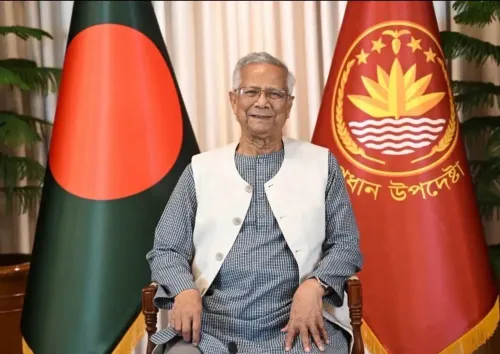
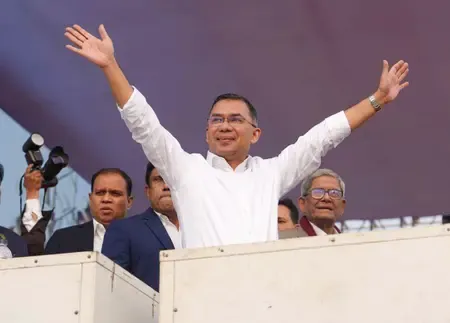
Bangladesh's ruling Bangladesh Nationalist Party (BNP) government has confirmed it is formally reviewing a trade agreement signed with the United States by the preceding Muhammad Yunus-led interim administration, with a senior party official stating that Dhaka will take steps to protect national sovereignty and rights. The disclosure came as the elected government of Prime Minister Tarique Rahman, which assumed office in February 2025, faces mounting domestic pressure to cancel or renegotiate the deal.
What the BNP Said
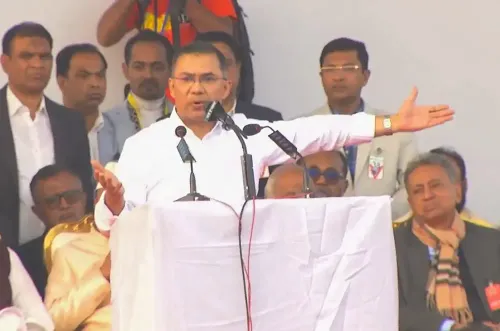
BNP lawmaker and Economic Affairs Secretary of the party's central committee, Khaled Hossain Mahbub Shyamal, told The Business Standard newspaper on Thursday that the government had obtained a copy of the agreement and was actively working on it. “We will try, as far as possible, to review the agreements and take future steps while ensuring that the country’s sovereignty and rights remain intact,” Shyamal said.
He also questioned the transparency of the interim government’s dealings, noting: “The agreements they signed were not known to the people of the country, nor were they known to us. They can explain better under what circumstances and in what context those agreements were made.”
Why the Deal Is Controversial
The agreement was signed on February 9, just three days before Bangladesh’s national election, reportedly under conditions of strict secrecy. Critics argue the timing and opacity of the signing raise serious questions about democratic accountability. Reports have alleged that the deal extends well beyond standard tariff concessions, reportedly embedding strategic conditions tied to national security and geopolitics.
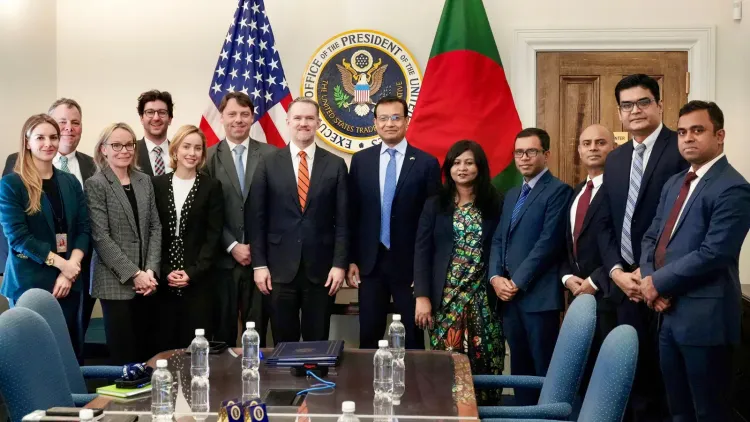
According to a contract released by the Office of the United States Trade Representative (USTR), Bangladesh accepted a wide range of conditions in exchange for a limited tariff concession. Among the concerns flagged are extensive tariff concessions favouring the US, removal of non-tariff barriers to American industrial, agricultural, and biotechnology exports, and mandatory import obligations for certain costly goods.
Sovereignty and Third-Country Clauses
Particularly contentious, according to reports, is a clause that reportedly restricts Bangladesh from entering into any agreement with a third country that contains ‘scientifically unsubstantiated, discriminatory, or biased’ technical standards that could harm US exports. An opinion piece in The Daily Star further noted that if Bangladesh enters into a free trade or preferential economic agreement with a country the US considers ‘non-market-based’ — such as China or Russia — Washington could cancel the deal and reimpose punitive tariffs.
The same analysis flagged a restriction on Bangladesh’s ability to procure nuclear reactors, fuel rods, or enriched uranium from countries deemed ‘risky to US interests,’ with limited exemptions for pre-existing agreements or cases where no alternative supplier exists.
Background: How the Interim Government Came to Power
The Yunus-led caretaker administration was formed in July 2024 after Sheikh Hasina’s government fell following mass protests demanding democratic reforms and accountability. Beyond the US trade deal, the interim government signed several other international agreements and introduced the July Charter, a political and constitutional reform framework aimed at institutionalising democratic governance. However, the Charter’s implementation has stalled amid constitutional deadlock, political dissent, and legal ambiguity, despite broad popular support.
What Happens Next
The BNP government has stopped short of announcing a cancellation, framing its position as a review rather than a rejection. The outcome of that review — and whether Dhaka seeks to renegotiate terms with Washington — will be closely watched given Bangladesh’s significant trade exposure to the US, particularly in the garments sector. Any move to revise or exit the agreement could have implications for Bangladesh’s broader economic diplomacy and its relationships with both Western and regional partners.
Point of View
Yet the reported terms of the deal hand Washington extraordinary leverage over Dhaka’s third-country relationships. The timing of the signing — three days before a national election, under secrecy — is the real political wound; it gives the BNP government a democratic mandate to push back without having to own the economic consequences of doing so. What mainstream coverage underplays is the China dimension: any clause that penalises Bangladesh for trade ties with Beijing is not just an economic condition but a geopolitical alignment test, one that carries risks far beyond tariff arithmetic.
NationPress
26 Sept 2026
Frequently Asked Questions
What is the US-Bangladesh trade deal that is under review?
It is a trade agreement signed between the United States and Bangladesh on February 9 , reportedly just three days before Bangladesh’s national election, by the then Muhammad Yunus -led interim government. According to reports and a contract released by the USTR , the deal includes extensive tariff concessions, removal of non-tariff barriers, and strategic clauses linked to national security and third-country agreements.
Why is the BNP government reviewing the deal?
The BNP government has faced domestic pressure to cancel the agreement, with critics arguing it was signed in secrecy, without public knowledge, and contains conditions that compromise Bangladesh’s sovereignty. BNP official Khaled Hossain Mahbub Shyamal said the government is working through a copy of the agreement to assess its implications before deciding on next steps.
What are the most controversial clauses in the agreement?
Reports and an opinion piece in The Daily Star flagged several contentious provisions: restrictions on Bangladesh entering deals with countries the US considers ‘non-market-based’ such as China and Russia , limitations on procuring nuclear materials from countries deemed risky to US interests, and mandatory import obligations for certain goods. The US can reportedly cancel the deal and reimpose punitive tariffs if Bangladesh violates these terms.
Who is Prime Minister Tarique Rahman and how did he come to power?
Tarique Rahman is the leader of the Bangladesh Nationalist Party (BNP) and became Prime Minister when his party won the national elections held in February 2025 . His government replaced the caretaker administration led by Muhammad Yunus , which had been formed in July 2024 after Sheikh Hasina ’s government fell amid mass protests.
Has Bangladesh officially cancelled the US trade deal?
No. As of the latest reports, the BNP government has confirmed a review is underway but has not announced cancellation. Shyamal stated the government will ‘take future steps while ensuring that the country’s sovereignty and rights remain intact,’ indicating a cautious, measured approach rather than an immediate exit.