Did the US and Bangladesh Sign a Reciprocal Trade Pact?
Synopsis
In a landmark agreement, the United States and Bangladesh have signed a reciprocal trade pact that not only sets tariff schedules but also emphasizes labor standards and digital commerce. This deal is poised to create new opportunities for American exporters and strengthen economic ties between the two nations.
Key Takeaways
U.S. and Bangladesh signed a reciprocal trade pact.
Focus on market access, labor standards, and digital trade.
Bangladesh will extend preferential access for U.S. goods.
Agreement includes comprehensive labor rights protections.
Pact will take effect 60 days after legal procedures are completed.
Washington, Feb 10 (NationPress) The United States and Bangladesh have formalized a legally binding agreement focused on reciprocal trade, establishing tariff schedules along with comprehensive commitments concerning market access, labor standards, and digital commerce, as per reports from U.S. officials.
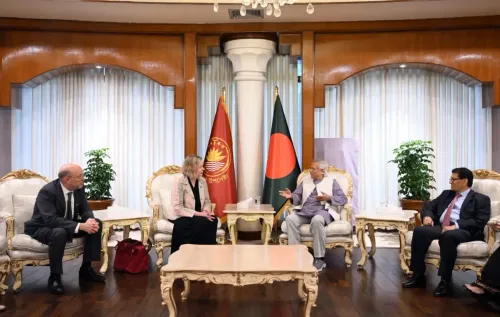
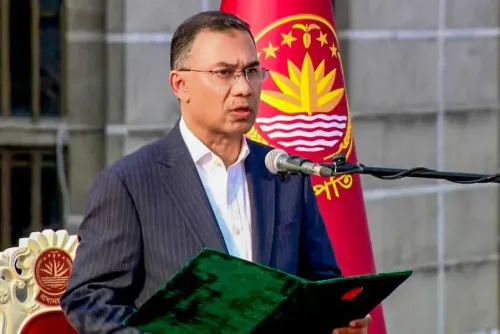
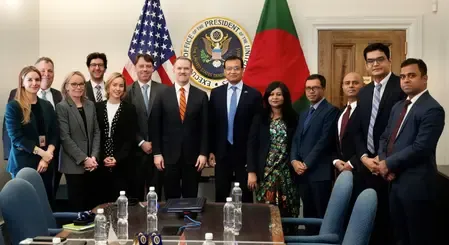
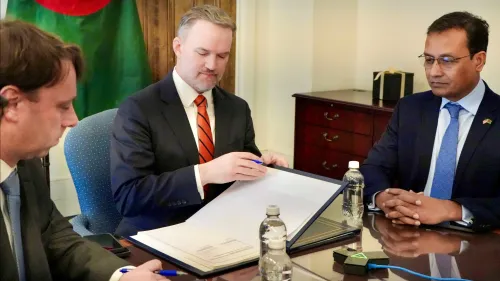
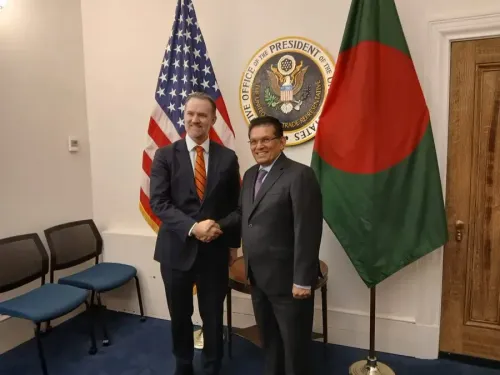
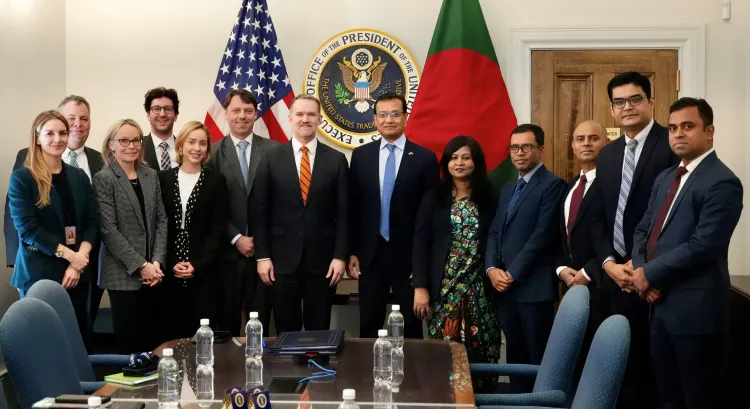
The agreement was signed by U.S. Trade Representative Jamieson Greer alongside Bangladesh’s commerce adviser, Sheikh Bashir Uddin, during a ceremony held in Washington, according to a statement released by the USTR's office.
Greer remarked, “Under President Trump’s administration, the U.S. is implementing a trade policy that yields tangible benefits for American workers and businesses.” He emphasized that this pact represents “a significant advancement in market accessibility, tackling trade barriers, and generating fresh opportunities for American exporters.”
This marks the first reciprocal trade agreement the United States has entered into in South Asia, according to the USTR.
As part of the deal, Bangladesh will extend preferential market access for U.S. industrial and agricultural products. This encompasses items such as chemicals, machinery, medical devices, energy products, soy, dairy, poultry, beef, tree nuts, and fruits.
The U.S. will implement reciprocal tariff rates on imports from Bangladesh based on established schedules, with most additional tariffs capped at 19%, barring certain specifically listed products.
Furthermore, Bangladesh has pledged to mitigate non-tariff barriers impacting U.S. exports. The agreement necessitates the acceptance of U.S. regulatory standards for vehicles, medical devices, and pharmaceuticals, along with recognition of U.S. safety and inspection protocols for agricultural goods.
The deal incorporates comprehensive labor provisions, where Bangladesh has agreed to safeguard internationally recognized labor rights, enhance the enforcement of labor legislation, and prohibit the importation of goods produced wholly or partially through forced labor.
This pact also addresses labor conditions within export processing zones and advocates for reforms related to previous unrest in the garment industry. A separate chapter is dedicated to digital trade.
Per the agreement, Bangladesh will not impose discriminatory taxes on digital services, will allow cross-border data transfers for commercial purposes, and will endorse a permanent moratorium on customs duties for electronic transmissions.
The deal connects trade commitments to economic and national security collaboration. Bangladesh has agreed to work with the U.S. on export controls, sanctions enforcement, and supply chain security, and is committed to limiting specific technology and defense acquisitions from nations deemed security threats by the U.S.
Commercial annexes detail Bangladesh’s intention to boost purchases of U.S. products, including agricultural goods such as wheat, soy, and cotton, long-term acquisitions of U.S. liquefied natural gas, and increased procurement of U.S. civilian aircraft and military gear.
The agreement will take effect 60 days post the completion of domestic legal processes by both parties. Either side can terminate the pact with a 60-day written notice.
According to a U.S. fact sheet, the United States experienced a $6.1 billion trade deficit in goods with Bangladesh in 2024.
This agreement follows the Trump administration's emphasis on “reciprocal” trade relations aimed at lowering tariffs and non-tariff barriers internationally while retaining leverage through enforcement measures. U.S. officials have noted that similar agreements have recently been established with Malaysia, Cambodia, El Salvador, Guatemala, and Argentina.
Point of View
We recognize the importance of this bilateral agreement between the United States and Bangladesh. It represents a strategic move towards enhancing trade relations while addressing critical issues such as labor rights and digital commerce. This pact not only opens new markets but also strengthens economic ties, highlighting a commitment to fair trade practices.
NationPress
9 Oct 2026
Frequently Asked Questions
What does the reciprocal trade pact entail?
The pact includes tariff schedules, commitments on market access, labor standards, and digital trade provisions.
How will this agreement benefit American exporters?
It opens new market opportunities and reduces trade barriers for U.S. goods in Bangladesh.
What are the labor provisions in the agreement?
Bangladesh agrees to protect internationally recognized labor rights and prohibit goods produced by forced labor.
When will the agreement take effect?
It will come into force 60 days after both nations complete their domestic legal procedures.
What is the significance of this pact for South Asia?
It marks the first reciprocal trade agreement the U.S. has signed in South Asia, indicating a strategic partnership.