Iran executes two Mossad spies amid fragile US-Israel-Iran ceasefire

Synopsis
Even as the US declared the Iran war 'terminated' and ceasefire talks stalled in Islamabad, Tehran hanged two men convicted of spying for Mossad — a pointed signal that Iran's internal security crackdown is accelerating, not easing, in the war's aftermath.
Key Takeaways
Iran executed Yaqoub Karimpour and Naser Bekrzadeh on 2 May for espionage on behalf of Israel's Mossad .
Karimpour allegedly used Telegram to pass sensitive military information during the 40-day war ; Bekrzadeh allegedly used WhatsApp and email to share photos of officials and government sites.
Both sentences were upheld by the Supreme Court of Iran ; both men reportedly received money for their missions.
The executions follow a ceasefire reached on 8 April after joint US-Israel strikes on Tehran on 28 February reportedly killed then-Supreme Leader Ali Khamenei .
Peace talks in Islamabad on 11–12 April ended without an agreement.
US President Donald Trump declared the war "terminated" on 2 May , citing the 60-day legal deadline for unauthorised military action.
Iran on Saturday, 2 May executed two men convicted of espionage for Israel's intelligence agency Mossad, according to Mizan, the official news agency of the Iranian judiciary. The executions come as a fragile ceasefire between Iran, Israel, and the United States holds following weeks of open conflict.
Who Was Executed
The two men, identified as Yaqoub Karimpour and Naser Bekrzadeh, were hanged after their death sentences were upheld by the Supreme Court of Iran, Mizan reported. Both were accused of passing sensitive intelligence to Mossad in exchange for money.
According to Mizan, Karimpour allegedly maintained what the judiciary described as "effective" cooperation with Mossad during the 40-day war involving Iran, the United States, and Israel. He is accused of transmitting sensitive information to a Mossad officer via the Telegram messaging platform, as reported by Xinhua news agency. Additional charges included involvement in sound explosions, filming military sites, carrying out harmful actions on a Mossad officer's orders, and providing false reports to security institutions in western Iran to deceive them.
Bekrzadeh, meanwhile, is accused of supplying Mossad with photographs, videos, and information on public and law enforcement locations, as well as details on senior government officials, provincial authorities, and religious figures — transmitted via WhatsApp and email, also reportedly in exchange for payment.
Context: The 40-Day War and Its Aftermath
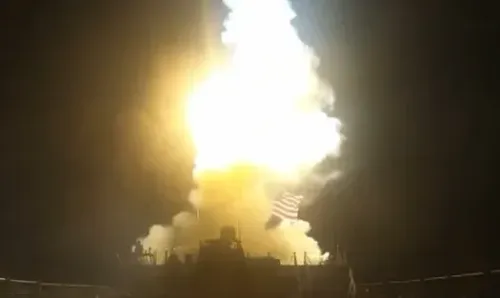
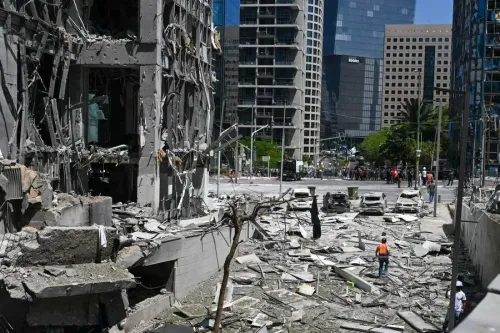
The executions follow a period of unprecedented open warfare in the region. On 28 February, Israel and the United States reportedly launched joint strikes on Tehran and other Iranian cities, killing Iran's then-Supreme Leader Ali Khamenei and several senior commanders, according to reports. Iran responded with waves of missile and drone strikes targeting Israel and US bases and assets across the Middle East.
A ceasefire was reached on 8 April, followed by peace talks held in Islamabad on 11 and 12 April, which concluded without a formal agreement. The conflict's resolution remains incomplete, with diplomatic channels still open but unresolved.
Trump Declares War 'Terminated'
On the same day as the executions, US President Donald Trump told US lawmakers that the war against Iran has "terminated," citing the 60-day legal deadline under US law for military action launched without Congressional approval. The military campaign had begun without prior Congressional authorisation, raising significant legal and constitutional questions in Washington.
Notably, Trump's declaration comes even as peace talks in Islamabad failed to produce a binding agreement, leaving the long-term stability of the ceasefire uncertain.
What This Signals
The executions of alleged Mossad operatives signal that Tehran is moving to demonstrate internal security resolve even as external hostilities formally wind down. Iran has a documented history of executing individuals convicted of espionage for Israel, particularly during and after periods of heightened military tension. This is not the first such post-conflict crackdown; similar executions followed previous rounds of covert conflict between Iran and Israel.
With peace talks stalled and no formal agreement in place, analysts warn that the underlying conditions for renewed hostility remain. The next phase of diplomacy — and whether Islamabad talks resume — will be closely watched.
Point of View
To the security establishment, and to the public — that Iran's institutions are intact and asserting control even after the killing of Supreme Leader Khamenei. What mainstream coverage underplays is the legal vacuum on the US side: military action launched without Congressional approval, now ended by a presidential deadline rather than a peace treaty. With Islamabad talks producing nothing and no formal agreement signed, this ceasefire rests on political will alone — a historically fragile foundation in this region.
NationPress
7 Oct 2026
Frequently Asked Questions
Who were the two men executed by Iran for spying for Mossad?
The two men were Yaqoub Karimpour and Naser Bekrzadeh , executed by hanging on 2 May after the Supreme Court of Iran upheld their death sentences for espionage on behalf of Israel's Mossad. Both reportedly received money in exchange for intelligence.
What were the specific charges against Yaqoub Karimpour?
Karimpour was accused of transmitting sensitive military information to a Mossad officer via Telegram during the 40-day war, involvement in sound explosions, filming military sites, and providing false reports to security institutions in western Iran, according to Mizan.
What information did Naser Bekrzadeh allegedly provide to Mossad?
Bekrzadeh allegedly supplied Mossad with photos and videos of public and law enforcement locations, as well as details on senior government, provincial, and religious figures in Iran, reportedly transmitted via WhatsApp and email in exchange for payment.
What is the current status of the US-Iran-Israel conflict?
A ceasefire was reached on 8 April following the 40-day war. Peace talks in Islamabad on 11–12 April ended without a formal agreement. US President Donald Trump declared the war 'terminated' on 2 May, citing the 60-day legal deadline for military action launched without Congressional approval.
Why is the Islamabad peace talk failure significant?
The Islamabad talks on 11–12 April were the first formal diplomatic contact after the ceasefire but ended without an agreement, meaning no binding framework governs the current pause in hostilities. This leaves the ceasefire dependent on political will rather than a treaty, raising concerns about long-term stability.