ISKP May Exploit Iran Tensions After US-Israel Strikes: Expert
Synopsis
Expert Peter Knoope warns that US-Israeli strikes on Iran are recreating the exact conditions — weapons proliferation, ungoverned spaces, public anger — that gave birth to Daesh after the 2003 Iraq War. ISKP, already expanding globally, may now exploit Iran's sectarian fault lines to launch attacks on Shia communities and institutions.
Key Takeaways
Expert Peter Knoope , writing for India Narrative , warned on April 25, 2025 that US-Israeli strikes on Iran risk enabling ISKP expansion.
Knoope drew a direct parallel to the 2003 US invasion of Iraq , which indirectly gave rise to Daesh (ISIS) through intermediate destabilising developments.
Key conditions enabling terror group emergence — weapons proliferation, ungoverned spaces, public disenchantment, and human rights violations — are now potentially forming in Iran .
ISKP may exploit rising Sunni-Shia sectarian tensions in Iran to recruit fighters and conduct targeted attacks against Shia communities and institutions .
The expert also flagged the risk of resurgence of Jama'at Nusrat al-Islam wal-Muslimin (JNIM) , another extremist group with regional reach.
For India , an ISKP foothold in West Asia carries direct national security implications given the group's prior propaganda targeting New Delhi .
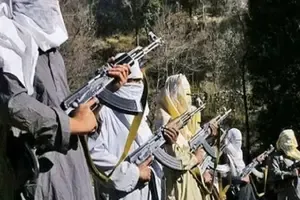
New Delhi, April 25 — The Islamic State – Khorasan Province (ISKP) may seize upon the destabilisation caused by recent United States and Israeli military strikes on Iran to expand its footprint, according to a new expert analysis. The report warns that the conditions now emerging in Iran mirror those that historically enabled the rise of terror organisations, with potentially severe consequences for the broader West Asia region and beyond.
Expert Warns of Terror Vacuum in Post-Strike Iran
Peter Knoope, a recognised authority on diplomacy and international cooperation, writing for India Narrative, cautioned that external military interventions rarely contain their consequences within the targeted country's borders. He argued that the current strikes risk generating long-term instability that extremist groups like ISKP are strategically positioned to exploit.
Knoope drew a direct historical parallel to the United States invasion of Iraq in 2003, which, through a chain of intermediate developments, eventually gave rise to Daesh (ISIS). He noted that Sunni-driven resistance to the reshuffling of internal power in Iraq attracted a surge of foreign terrorist fighters from across the globe, fuelling one of the most devastating terror movements in modern history.
"While the aftermath of the so-called Caliphate is now history, its traces still persist across the region and in parts of Africa and Asia," Knoope observed, underscoring that the consequences of such destabilisation rarely disappear — they merely evolve.
Conditions That Breed Extremism
Knoope outlined a specific set of structural conditions that historically enable the emergence and growth of terror groups. These include the proliferation of weapons, the creation of ungoverned or under-governed spaces, widespread public disenchantment, human rights violations, systemic suppression, and the presence of exploitable opportunity.
He warned that such environments generate a dangerous vacuum — one that extremist recruiters are adept at filling by mobilising grievances and channelling anger toward violence. The combination of these factors, he argued, is precisely what makes post-strike Iran a potential breeding ground for radicalisation.
Of particular concern is the risk of a rising "us versus them" identity-based dynamic within Iran — a sectarian fault line that ISKP leadership could deliberately inflame. The expert cautioned this could manifest in targeted attacks against Shia communities, religious institutions, and prominent individuals.
ISKP's Regional Ambitions and the Sectarian Threat
ISKP, the Afghanistan-based affiliate of the Islamic State, has demonstrated growing ambitions beyond its core operational theatre. The group has claimed responsibility for high-profile attacks in Russia, Iran, and across Central Asia in recent years, signalling a deliberate strategy of geographic expansion during periods of geopolitical flux.
Knoope raised the critical question of whether the current military intervention could trigger a resurgence not only of ISKP but also of groups like Jama'at Nusrat al-Islam wal-Muslimin (JNIM), which has already established a significant presence across the Sahel region of Africa. The interconnected nature of these networks means that instability in one region can rapidly energise affiliates thousands of kilometres away.
He also acknowledged the uncomfortable possibility that sectarian violence in Iran could receive tacit or active support — whether direct or passive — from certain Sunni-dominated forces elsewhere in the region, though he noted this remains speculative at this stage.
Historical Pattern: Military Action and Terror Blowback
This analysis arrives at a moment of heightened global scrutiny over the strategic wisdom of the US-Israel strikes on Iran. Critics have long argued that military interventions in the Middle East and West Asia, however tactically precise, tend to generate strategic blowback that outlasts the immediate military objective.
Notably, the 2001 invasion of Afghanistan, the 2003 Iraq War, and the 2011 NATO intervention in Libya each left behind fragmented state structures that became incubators for extremist groups. The pattern is consistent: military action without a robust post-conflict governance framework creates the very instability it seeks to eliminate.
For India, the stakes are particularly significant. ISKP has previously identified India as a target in its propaganda, and any strengthening of the group's operational capacity in West Asia or Central Asia carries direct national security implications for New Delhi.
Implications for Regional and Global Security
The report's findings carry weight beyond academic analysis. If ISKP successfully establishes a meaningful presence within Iran, it would represent a significant geographic leap for the group — one that places it closer to South Asia, the Gulf states, and key global energy corridors.
Security analysts have previously noted that ISKP thrives in the interstitial spaces between competing state powers — and a weakened or internally divided Iran could provide exactly that kind of operational latitude. The group's demonstrated ability to conduct complex, multi-city attacks — as seen in Moscow in March 2024 — suggests it has both the intent and the capability to scale up operations given the right conditions.
As West Asia enters what many observers describe as its most volatile phase in decades, the international community faces a familiar but urgent dilemma: how to address immediate security threats without inadvertently creating the conditions for the next generation of extremism. The answer, if history is any guide, will define the region's trajectory for years to come.
Point of View
But if they fracture Iranian state cohesion, ISKP will not wait for an invitation — it will walk through the door. India, which sits downstream of every West Asian destabilisation, must watch this trajectory with far greater alarm than its diplomatic silence currently suggests.
NationPress
16 Sept 2026
Frequently Asked Questions
What is ISKP and why is it a threat in Iran?
ISKP, or Islamic State – Khorasan Province, is the Afghanistan-based affiliate of the Islamic State known for expanding attacks across Central Asia, Russia, and Iran. Experts warn that US-Israeli strikes on Iran could create ungoverned spaces and public anger that ISKP will exploit to recruit and launch sectarian attacks against Shia communities.
How are US-Israeli strikes on Iran linked to terrorism risks?
According to expert Peter Knoope, external military strikes historically generate instability — including weapons proliferation, governance vacuums, and public disenchantment — that terror groups exploit. He draws a direct parallel to the 2003 US invasion of Iraq, which indirectly led to the rise of Daesh through a chain of destabilising developments.
Could ISKP attacks target Shia Muslims in Iran?
Yes, experts warn this is a credible risk. Peter Knoope specifically cautioned that a rising 'us versus them' sectarian identity in Iran could lead ISKP to conduct targeted attacks against Shia communities, institutions, and individuals, potentially with passive support from some Sunni-dominated regional forces.
What is the connection between the 2003 Iraq War and the rise of ISIS?
The 2003 US invasion of Iraq disrupted internal power structures, triggering Sunni resistance and an influx of foreign terrorist fighters that eventually coalesced into Daesh (ISIS). Experts now warn that similar dynamics could unfold in Iran following recent US-Israeli military strikes.
What does ISKP's potential expansion in Iran mean for India?
ISKP has previously named India as a target in its propaganda, and any strengthening of the group's operational capacity in West Asia or Central Asia carries direct national security implications for New Delhi. An ISKP presence in Iran would place the group geographically closer to South Asia and key Indian strategic interests.