Private Schools in Islamabad Fail to Honor Scholarship Quota for Low-Income Students
Synopsis
Private schools in Islamabad are reportedly disregarding a crucial scholarship quota for low-income students, potentially earning billions through this violation. The implications for educational equity are profound, particularly for underprivileged communities.
Key Takeaways
Private schools in Islamabad are neglecting their scholarship obligations.
This disregard results in significant profits at the expense of low-income students.
Approximately 38,900 students have been denied access to necessary educational resources.
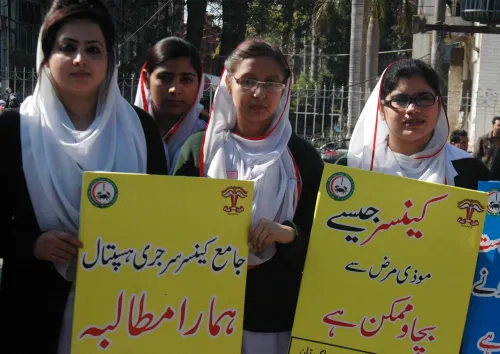
The struggle for educational equity continues, especially among girls in rural areas .
Immediate legal action is crucial to address these violations.
Islamabad, April 16 (NationPress) In Islamabad, private educational institutions are failing to meet the mandatory 10% scholarship allocation for low-income students, as stipulated by the Right to Free and Compulsory Education Act of 2012. Documents presented to the Islamabad High Court indicate that these schools are profiting between PKR five billion and PKR six billion annually through this violation.
The scholarship quota was established to provide academically talented students from disadvantaged backgrounds with an opportunity to transform their futures, as highlighted in an editorial from The Express Tribune.
It is estimated that 38,900 students have been deprived of this essential right. If legal measures against these private entities do not accelerate, this number is likely to rise. Furthermore, merely enforcing the scholarship quota will not suffice to rectify the damage caused by these infractions. Authorities must ensure that all illegally obtained funds are returned, and reparations are provided to students who have lost out on vital educational prospects, according to The Express Tribune.
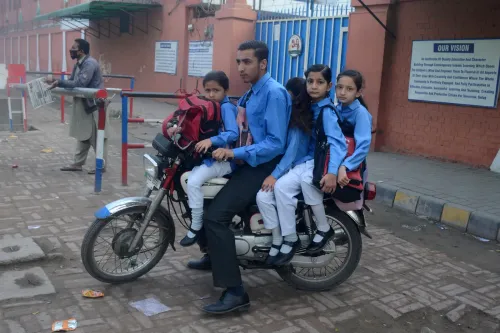
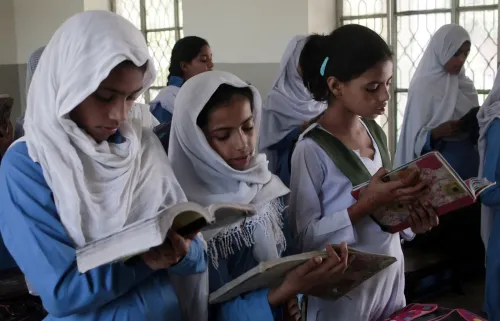
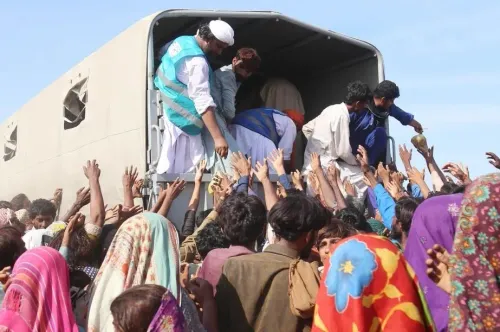
Recent data shows that 28% of children aged 5 to 16 in Pakistan are not attending school. Alarmingly, 34% of girls are out of school compared to 22% of boys, with these disparities particularly pronounced in rural areas, where gender and geographical factors hinder educational access.
Approximately two-thirds of Pakistanis aged 10 and above have attended school at some point, revealing a stark inequality in educational access, as reported by The Express Tribune, referencing the HIES survey by Gallup Pakistan. The national literacy rate in Pakistan stands at 63%, with male literacy at 73% and female literacy at 52%.
Urban literacy is at 77%, while it drops to 56% in rural areas. Although 68% of children are enrolled in primary schools, this number sharply declines at higher educational levels, with only 40% progressing to middle school and around 30% continuing to matriculation.
This significant drop in student retention underscores the obstacles faced in rural and underprivileged regions, pointing towards systemic issues such as safety concerns, distance to schools, and rising opportunity costs as children age, especially affecting rural girls. Factors such as financial burdens, domestic responsibilities, and limited options for post-primary education further exacerbate these challenges, particularly for girls who face social expectations and early marriage.
Point of View
It is alarming to witness private schools neglecting their legal obligations. Education is a fundamental right, and the disregard for scholarship quotas not only undermines the law but also perpetuates inequality. Immediate action is essential to ensure that all students, regardless of their economic background, have access to quality education.
NationPress
19 Sept 2026
Frequently Asked Questions
What is the scholarship quota for private schools in Pakistan?
Private schools are required to allocate **10%** of their enrollment for scholarships to low-income students as mandated by the **Right to Free and Compulsory Education Act, 2012**.
How much revenue do private schools generate by violating the scholarship quota?
These schools reportedly earn between **PKR five billion** and **PKR six billion** annually by not adhering to the scholarship quota.
What percentage of children are out of school in Pakistan?
Around **28%** of children aged 5-16 years are currently out of school in Pakistan.
How does gender impact school enrollment in Pakistan?
Girls are disproportionately affected, with **34%** of girls not enrolled in schools compared to **22%** of boys, particularly in rural areas.
What is the literacy rate in Pakistan?
The national literacy rate in Pakistan stands at **63%**, with significant disparities between male and female literacy.