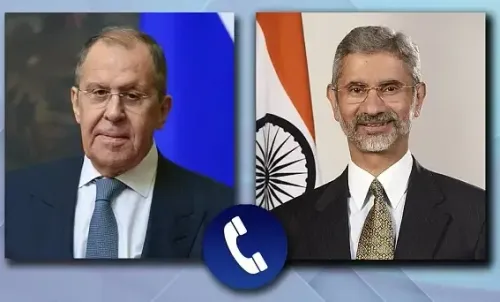
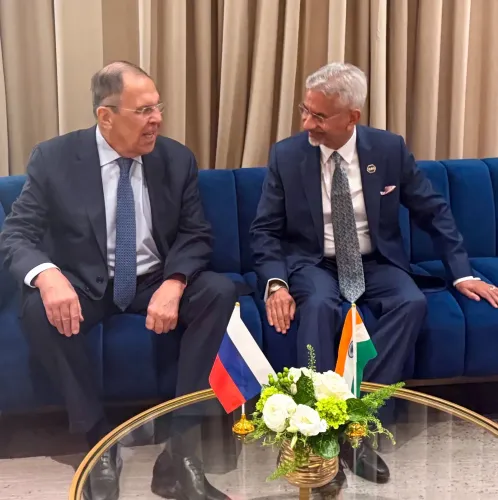
Jaishankar, Lavrov discuss bilateral, global issues in call
Synopsis
Jaishankar and Lavrov have now spoken twice in November, with the latest call covering bilateral ties, multilateral and regional issues and ongoing conflicts. The MEA confirmed a dense run of India-Russia contacts but offered no detailed readout of outcomes.
Key Takeaways
Jaishankar and Sergei Lavrov exchanged views on bilateral, multilateral and regional issues and ongoing conflicts in a telephone call this week.
The MEA confirmed the conversation at its weekly briefing in New Delhi on 25 November .
MEA spokesperson Randhir Jaiswal said India has had several engagements with Russia in the last few weeks.
The Monday call followed an earlier Jaishankar-Lavrov conversation on 9 November focused on the Ukraine conflict and diplomatic initiatives.
Jaishankar posted on X after both calls; the Russian Foreign Ministry said the latest discussion covered the bilateral agenda and current international issues.
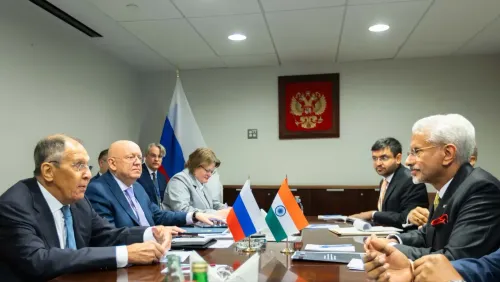
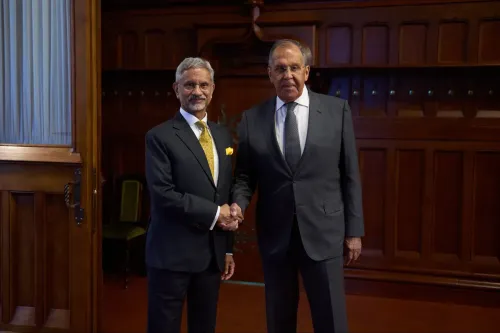
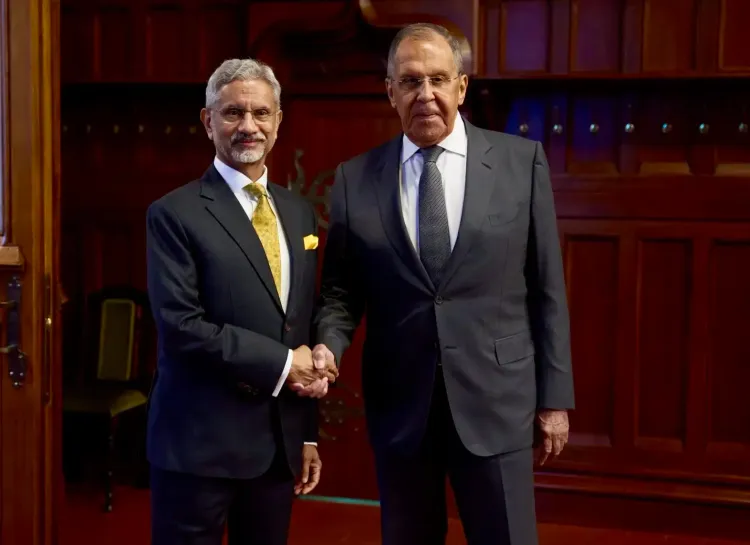
External Affairs Minister S. Jaishankar and Russian Foreign Minister Sergei Lavrov exchanged views on bilateral issues as well as multilateral and regional questions and ongoing conflicts during a telephone conversation this week, the Ministry of External Affairs (MEA) said on Wednesday. Addressing the weekly media briefing in New Delhi, MEA spokesperson Randhir Jaiswal said India has had several engagements with the Russian side in the last few weeks, and that the latest call covered both the bilateral agenda and the wider global landscape.
What the government said
Jaiswal told reporters that the conversation between the two foreign ministers was one of several contacts with Moscow in recent weeks. He said such exchanges are occasions for the External Affairs Minister and his Russian counterpart to discuss bilateral matters as well as multilateral issues, regional developments and conflicts that currently shape international diplomacy.
Jaiswal said: “Our Foreign Minister had a conversation with the Foreign Minister of Russia. We have had engagements with the Russian side -- several such engagements in the last few weeks or so. And these are occasions when leaders from both sides, the External Affairs Minister from our side and the Foreign Minister of Russia from their side, exchange views on bilateral issues as well as several issues that today form part of the global landscape: multilateral issues, regional issues, conflicts that are going on. So these were some of the issues that were discussed during the phone call.”
Monday’s telephone conversation
On Monday, Jaishankar and Lavrov held a telephone conversation on a number of issues on the bilateral agenda. After the call, Jaishankar posted on X: “Appreciate the telephonic discussion this evening with FM Lavrov of Russia on recent developments.” The Russian Foreign Ministry stated that the heads of the two foreign affairs agencies discussed a number of issues on the bilateral agenda and exchanged views on current international issues.
The MEA briefing on 25 November did not spell out operational outcomes of the call, nor did it name specific theatres beyond the general reference to ongoing conflicts and regional issues. Officials presented the contact as part of a regular diplomatic channel rather than a one-off crisis conversation.
Earlier call focused on Ukraine
The two ministers had also spoken over the phone earlier this month, on 9 November. That conversation, according to Jaishankar’s subsequent post on X, focused on the Ukraine conflict and ongoing diplomatic initiatives. He wrote: “Spoke this evening with Foreign Minister Sergey Lavrov of Russia. Our conversation focused on the Ukraine conflict and ongoing diplomatic initiatives.”
This is at least the second high-level telephone exchange between Jaishankar and Lavrov in November. The back-to-back contacts sit within the broader run of India-Russia engagements in recent weeks flagged by the MEA spokesperson, as New Delhi and Moscow continue to compare notes while diplomatic efforts around the war and other conflicts remain on the international agenda.
Why the contacts matter
India and Russia maintain a long-standing strategic partnership spanning defence, energy and multilateral forums. Frequent ministerial calls are a feature of that relationship, particularly when major conflicts and UN-level debates are in play. Notably, the November contacts come as diplomatic initiatives around Ukraine remain active — a subject both ministers explicitly discussed on 9 November and which falls within the ongoing conflicts the MEA said were covered in the latest call.
For New Delhi, staying in direct touch with Moscow allows it to register positions on regional stability, multilateral processes and the fallout of wars without committing every detail of those conversations to a public readout. The MEA’s choice to confirm the call at the weekly briefing, rather than issue an expansive joint statement, is consistent with how India often treats sensitive diplomatic contacts.
What happens next
Neither the MEA nor the Russian Foreign Ministry announced a follow-up meeting or a detailed joint communique beyond the existing readouts. Jaiswal indicated that such conversations form part of an already dense calendar of India-Russia contacts. Defence supplies, energy trade and other commercial files were not mentioned in the briefing; the public emphasis remained on political consultation over bilateral and global issues.
Further specifics, if any, are likely to surface only if either capital schedules a physical visit or issues a fuller readout. Until then, the two November telephone calls stand as the most recent confirmed high-level political exchanges between Jaishankar and Lavrov.
Point of View
Not a routine courtesy readout. India is keeping a live channel to Moscow while Ukraine and other conflicts remain unresolved, which is consistent with strategic autonomy but leaves New Delhi open to Western pressure. The MEA’s thin briefing — confirming the call without naming outcomes — suggests the substance is still too sensitive for a public joint statement. What much coverage misses is that this November tempo is diplomatic signalling, not small talk.
NationPress
25 Nov 2026
Frequently Asked Questions
What did Jaishankar and Lavrov discuss in their phone call?
They exchanged views on bilateral issues as well as multilateral and regional issues and ongoing conflicts, according to the Ministry of External Affairs. The Russian Foreign Ministry said the two also discussed a number of issues on the bilateral agenda and current international questions.
When did Jaishankar speak to Lavrov?
The latest telephone conversation took place on Monday, and the MEA confirmed it at its weekly briefing in New Delhi on 25 November. The two ministers had also spoken earlier this month, on 9 November.
Did Jaishankar and Lavrov discuss the Ukraine conflict?
Yes, their 9 November phone call focused on the Ukraine conflict and ongoing diplomatic initiatives, according to Jaishankar’s post on X. The MEA said the more recent call covered ongoing conflicts among other global and regional issues, without naming specific theatres.
What did the MEA say about India-Russia engagements?
MEA spokesperson Randhir Jaiswal said India has had several engagements with the Russian side in the last few weeks. He described the Jaishankar-Lavrov calls as occasions to exchange views on bilateral, multilateral and regional issues and conflicts.
Who confirmed the Jaishankar-Lavrov conversation?
The Ministry of External Affairs confirmed it at the weekly media briefing in New Delhi, with spokesperson Randhir Jaiswal outlining the subjects discussed. Jaishankar also posted on X after the Monday call, and the Russian Foreign Ministry issued its own readout.