Jaishankar concludes Bhutan visit, ₹4,000 crore energy credit signed
Synopsis
EAM Jaishankar's Bhutan visit wasn't ceremonial — it delivered a ₹4,000 crore energy credit, restarted the long-stalled 1,200 MW Punatsangchhu-I dam, and placed India squarely behind Bhutan's ambitious Gelephu Mindfulness City project. The visit signals that India is actively deepening its most stable bilateral relationship ahead of shifting regional dynamics.
Key Takeaways
Jaishankar completed an official visit to Thimphu, Bhutan on 18 September 2026 , calling it 'productive'.
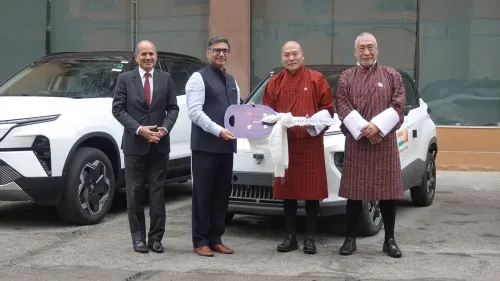
India and Bhutan signed an agreement on a concessional Line of Credit of ₹4,000 crore for energy projects.
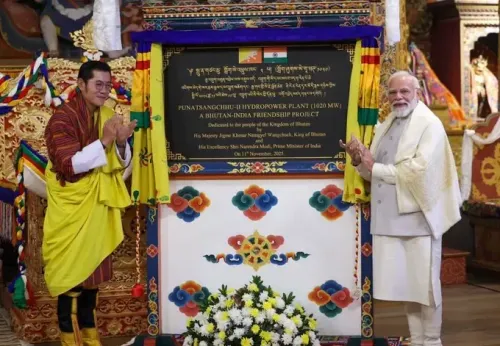
The 1,020 MW Punatsangchhu-II HEP was inaugurated; construction of the 1,200 MW Punatsangchhu-I HEP has resumed.
India reaffirmed support for Bhutan's 13th Five Year Plan (2024-29) and the Gelephu Mindfulness City (GMC) vision.
Jaishankar and King Jigme Khesar Namgyel Wangchuck lit the 'Aashirvaad ka Diya' at Tashichho Dzong , marking PM Modi's 25 years of public service .
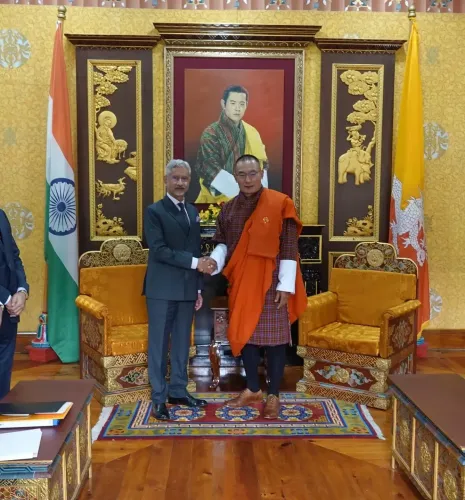
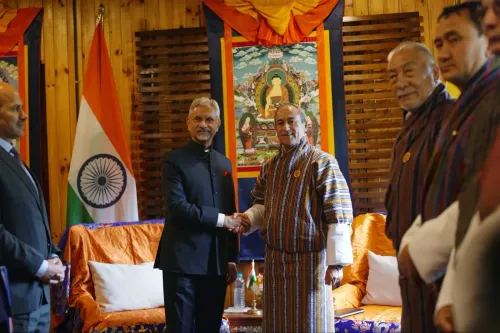
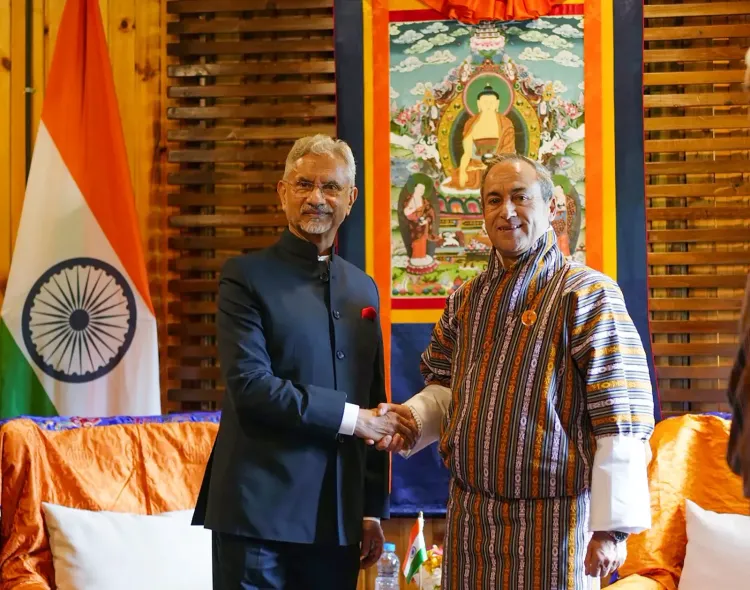
External Affairs Minister S. Jaishankar on Friday, 18 September 2026, wrapped up an official visit to Thimphu, describing it as 'productive' and highlighting the signing of a ₹4,000 crore concessional Line of Credit for energy projects as a centrepiece of renewed bilateral engagement between India and Bhutan.
Key Outcomes of the Visit
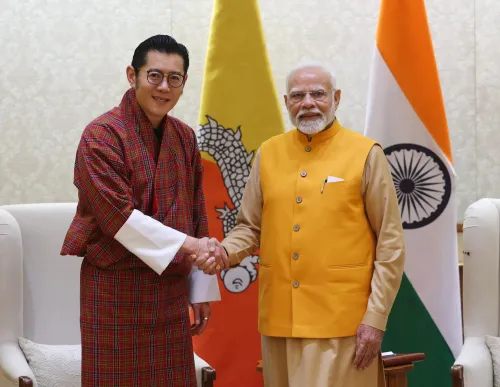
A joint statement issued on Friday welcomed the progress made in deepening the India-Bhutan partnership, with both sides commending advances in bilateral development cooperation under the guidance of Bhutanese King Jigme Khesar Namgyel Wangchuck and Prime Minister Narendra Modi. Jaishankar reaffirmed India's support for Bhutan's developmental goals and priorities, while Bhutan acknowledged India's wide-ranging support under its 13th Five Year Plan (2024-29).
The visit came at the invitation of Bhutanese Minister for Foreign Affairs and External Trade Lyonpo D. N. Dhungyel, and marked the latest high-level diplomatic exchange between the two countries, which share uniquely close ties.
Energy Cooperation Takes Centre Stage
Both ministers expressed satisfaction at the implementation of the Joint Vision on Energy Partnership of March 2024. Key milestones noted in the statement included the inauguration of the 1,020 MW Punatsangchhu-II Hydroelectric Project (HEP), the signing of its Tariff Protocol, and the resumption of dam construction on the 1,200 MW Punatsangchhu-I HEP — a project that had been stalled for years.
The agreement on a concessional Line of Credit of ₹4,000 crore for energy projects in Bhutan was welcomed as a significant step, as was the active engagement of Indian companies in Bhutan's hydropower sector. This energy cooperation dimension reflects a broader strategic interest: India sources a significant share of hydropower imports from Bhutan, and Thimphu depends on project revenues for its exchequer.
Gelephu Mindfulness City and Long-term Collaboration
Jaishankar reaffirmed the Government of India's support for the Bhutanese King's vision for the Gelephu Mindfulness City (GMC) — an ambitious special economic zone being developed in southern Bhutan with potential links to India's Northeast. The two sides acknowledged progress through the Joint Working Group on GMC and agreed to continue developing collaboration on GMC-related issues.
This is the first major bilateral checkpoint since the GMC concept gained significant international attention in 2024, and India's explicit backing signals it views the project as strategically aligned with its Act East connectivity goals.
Ceremonial Highlights
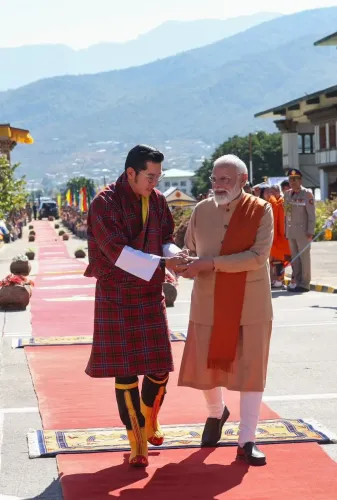
On Thursday, Jaishankar joined King Jigme Khesar Namgyel Wangchuck and Prime Minister Tshering Tobgay at the iconic Tashichho Dzong in Thimphu to light the 'Aashirvaad ka Diya' — a tribute to Prime Minister Modi's 25 years of public service. Members of the Indian community in Bhutan and friends of India were also present at the ceremony.
'Concluded a productive visit to Bhutan. Touched by the warmth of our unique ties of friendship. Kadrinchey La!,' Jaishankar wrote in a post on X, sharing highlights of the trip.
What's Next
With the concessional credit agreement signed and the Punatsangchhu-I dam construction back on track, attention will shift to implementation timelines for the hydropower projects. Progress on the Gelephu Mindfulness City and continued engagement through bilateral working groups is expected to define the next phase of India-Bhutan cooperation.
Point of View
While India secures clean energy and keeps Thimphu firmly within its orbit. The explicit backing for the Gelephu Mindfulness City is notable: it connects India's Northeast connectivity agenda to a Bhutanese economic experiment that could reshape bilateral trade flows. What the joint statement does not address, however, is the pace of Bhutan's own border talks with China — a variable that increasingly shapes the context in which India frames every headline out of Thimphu.
NationPress
18 Sept 2026
Frequently Asked Questions
What were the main outcomes of EAM Jaishankar's visit to Bhutan?
The visit produced a concessional Line of Credit agreement worth ₹4,000 crore for energy projects in Bhutan, progress on key hydropower projects, and India's reaffirmation of support for Bhutan's 13th Five Year Plan and the Gelephu Mindfulness City. A joint statement also noted the inauguration of the 1,020 MW Punatsangchhu-II HEP and the resumption of construction on the 1,200 MW Punatsangchhu-I HEP.
What is the Gelephu Mindfulness City and why does India's support matter?
The Gelephu Mindfulness City (GMC) is an ambitious special economic zone being developed in southern Bhutan, envisioned by King Jigme Khesar Namgyel Wangchuck. India's backing matters because the project has natural connectivity links to India's Northeast, and Indian investment and infrastructure support are seen as critical to its viability.
What is the significance of the ₹4,000 crore Line of Credit for Bhutan?
The concessional Line of Credit of ₹4,000 crore is earmarked for energy projects in Bhutan and will facilitate further hydropower development and Indian company participation in the sector. It builds on the Joint Vision on Energy Partnership signed in March 2024, reinforcing the energy pillar of the India-Bhutan relationship.
What is the current status of the Punatsangchhu hydropower projects?
The 1,020 MW Punatsangchhu-II Hydroelectric Project has been inaugurated and its Tariff Protocol signed, while construction on the 1,200 MW Punatsangchhu-I HEP — which had been stalled — has now resumed. Both projects are central to India-Bhutan energy cooperation.
Why did Jaishankar visit Bhutan?
Jaishankar visited Bhutan at the official invitation of Bhutanese Foreign Minister Lyonpo D. N. Dhungyel to review and advance bilateral cooperation across development, energy, and connectivity. The visit also included a ceremonial tribute to PM Modi's 25 years of public service, held at the iconic Tashichho Dzong in Thimphu.