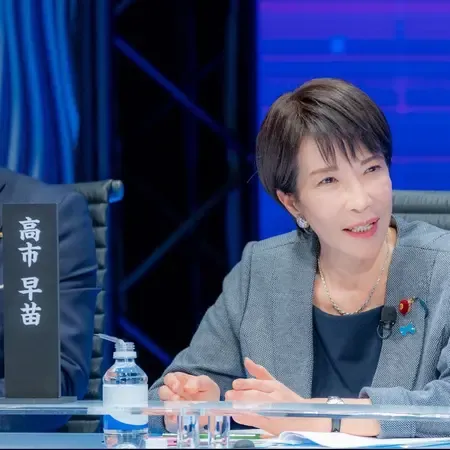
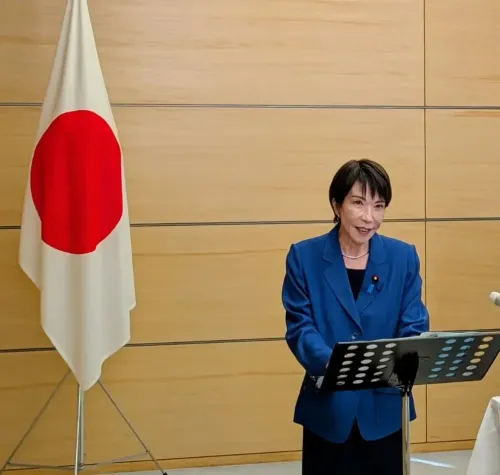
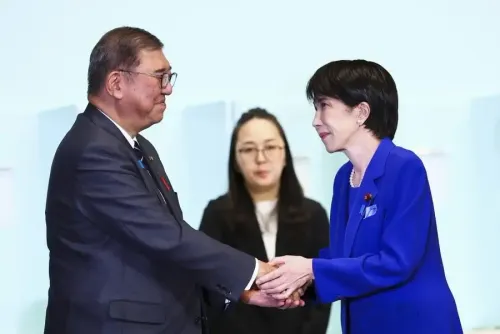
Japan PM Takaichi reshuffles cabinet, brings in JIP minister for first time
Synopsis
Japan PM Sanae Takaichi's first cabinet reshuffle since taking office brings a historic first — a Japan Innovation Party member inside the cabinet — while controversially reinstating lawmakers punished over a political slush fund scandal. With Japan's security posture about to sharpen and an LDP leadership race looming, the new lineup is as much about political survival as policy direction.
Key Takeaways
PM Sanae Takaichi conducted her first cabinet reshuffle on 17 September 2026 , since taking office in October 2025 .
Hiroshi Nakatsuka of the Japan Innovation Party (JIP) was named regulatory reform minister — the first JIP member ever to hold a cabinet post.
Scandal-disciplined LDP lawmakers Kazuo Yana and Yoshihiro Seki were appointed agriculture minister and education minister respectively — the first such appointments since the slush fund affair.
Key ministers Kihara , Motegi , Koizumi , and Katayama all retained their portfolios.
Japan's three key security documents are due for revision by end of 2026 , potentially covering unmanned systems and hypersonic missile production.
LDP rival Yoshimasa Hayashi was notably excluded from the new cabinet ahead of next year's party leadership race.
Japanese Prime Minister Sanae Takaichi overhauled her cabinet on Thursday, 17 September 2026, retaining most senior ministers while marking a historic first by appointing a member of the Japan Innovation Party (JIP) — the junior coalition partner — to a cabinet post. The reshuffle is Takaichi's first since she assumed office in October 2025.
Key Cabinet Retentions and New Appointments
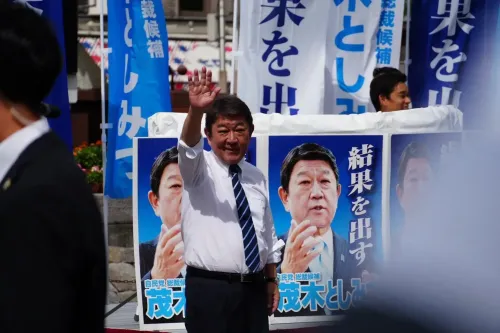
Chief Cabinet Secretary Minoru Kihara, Foreign Minister Toshimitsu Motegi, Defence Minister Shinjiro Koizumi, and Finance Minister Satsuki Katayama all held on to their portfolios, signalling continuity in Japan's core policy direction. The retained lineup suggests Takaichi is not seeking a policy reset but rather a political consolidation ahead of the LDP presidential election due next autumn.
In a notable and controversial move, House of Representatives members Kazuo Yana and Yoshihiro Seki — both previously disciplined by the Liberal Democratic Party (LDP) over a high-profile political slush fund scandal — were named agriculture minister and education minister, respectively. This marks the first time since the scandal broke that party-disciplined lawmakers have been elevated to cabinet rank, a decision likely to attract public scrutiny.
Historic JIP Entry Into the Cabinet
The most structurally significant change is the appointment of Hiroshi Nakatsuka, formerly secretary general of the JIP, as minister in charge of regulatory reform. It is the first time a JIP member has served as a cabinet minister, transforming the coalition's relationship from external parliamentary support to direct executive participation. Analysts see the move as a deepening of the LDP-JIP alliance ahead of Takaichi's bid for a second LDP presidential term.
Security Posture and Policy Implications
Shigeaki Koga, a former official at Japan's Ministry of Economy, Trade and Industry, said that on foreign and security matters the JIP is 'even more hawkish than Takaichi' and could potentially encourage the Prime Minister to pursue more assertive policies. The Takaichi government is already set to revise Japan's three key security documents by the end of 2026, with plans reportedly including the acquisition of large numbers of unmanned systems and moves toward mass production of hypersonic missiles.
Analysts broadly read the reshuffle as a signal that the administration will press ahead with its military build-up, proactive fiscal stance, and active diplomatic agenda — while also reinforcing Takaichi's grip on the party machinery.
Hayashi's Absence and Internal LDP Dynamics
One absence drew particular attention: former Internal Affairs and Communications Minister Yoshimasa Hayashi, who was Takaichi's rival in last year's LDP presidential election, did not receive a cabinet position. The omission is widely interpreted as a consolidation move, removing a potential internal challenger from a platform of executive influence as Takaichi sets her sights on re-election as party president next autumn.
With security document revisions due before year-end and the LDP leadership race approaching, the composition of this cabinet will face its first major test sooner rather than later.
Point of View
But the more revealing detail is the rehabilitation of slush-fund-disciplined lawmakers — a calculated political risk that suggests Takaichi is prioritising factional loyalty over public optics. With an LDP presidential election due next autumn, every appointment is also a vote count. The hawkish JIP presence in cabinet, meanwhile, could push Japan's already-assertive security posture further rightward at a moment when Tokyo is rewriting its core defence documents. Mainstream coverage has focused on the coalition milestone; the harder question is whether Takaichi is governing for Japan's strategic interests or for her own political longevity — and whether those two objectives are diverging.
NationPress
17 Sept 2026
Frequently Asked Questions
Why did Japan PM Takaichi reshuffle her cabinet?
Takaichi conducted her first cabinet reshuffle on 17 September 2026 to consolidate her political base ahead of the LDP presidential election due next autumn, while also deepening the governing coalition by bringing the Japan Innovation Party directly into the cabinet for the first time.
Who is Hiroshi Nakatsuka and why is his appointment significant?
Hiroshi Nakatsuka is the former secretary general of the Japan Innovation Party (JIP). His appointment as minister in charge of regulatory reform is historically significant because he is the first JIP member ever to serve as a cabinet minister, shifting the party from external coalition support to direct executive participation.
Why is the inclusion of slush-fund-disciplined lawmakers controversial?
Kazuo Yana and Yoshihiro Seki were previously disciplined by the LDP over a high-profile political slush fund scandal. Their appointment as agriculture minister and education minister respectively marks the first time since the scandal emerged that party-penalised lawmakers have been given cabinet positions, raising questions about accountability.
What are Japan's three key security documents and when will they be revised?
Japan's three core security documents — the National Security Strategy, National Defence Strategy, and Defence Buildup Plan — are due for revision by the end of 2026. Reports indicate the updated documents may include plans to acquire large numbers of unmanned systems and move toward mass production of hypersonic missiles.
Why was Yoshimasa Hayashi left out of the cabinet?
Yoshimasa Hayashi, a former Internal Affairs and Communications Minister who contested against Takaichi in last year's LDP presidential election, was not given a cabinet post. Analysts widely interpret his exclusion as a move by Takaichi to sideline a potential internal rival ahead of the next party leadership race.