Will PM Takaichi Maintain Power as LDP Dominates Elections?

Synopsis
As Japanese Prime Minister Sanae Takaichi's Liberal Democratic Party gears up for a potential majority in recent elections, the nation watches closely. With a two-thirds majority in sight, Takaichi's bold fiscal policies could reshape Japan's future. Dive into the unfolding political landscape and discover what lies ahead for Japan's leadership.
Key Takeaways
Sanae Takaichi's LDP is projected to win a majority.
A potential two-thirds majority is possible with allies.
Takaichi emphasizes an aggressive fiscal policy.
Voter turnout may be impacted by severe weather.
Significant uncertainty remains due to undecided voters.
Tokyo, Feb 8 (NationPress) The Liberal Democratic Party (LDP) led by Japanese Prime Minister Sanae Takaichi is on track to secure a strong independent majority in the recent snap elections held on Sunday, with projections indicating a potential two-thirds majority alongside its allies, according to exit polls released by Japanese media.
As reported by public broadcaster NHK, the LDP is likely to capture between 274 and 328 of the 465 seats in the influential lower house of parliament, surpassing the 233 required for a majority.
With its coalition partner, the Japan Innovation Party, also known as Ishin, the LDP could potentially achieve as many as 366 seats in the House of Representatives based on these polls.
Following a wave of congratulatory messages, including one from Indian Prime Minister Narendra Modi, Japan's first female Prime Minister, Takaichi, emphasized her commitment to an "aggressive" fiscal policy.
"We have always underscored the need for a responsible and proactive fiscal policy," she stated to reporters after the projections indicated her success.
“Our focus will be on ensuring the sustainability of fiscal policy while making necessary investments.”
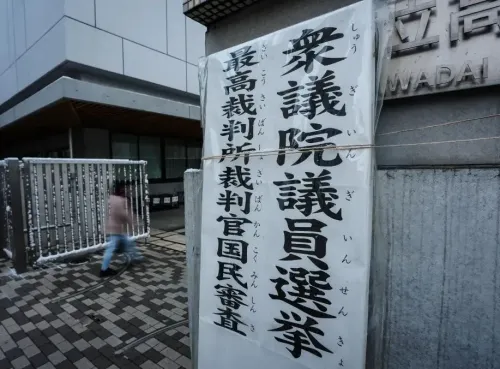
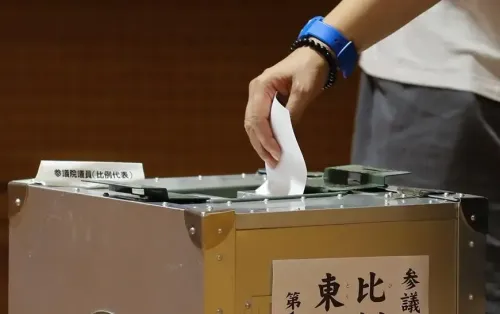
Voting for Japan's general election commenced on Sunday morning, with 1,284 candidates vying for 465 seats in the House of Representatives.
The key question of this election is whether the ruling coalition of the LDP and the Japan Innovation Party will maintain their majority, thereby allowing Prime Minister Takaichi’s administration to persist, or if the opposition will gain strength and hinder that outcome, according to Xinhua news agency.
Polling stations across the nation closed at 8 p.m. local time, with ballot counting expected to continue late into the night.
Among the 465 lower house seats, 289 are elected from single-member districts while 176 are filled through proportional representation across 11 regional blocs.
Recent surveys from major Japanese media outlets indicate that the ruling coalition is likely to secure a majority of seats. Conversely, the newly established Centrist Reform Alliance, which includes the Constitutional Democratic Party of Japan and Komeito, appears to be losing traction compared to their pre-election seat counts, according to a poll by Kyodo News.
Despite these forecasts, a notable portion of voters remains undecided, leaving the door open for last-minute changes, while ongoing slush fund scandals associated with the LDP add uncertainty to the electoral landscape.
On January 23, Takaichi made the unexpected decision to dissolve the lower house for a snap election, marking the first instance of such a dissolution at the beginning of a regular parliamentary session in 60 years. She has pledged to resign if the coalition fails to maintain its majority.
This decision has faced criticism for prioritizing political motives over the necessity of enacting an initial budget for fiscal 2026, which begins in April, despite her commitment to policy execution.
This election marks the first lower house election to occur in February since 1990. Heavy snowfall along the Sea of Japan coast raised concerns regarding potential transportation disruptions and safety risks as voters headed to polling places, which could impact voter turnout.
Point of View
The unfolding electoral dynamics in Japan highlight a critical juncture for the nation. The Liberal Democratic Party's potential victory not only signifies a continuation of established policies but also raises questions about the efficacy of opposition forces. As the political landscape shifts, the responsibility lies on the ruling coalition to address pressing issues and maintain public trust.
NationPress
24 Sept 2026
Frequently Asked Questions
What is the significance of the recent elections in Japan?
The elections are crucial as they determine whether Prime Minister Takaichi's coalition can maintain its majority, thereby influencing Japan's policy direction and governance.
Who is Sanae Takaichi?
Sanae Takaichi is Japan's first female Prime Minister and leader of the Liberal Democratic Party, known for her proactive fiscal policies.
What challenges does Takaichi face post-election?
Takaichi must navigate public discontent regarding unresolved scandals and ensure effective governance to uphold her coalition's majority.
How does the LDP's potential victory affect Japan's economy?
A continued LDP majority could lead to sustained fiscal policies aimed at economic recovery, but public scrutiny and accountability will remain essential.
What are the implications of opposition parties losing ground?
If opposition parties fail to gain traction, it may lead to less political diversity and a potential stagnation of alternative policies in Japan's governance.