What Happens as Voting Kicks Off in Japan's General Election?
Synopsis
Voting has commenced in Japan's general election, with 1,284 candidates competing for 465 House of Representatives seats. The outcome could significantly impact the ruling coalition's future and the opposition's strength. With uncertainty looming due to undecided voters and ongoing scandals, this election is crucial for Japan's political landscape.
Key Takeaways
1,284 candidates are contesting for 465 seats .
The election outcome may influence the ruling coalition's future.
Heavy snowfall poses risks to voter turnout.
Controversies surrounding the LDP could impact voter sentiment.
This election is Japan's first lower house vote in February since 1990 .
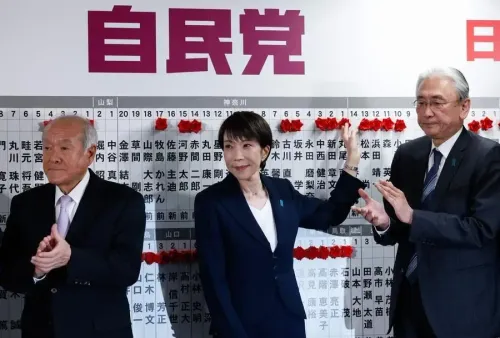
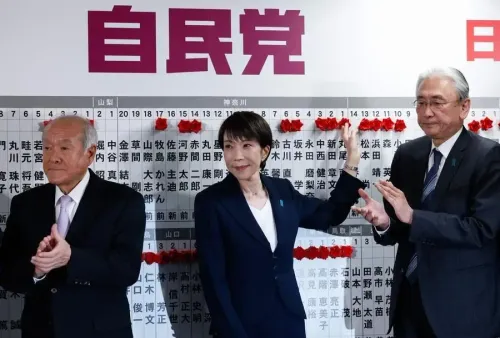
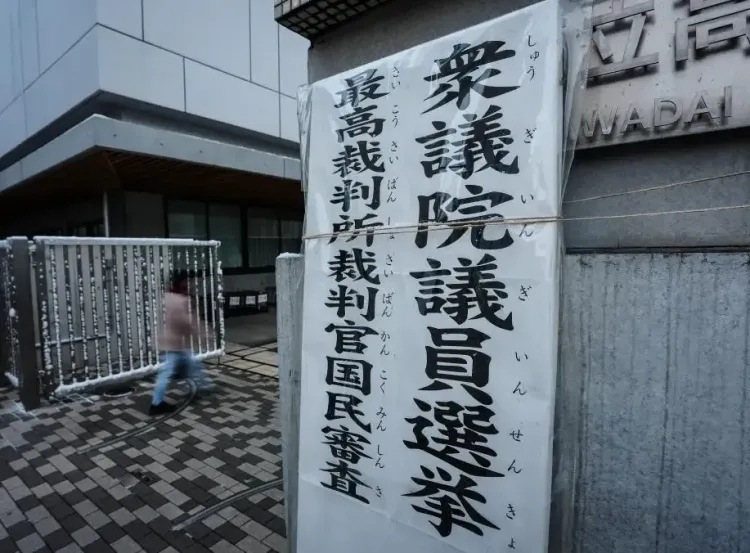
Tokyo, Feb 8 (NationPress) The voting process for Japan's general election commenced on Sunday morning, featuring 1,284 candidates vying for 465 seats in the House of Representatives, the influential lower chamber of parliament.
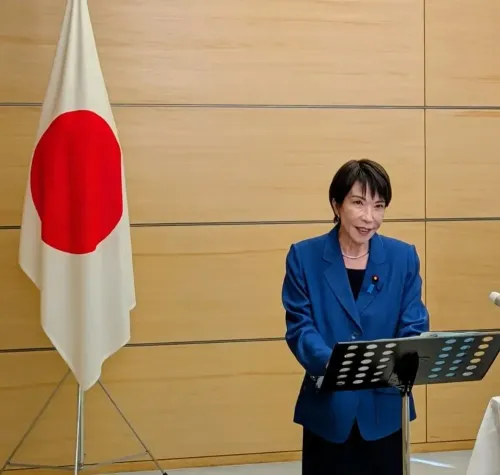
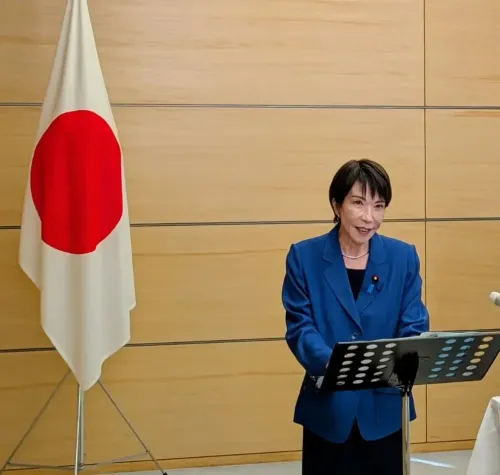
The election's pivotal question is whether the ruling coalition of the Liberal Democratic Party (LDP) and the Japan Innovation Party will maintain their majority, enabling Prime Minister Sanae Takaichi's administration to persist, or if the opposition will bolster its presence and thwart that possibility, according to reports from Xinhua.
Polling locations nationwide will close at 8 p.m. local time, with ballot counting anticipated to extend late into the night.
Among the 465 lower house seats, 289 will be filled from single-member districts while 176 will be allocated through proportional representation across 11 regional blocs.
Recent surveys from prominent Japanese media outlets indicate that the ruling coalition is poised to secure a majority. However, the recently established opposition Centrist Reform Alliance, launched by the Constitutional Democratic Party of Japan and Komeito (a former ally of the LDP), seems to be losing traction compared to their pre-election seat counts, according to a Kyodo News poll.
Despite these forecasts, many voters remain undecided, leaving the door open for potential last-minute changes. Furthermore, the ongoing slush fund scandals associated with the LDP add an element of unpredictability to the election.
On January 23, Takaichi unexpectedly dissolved the lower house for a snap election—marking the first such dissolution at the beginning of a regular parliamentary session in 60 years. She has pledged to resign if the coalition fails to retain its majority in this election.
This decision has faced criticism for prioritizing political maneuvering over the parliament's essential task of passing the initial budget for the fiscal year 2026, which begins in April, despite her commitment to focus on policy execution.
This election represents Japan's first lower house vote held in February since 1990. Heavy snowfall along the Sea of Japan coast raises concerns about possible transport disruptions and safety risks for voters, potentially impacting turnout.
Point of View
I emphasize the importance of this election for Japan's democratic process. The potential outcomes could significantly alter the political landscape and influence future policy directions. Voter participation is crucial in determining the effectiveness of the ruling coalition versus the opposition's strategies.
NationPress
29 Sept 2026
Frequently Asked Questions
What is the significance of Japan's general election?
This election is crucial as it will determine whether the ruling coalition can retain its majority and continue governing under Prime Minister Sanae Takaichi.
Who are the main candidates in the election?
A total of 1,284 candidates are competing, including those from the ruling Liberal Democratic Party and various opposition parties.
What are the concerns regarding voter turnout?
Heavy snowfall along the Sea of Japan coast raises concerns about transportation disruptions and safety for voters, which may impact turnout.
What recent events have influenced the election?
Ongoing slush fund scandals involving the LDP and recent polls showing undecided voters have added uncertainty to the election outcome.
When will the polling stations close?
Polling stations will close at 8 p.m. local time, with ballot counting expected to continue into the night.