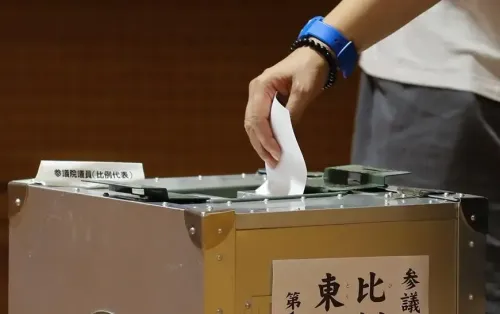
Did Japanese PM Takaichi Just Dissolve the Lower House for Elections on February 8?
Synopsis
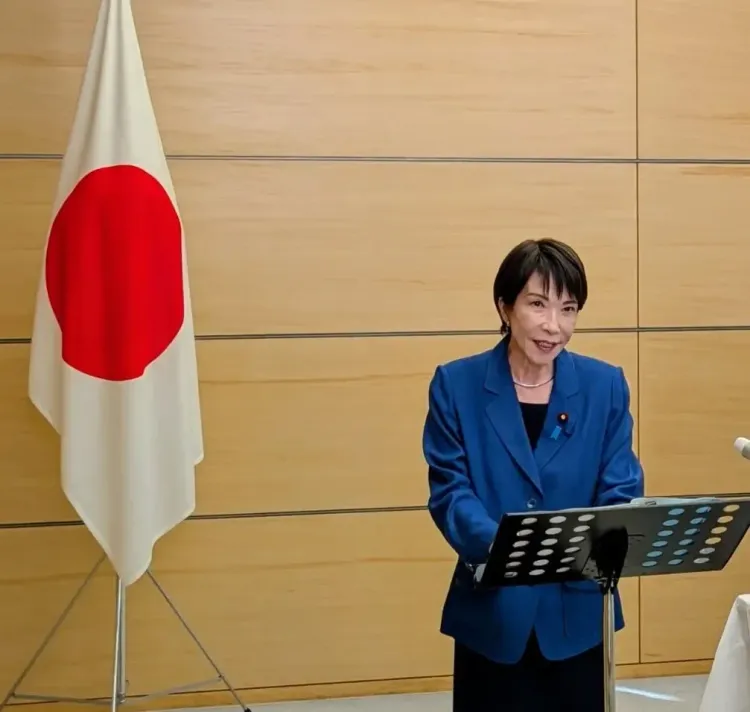
In a surprising political move, Japanese Prime Minister Sanae Takaichi has dissolved the House of Representatives, calling for elections on February 8. This decision comes amidst rising inflation concerns and will ignite fierce campaign debates around economic policies and political accountability.
Key Takeaways
The House of Representatives was dissolved by PM Takaichi on January 23.
Snap elections are scheduled for February 8.
Inflation and consumption tax on food are key campaign issues.
This dissolution is unprecedented at the start of a regular parliamentary session.
Opposition parties have criticized Takaichi for prioritizing elections over budget planning.
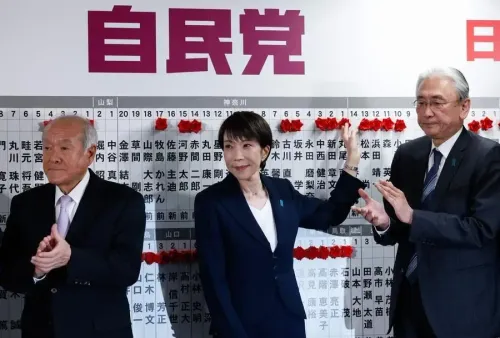
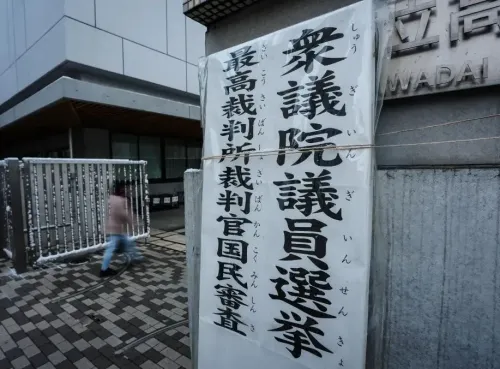
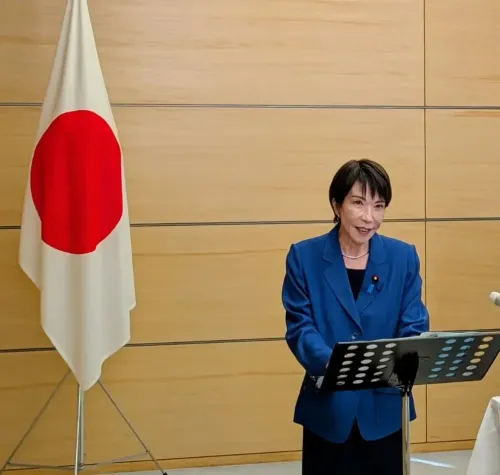
Tokyo, Jan 23 (NationPress) Japan's Prime Minister Sanae Takaichi announced the dissolution of the House of Representatives on Friday, paving the way for a snap election scheduled for February 8, according to local media reports.
This dissolution, taking place at the beginning of the ordinary parliamentary session, has initiated a brief campaign period for political parties ahead of the upcoming elections. Both ruling and opposition parties are advocating for the suspension of the consumption tax on food to alleviate the financial strain on households coping with inflation, as reported by Kyodo News.
On Friday, Takaichi's cabinet sanctioned the dissolution of the 465-member chamber. Notably, while Japanese prime ministers have the authority to dissolve the lower house, this marks the first occurrence of such an action at the commencement of a regular session in the past sixty years.
Takaichi emphasized her decision to hold elections stems from her desire to gain public support for her premiership, which commenced in October of last year. The ruling coalition has proposed a moratorium on the consumption tax for food items, while the opposition coalition has suggested eliminating it altogether. Election discussions are also expected to address topics such as politics and financial matters, especially in light of the slush fund scandal that affected the Liberal Democratic Party (LDP) in recent years, as well as issues related to foreign residents and tourists.
Despite Takaichi's cabinet enjoying a favorable support rating, the ruling coalition maintains a precarious majority in the lower house and is in the minority in the House of Councillors, indicating a need for collaboration with opposition lawmakers to pass legislation.
Critics among opposition parties have condemned Sanae Takaichi for calling for elections prior to the parliament's enactment of the initial budget for the fiscal year 2026, set to commence in April, accusing her of prioritizing political motives.
A former television host, Takaichi transitioned into politics in 1993, winning a seat in the Lower House as an independent candidate. She joined the LDP in 1996 and first entered the Cabinet under Prime Minister Shinzo Abe. She served as the Minister of State for Okinawa and Northern Territories Affairs, later becoming the first woman to lead the LDP's Policy Research Council.
From 2022 to 2024, Takaichi held the position of Japan's Economic Security Minister and is recognized as the longest-serving Minister for Internal Affairs, a role she has occupied during various tenures.
Takaichi, a prominent figure within the conservative faction of the LDP and a long-time advocate for its principles, was elected as the LDP leader with 185 votes, defeating Shinjiro, who received 156 votes in a runoff after no candidate achieved a majority in the initial voting round.
Point of View
The dissolution of the House of Representatives by PM Takaichi is a pivotal moment in Japanese politics. While it reflects her recognition of the need for public support, it also raises questions about governance priorities and fiscal responsibility. The NationPress remains committed to delivering unbiased and comprehensive coverage of this critical political event.
NationPress
29 Sept 2026
Frequently Asked Questions
Why did Prime Minister Takaichi dissolve the House of Representatives?
Prime Minister Takaichi dissolved the House to seek public support for her leadership and to address pressing economic issues, particularly inflation.
When will the elections take place?
The elections are scheduled for February 8.
What are the main topics expected to be discussed during the election campaign?
Key topics include the consumption tax on food, inflation, and political accountability.
What is the significance of dissolving the House at the start of a regular session?
This is the first time in six decades that a lower house is dissolved at the beginning of a regular session, highlighting the urgency of the political situation.
How does this dissolution impact Takaichi's cabinet?
Although Takaichi's cabinet enjoys a high support rating, the ruling coalition has a narrow majority, necessitating collaboration with opposition lawmakers.