Will PM Takaichi Retain Power as LDP Dominates Lower House Elections?

Synopsis
Japan's recent elections could solidify the leadership of Prime Minister Sanae Takaichi and her LDP. With potential majorities at stake, the political landscape remains dynamic, raising questions about the future direction of governance in Japan.
Key Takeaways
The LDP is projected to win a majority in the elections.
Coalition with the Japan Innovation Party could lead to stronger governance.
Voter undecidedness may influence final outcomes.
Heavy snowfall poses logistical challenges for voter turnout.
Takaichi has vowed to resign if the coalition loses its majority.
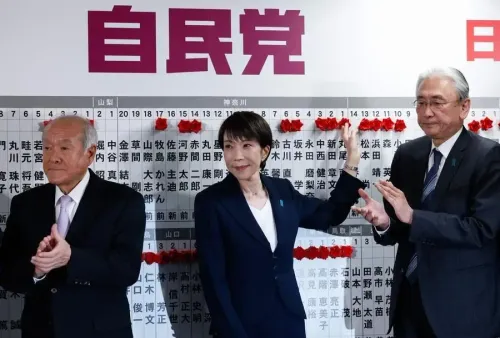
Tokyo, Feb 8 (NationPress) The Japanese Prime Minister Sanae Takaichi and her Liberal Democratic Party (LDP) are poised to secure a substantial majority independently and may even achieve a two-thirds majority in conjunction with allies in the snap elections held on Sunday, according to exit polls from Japanese media.
An exit poll conducted by public broadcaster NHK indicates that the LDP is on track to capture between 274 and 328 of the 465 seats in the influential lower house of parliament, significantly exceeding the 233 required for a majority.
In alliance with its coalition partner, the Japan Innovation Party (Ishin), the LDP could potentially amass as many as 366 seats in the House of Representatives, based on current polling data.
As a wave of congratulatory messages arrived, including one from Indian Prime Minister Narendra Modi, Japan's first female Prime Minister, Takaichi, underscored her commitment to an “aggressive” fiscal policy.
“We have continually emphasized the necessity of a responsible and proactive fiscal policy,” she expressed to reporters following the positive projections of her success.
“Our priority will be the sustainability of fiscal policy. We are committed to making essential investments.”
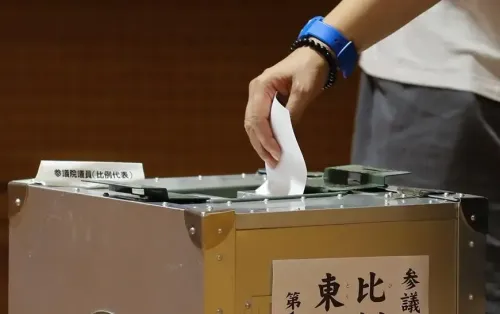
Voting for Japan's general election commenced on Sunday morning, featuring a total of 1,284 candidates vying for 465 seats in the House of Representatives.
The central question of the election is whether the governing coalition of the LDP and the Japan Innovation Party will maintain a majority, permitting Takaichi's administration to persist, or if the opposition will bolster its power to obstruct this outcome, as reported by Xinhua.
Polling stations nationwide were scheduled to close at 8 p.m. local time, with ballot counting anticipated to extend late into the evening.
Out of the 465 lower house seats, 289 will be elected from single-member districts, while 176 will be determined through proportional representation across 11 regional blocks.
Recent surveys from leading Japanese media outlets suggest that the ruling coalition is likely to secure a majority of seats. Concurrently, the newly established opposition Centrist Reform Alliance, formally initiated by the Constitutional Democratic Party of Japan and Komeito, a previous LDP ally, seems to be losing ground compared to their pre-election seat counts, according to a Kyodo News poll.
However, despite these forecasts, polls have noted a considerable portion of voters remain undecided, leaving the door open for last-minute changes, while ongoing slush fund scandals tied to the LDP continue to cast uncertainty over the election.
Takaichi made the unexpected decision to dissolve the lower house for a snap election on January 23, marking the first dissolution at the onset of a regular parliamentary session in 60 years. She has promised to resign if the coalition fails to secure a majority in the election.
This move has drawn criticism for prioritizing political factors over the parliament's enactment of an initial budget for fiscal 2026 starting in April, despite her assurance to prioritize policy execution.
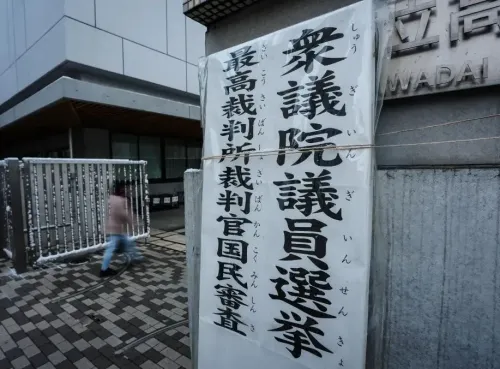
This election marks Japan's first lower house election held in February since 1990. Ongoing heavy snowfall along the Sea of Japan coast has raised concerns regarding transportation disruptions and safety risks as voters head to polling stations, which could, in turn, depress voter turnout.
Point of View
I believe this election signifies a crucial turning point for Japan's governance. With the potential for Takaichi's administration to continue, the focus will be on how her policies will shape the nation's future amidst economic challenges and public sentiment.
NationPress
30 Sept 2026
Frequently Asked Questions
What is the significance of the recent Japanese elections?
The elections are crucial as they could determine the future of Prime Minister Takaichi's administration and the policy direction of Japan.
How many seats are contested in the House of Representatives?
A total of 465 seats are contested in the Japanese House of Representatives.
What challenges does Takaichi face after the elections?
Takaichi faces challenges including public skepticism due to past LDP scandals and the need to ensure a solid fiscal policy.
What do the exit polls indicate about the LDP's performance?
Exit polls suggest the LDP is likely to secure a majority, with projections of winning between 274 and 328 seats.
Why was the lower house dissolved for a snap election?
Takaichi dissolved the lower house aiming to secure a majority before the initial budget enactment for fiscal 2026.