Karachi residents protest 16-hour power outages, block I.I. Chundrigar Road
Synopsis
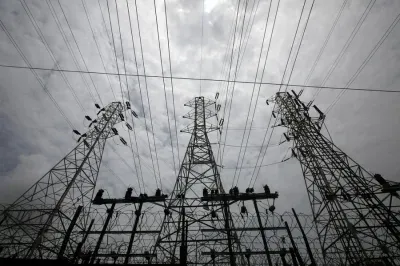
Karachi residents took to the streets over 16-hour daily power cuts, blocking one of the city's busiest commercial corridors. The protest is a visible symptom of a deepening electricity crisis across Pakistan, with loadshedding hitting urban and rural areas alike as summer demand peaks and K-Electric faces mounting public anger.
Key Takeaways
Residents of Railway Colony, Karachi blocked I.I.
Chundrigar Road on 28 April 2025 over unannounced loadshedding of up to 16 hours daily .
The protest disrupted traffic for over two hours ; police dispersed demonstrators after 30 minutes of negotiations.
Protesters accused K-Electric of ignoring bill-paying customers and causing suffering to children, patients, and the elderly.
Power outages in Punjab range from 8 hours in urban areas to 12–16 hours in rural areas under Lesco and other distributors.
Multiple Punjab districts — including Faisalabad , Multan , Bahawalpur , and Dera Ghazi Khan — are also experiencing severe loadshedding.
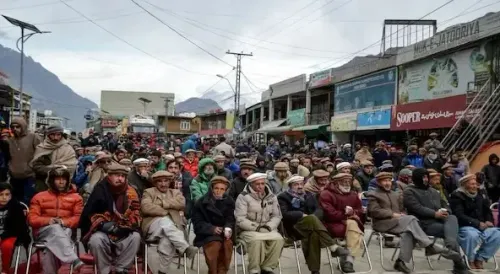
Residents of Karachi's Railway Colony staged a protest on Monday, 28 April 2025, against prolonged, unannounced power outages lasting up to 16 hours daily, blocking key roads in the city's business district for over two hours, according to local media reports. The demonstration, directed at power utility K-Electric, is the latest flashpoint in a widening loadshedding crisis gripping Pakistan as summer temperatures surge.
Key Developments
Protesters gathered at the Shaheen Complex intersection in Railway Colony, blocking vehicular movement on I.I. Chundrigar Road, Ziauddin Ahmed Road, and adjacent areas including Saddar and Pakistan Chowk. Commuters faced severe difficulty under extreme heat as traffic queues stretched for kilometres. Office-goers, students, and patients were among those stranded, with one woman reportedly stuck in traffic for 90 minutes while attempting to transport her father to hospital, daily Dawn reported.
Police arrived at the protest site and negotiated with demonstrators. The protest dispersed after approximately 30 minutes, though the resulting traffic jam took over two hours to fully clear.
What Residents Said
Protesters shouted slogans against K-Electric, accusing the utility of imposing
Point of View
Stripping residents of even the basic ability to plan their day. What is striking is that the protesters explicitly note they are paying their bills; this is not a dispute over non-payment but over institutional accountability. As summer demand climbs further, and with Punjab's Lesco already overwhelmed across more than a dozen districts, the risk of more disruptive street protests — and potential confrontations — is real. Pakistan's power sector reform agenda has repeatedly stalled on circular debt and distribution inefficiency; the scenes on I.I. Chundrigar Road are the human cost of that stall.
NationPress
19 Sept 2026
Frequently Asked Questions
Why did Karachi residents protest on 28 April 2025?
Residents of Karachi's Railway Colony protested against unannounced power outages lasting up to 16 hours daily, imposed by K-Electric. They blocked I.I. Chundrigar Road and nearby areas, demanding immediate restoration of regular power supply during extreme summer heat.
How long did the Karachi protest and traffic disruption last?
The protest itself was dispersed by police after approximately 30 minutes of negotiations. However, the resulting traffic congestion on I.I. Chundrigar Road and surrounding areas took over two hours to clear.
What is K-Electric and why is it being blamed?
K-Electric is the primary power distribution and generation utility serving Karachi. Protesters blame it for imposing long, unannounced loadshedding schedules despite residents paying their electricity bills regularly, leaving households without power for up to 16 hours a day.
Is the power crisis limited to Karachi?
No. Power outages of 8 hours in urban areas and 12–16 hours in rural areas have been reported across Punjab under the Lahore Electric Supply Company (Lesco). Districts including Faisalabad, Multan, Bahawalpur, Sialkot, and Dera Ghazi Khan are also affected.
What did the protesters demand?
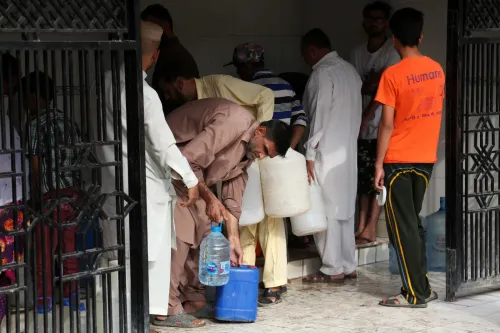
Protesters demanded the immediate restoration of a regular and announced power supply schedule. Residents cited suffering among children, patients dependent on medical equipment, and households without running water due to non-functional electric pumps.