Kim Jong-un Meets Russian Duma Speaker Volodin in Pyongyang
Synopsis
Russian Duma Speaker Volodin met Kim Jong-un in Pyongyang to inaugurate a memorial museum honouring North Korean soldiers killed fighting for Russia in Ukraine — a historic first that cements the Russia-DPRK military alliance and signals Pyongyang's permanent role in the Europe war theatre.
Key Takeaways
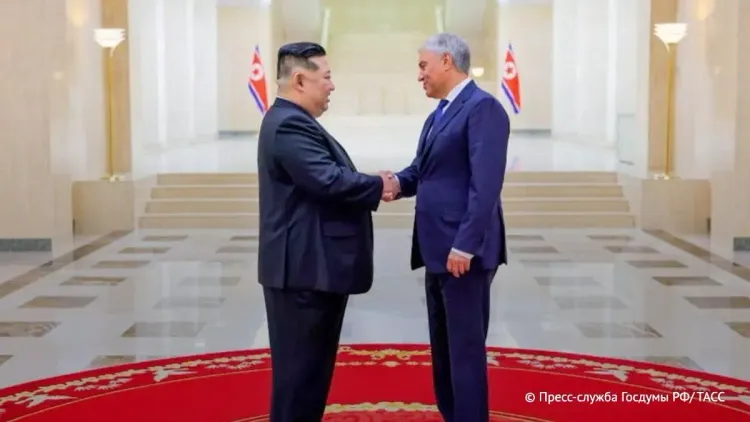
Kim Jong-un met Russian Duma Speaker Vyacheslav Volodin in Pyongyang on April 27, 2025 , deepening the Russia-DPRK alliance.
A Memorial Complex and Museum was inaugurated in North Korea to honour North Korean soldiers killed fighting for Russia in the Ukraine war — a historic first.
North Korea deployed approximately 15,000 combat troops to Russia after a strategic partnership treaty was signed in June 2024 .
Volodin conveyed President Putin's personal greetings to Kim and praised North Korea's role in the liberation of the Kursk region .
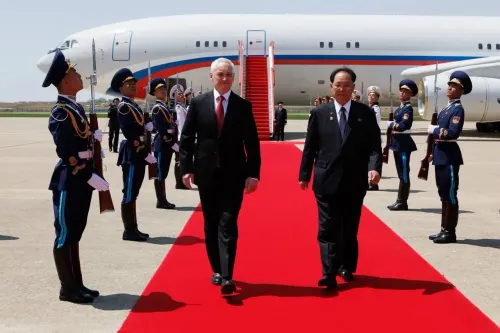
Russian Defence Minister Andrey Belousov also arrived in Pyongyang on the same day for separate high-level military talks with DPRK leadership .
Russia officially recaptured the Kursk region on April 26, 2024 — exactly one year before these commemorative visits — with North Korean troops playing a key operational role.
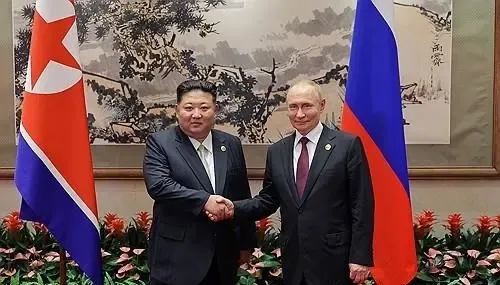
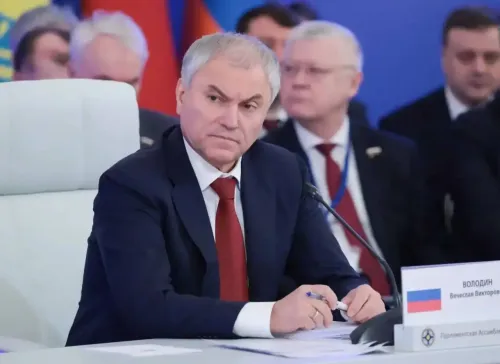
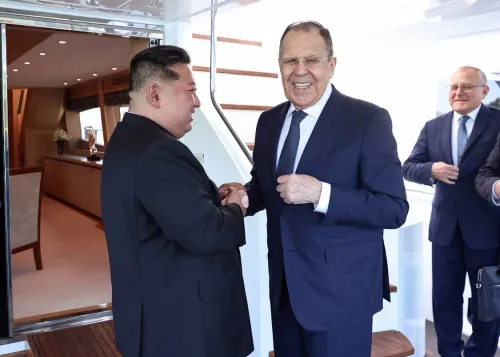
North Korean leader Kim Jong-un held a high-profile meeting with Russian State Duma Speaker Vyacheslav Volodin in Pyongyang on Sunday, April 27, 2025, as Russia formally honoured North Korean soldiers who died fighting alongside Russian forces in the ongoing war against Ukraine. The meeting, confirmed by Russia's TASS news agency, signals a deepening military and diplomatic alliance between Moscow and Pyongyang that is reshaping the geopolitical balance in both Eastern Europe and East Asia.
Opening of Memorial Museum Honours Fallen Korean Soldiers
Volodin travelled to North Korea specifically to attend the inauguration of a Memorial Complex and Museum of the Military Exploits of the Heroes of the Foreign Military Operation — a facility dedicated to North Korean troops killed while serving with Russian forces. The opening of such a museum on North Korean soil marks an unprecedented public acknowledgment by both nations of Pyongyang's direct military involvement in the Russia-Ukraine war.
During his address, Volodin stated that it was a great honour to be in Pyongyang to participate in the opening of the memorial complex. He added that the Russian people will never forget the heroism of the North Korean soldiers.
Putin's Greetings and Congratulations to Kim Exchanged
Volodin conveyed President Vladimir Putin's personal greetings and best wishes to Kim Jong-un, along with formal congratulations on Kim's reelection as Chairman of the State Affairs Directorate. This diplomatic gesture underscores that the Russia-North Korea strategic partnership operates at the very highest levels of both governments.
The Duma Speaker also expressed deep gratitude for North Korea's fraternal support during the liberation of the Kursk region, stating that Korean soldiers fought shoulder to shoulder with Russian troops in driving Ukrainian forces from Russian territory. He described this as a gesture from a true friend. Notably, Russia officially declared on April 26, 2024 — exactly one year before this visit — that it had fully recaptured the Kursk region, with North Korean troops playing a significant role.
Scale of North Korea's Military Deployment to Russia
North Korea deployed approximately 15,000 combat troops to support Russia following the signing of a Comprehensive Strategic Partnership Treaty between Kim Jong-un and President Putin in June 2024. This deployment has drawn sharp condemnation from South Korea, the United States, NATO, and Ukraine.
Volodin stressed that the relationship between Kim and Putin has become key to building the future, especially during the most difficult times — language signalling both leaders view this alliance as a long-term strategic pillar, not merely a wartime arrangement.
Russian Defence Minister Belousov Arrives in Pyongyang
In a parallel development, Russian Defence Minister Andrey Belousov arrived in North Korea on the same day for an official working visit. He was received at the airport by DPRK Military Department Chief Army General No Gwang-chol, according to TASS.
The Russian Defence Ministry confirmed that Belousov would meet with North Korea's top leadership and the DPRK armed forces command in Pyongyang and participate in commemorative events. The simultaneous visits by both the Duma Speaker and the Defence Minister suggest a coordinated, high-level diplomatic offensive by Moscow to cement its military partnership with Pyongyang.
Geopolitical Significance and What Comes Next
The construction of a war memorial museum on North Korean soil for soldiers killed in Europe is historically significant. It represents the first time since the Korean War era that North Korea has suffered battlefield casualties in a foreign conflict of this scale and the first time Russia has publicly honoured foreign allied troops with a dedicated memorial facility.
Western analysts argue this deepening alliance creates a dangerous feedback loop: North Korea gains battlefield experience and potential advanced military technology transfers, while Russia gains manpower and ammunition supplies that extend its war capacity in Ukraine. South Korea has already warned it may reconsider its policy of not supplying lethal weapons to Ukraine in direct response to North Korean troop deployments.
As the Russia-Ukraine war continues, the institutionalisation of the Russia-DPRK military alliance — now marked by memorials, treaties, and joint operations — suggests any future peace negotiations will need to account for Pyongyang's role as an active belligerent. Further high-level exchanges and potential expansion of military cooperation between the two nations are expected in the months ahead.
Point of View
Daring the West to respond. What the mainstream narrative misses is the transactional genius of this arrangement for Kim Jong-un: his troops gain real combat experience against NATO-equipped forces, Russia provides economic lifelines and potentially advanced weapons technology, and North Korea elevates itself from a pariah state to an indispensable wartime ally. The West's failure to deter this alliance early — when the partnership treaty was signed in June 2024 — has allowed it to calcify into something far harder to reverse.
NationPress
18 Sept 2026
Frequently Asked Questions
Why did Russian Duma Speaker Volodin visit North Korea in April 2025?
Volodin visited Pyongyang to attend the inauguration of a memorial museum honouring North Korean soldiers killed while fighting for Russia in the Ukraine war. He also met Kim Jong-un and conveyed President Putin's personal greetings and congratulations on his reelection.
How many North Korean troops fought for Russia in Ukraine?
North Korea deployed approximately 15,000 combat troops to support Russia following a strategic partnership treaty signed by Kim Jong-un and Vladimir Putin in June 2024. These troops played a documented role in Russia's recapture of the Kursk region.
What is the Russia-North Korea strategic partnership treaty?
The Comprehensive Strategic Partnership Treaty was signed between Kim Jong-un and President Putin in June 2024, formalising deep military, economic, and diplomatic cooperation between Moscow and Pyongyang. It underpins North Korea's troop deployment to the Russia-Ukraine war.
What role did North Korean soldiers play in the Kursk region battle?
North Korean troops fought alongside Russian forces in the operation to recapture the Kursk region from Ukrainian forces, which Russia declared completed on April 26, 2024. Volodin specifically credited Korean soldiers for fighting shoulder to shoulder with Russian troops.
Why did Russian Defence Minister Belousov also travel to North Korea?
Russian Defence Minister Andrey Belousov arrived in Pyongyang on April 27, 2025 for a working visit to meet DPRK top leadership and armed forces command and to participate in commemorative events. His visit ran simultaneously with Volodin's, signalling a coordinated high-level Russian diplomatic push to consolidate the military alliance.