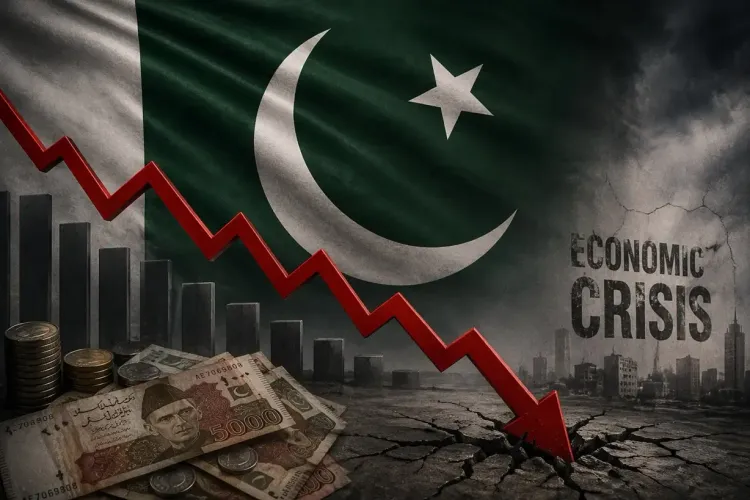
KSE-100 falls 1,223 points amid Pakistan political uncertainty, geopolitical fears
Synopsis
Pakistan's KSE-100 shed over 1,200 points in a single session as a volatile mix of domestic political tensions over Sindh's proposed division, US-Iran military escalation near Qeshm Island, and weak crude prices converged to spook investors — raising questions about whether the market's recent bull run has run its course.
Key Takeaways
The KSE-100 index closed at 176,294.33 on 19 November 2026 , down 1,223.41 points or 0.69% .
Intraday range: high of 177,719.05 , low of 176,053.64 .
Total traded volume fell 11.57% to 742 million shares ; turnover rose 28.85% to Rs 25.97 billion .
Political debate over division of Sindh province within the ruling coalition added to investor caution.
US airstrikes on an Iranian missile site at Qeshm Island heightened regional geopolitical risk.
Engro Holdings , UBL , Lucky Cement , and Meezan Bank led losses; Engro Fertilizers and MCB Bank partly offset declines.
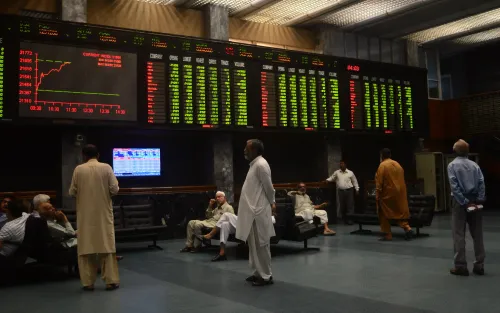
Pakistan's equity benchmark, the KSE-100 index, closed at 176,294.33 on 19 November 2026, shedding 1,223.41 points or 0.69% in another session marked by selling pressure, domestic political turbulence, and escalating regional geopolitical concerns. The decline extended a streak of cautious trading as investors opted to trim positions following a recent market rally.
Intraday Volatility and Market Movement
The session witnessed pronounced swings. The KSE-100 briefly touched an intraday high of 177,719.05 before selling pressure intensified, dragging it to a low of 176,053.64. Profit-booking dominated sentiment across multiple sectors as market participants reassessed positions in the face of compounding uncertainties.
Total traded volume fell 11.57% to 742 million shares, according to reports. However, turnover rose 28.85% to Rs 25.97 billion, indicating continued investor participation despite the broadly weaker tone.
Political Uncertainty Weighs on Sentiment
A key overhang on investor confidence was the ongoing political debate within Pakistan's ruling coalition over the proposed creation of additional administrative units. Opposition to any division of Sindh province remained a focal point for market watchers, with no resolution in sight. Analysts noted that this domestic political noise added a layer of caution that suppressed risk appetite throughout the session.
Geopolitical Flashpoints Add to Pressure
Beyond domestic politics, broader geopolitical developments weighed heavily on sentiment. Reports of heightened tensions in the Middle East — specifically, US warplanes striking an Iranian missile launch site on Qeshm Island in response to attacks on US personnel and assets — amplified concerns about regional stability and its spillover into financial markets. In global commodity markets, crude oil prices edged lower amid expectations of increased supply and rising US inventories, adding pressure to energy-related shares.
Stock-Level Performance
Not all stocks moved in lockstep with the broader decline. Engro Fertilizers, MCB Bank, Cnergyico PK, and Fauji Fertilizer provided partial support to the index. On the other side, Engro Holdings, United Bank Ltd (UBL), Lucky Cement, and Meezan Bank exerted significant downward drag, limiting any recovery attempt.
Outlook
Analysts suggest that until clarity emerges on the administrative units debate and regional geopolitical risks stabilise, cautious sentiment is likely to persist. Pakistan's equity market had staged a significant rally in recent months; whether that momentum resumes will depend heavily on how both political and external risk factors evolve in the sessions ahead.
Point of View
For all its recent momentum, remains acutely sensitive to two variables it cannot control: domestic political coherence and Middle East stability. The Sindh division debate is particularly corrosive — it signals fractures within the ruling coalition at exactly the moment markets need policy clarity. Meanwhile, the Qeshm Island strikes introduce a risk premium that no amount of positive earnings news can easily offset. If both fronts remain unresolved, profit-booking could deepen from a correction into something more structural.
NationPress
19 Nov 2026
Frequently Asked Questions
Why did the KSE-100 fall on 19 November 2026?
The KSE-100 fell 1,223.41 points to 176,294.33 on 19 November 2026 due to a combination of domestic political uncertainty over proposed administrative changes, profit-booking after a recent rally, and escalating Middle East geopolitical tensions including US airstrikes on an Iranian site at Qeshm Island.
What is the political issue affecting Pakistan's stock market?
Debate within Pakistan's ruling coalition over the creation of additional administrative units — including opposition to any division of Sindh province — has created uncertainty that is weighing on investor confidence. No resolution had been reached as of the latest session.
How did trading volumes change during this session?
Total traded volume declined 11.57% to 742 million shares compared with the previous session. However, turnover rose 28.85% to Rs 25.97 billion, suggesting investors remained active despite the weaker market tone.
Which stocks fell the most on the KSE-100?
Engro Holdings, United Bank Ltd (UBL), Lucky Cement, and Meezan Bank exerted the most significant downward pressure on the index during the session.
How did Middle East tensions affect Pakistan's market?
Reports of US warplanes striking an Iranian missile launch site on Qeshm Island heightened regional geopolitical uncertainty, dampening risk appetite among investors and adding to the broader selling pressure on Pakistan equities.