South Korea's Lee Jae Myung vows mutual respect diplomacy amid US friction
Synopsis
South Korean President Lee Jae Myung's Cabinet address was diplomatic in tone but pointed in context — delivered amid a reported US intelligence-sharing freeze over the Kusong disclosure and a Coupang data breach row. His simultaneous assertion of Seoul's top-five defence capability and push for wartime operational control signals a South Korea increasingly confident in charting its own strategic course.
Key Takeaways
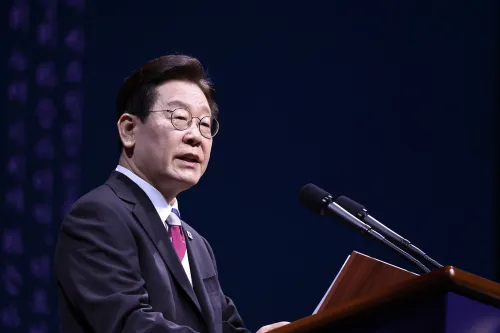
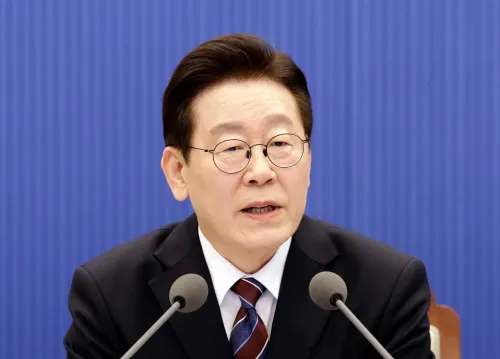
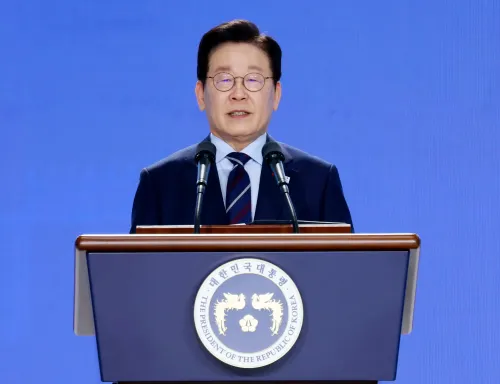
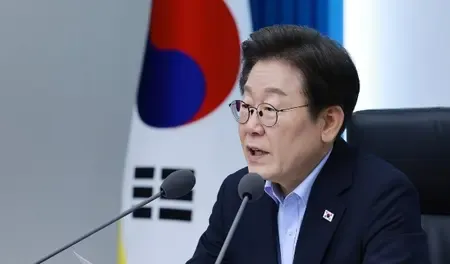
President Lee Jae Myung called for resolving alliance disputes through mutual respect and principles at a Cabinet meeting on 28 April at Cheong Wa Dae .
Remarks came amid reported US complaints over Seoul's handling of a data breach at Coupang and Unification Minister Chung Dong-young's public reference to Kusong as a North Korean uranium enrichment site.
Washington reportedly partially suspended intelligence sharing on North Korea's nuclear facilities with Seoul over the Kusong disclosure.
Lee pledged to increase defence spending, noting South Korea's defence capability ranks fifth globally and defence exports rank fourth .
The Lee administration seeks wartime operational control of its troops back from the US before 2030 .
South Korea's real GDP grew 1.7% in Q1, nearly double earlier estimates, though external risks from the Middle East conflict and oil prices persist.
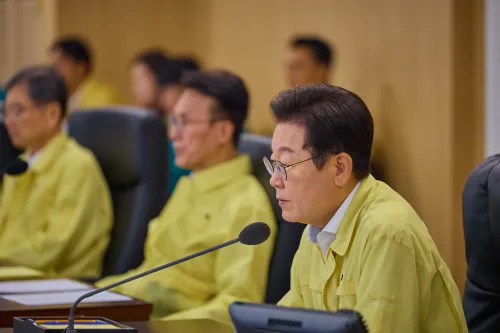
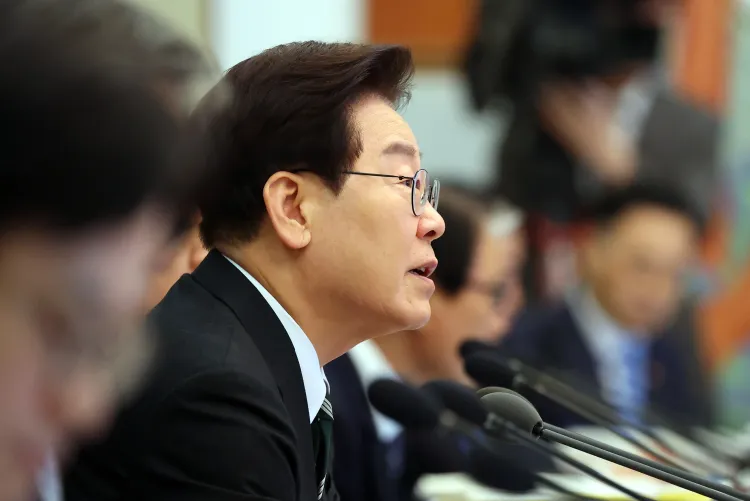
South Korea's President Lee Jae Myung on Tuesday, 28 April called for resolving outstanding disputes with close allies through mutual respect, common sense, and principles, signalling a firm but conciliatory posture as Seoul navigates diplomatic friction with Washington. The remarks came during a Cabinet meeting at Cheong Wa Dae, South Korea's presidential office.
Key Remarks at the Cabinet Meeting
"(We) need the wisdom to build healthy, future-oriented relations with traditional allies, while resolving pending issues based on mutual respect, common sense and principles," Lee told the Cabinet. He added that he would "devote myself to diplomacy aimed at building genuine friendship with allies, with confidence as a sovereign nation." Lee stressed that "cooperation with traditional allies should also be developed," framing the approach as a long-term strategic investment rather than a reactive posture.
The Diplomatic Friction with Washington
While President Lee did not name specific disputes, the remarks came against the backdrop of reported tensions with the United States. According to Yonhap news agency, Washington has reportedly raised complaints over Seoul's handling of a significant information breach at Coupang, a US-listed e-commerce firm. Separately, Unification Minister Chung Dong-young's public identification of Kusong as a North Korean uranium enrichment site has reportedly triggered a partial suspension of US intelligence sharing on North Korea's nuclear facilities with Seoul, as Washington believes the disclosure was based on US-shared intelligence. Minister Chung has repeatedly clarified that his remarks on Kusong were drawn from publicly available sources and not from any intelligence provided by the US.
Defence Sovereignty and Wartime Control
President Lee also underscored South Korea's growing self-reliant defence capability, pledging to further increase defence spending. "South Korea's own defence capability, excluding US Forces Korea, is the world's fifth-largest, while its annual defence spending is 1.4 times North Korea's annual gross national product," he said, adding that the country's defence exports rank fourth globally. The Lee administration is seeking to regain wartime operational control of South Korean troops from Washington before its five-year term ends in 2030. Command authority was transferred to the US during the 1950-53 Korean War, with only peacetime control returned to Seoul in 1994. "Even now, we have enough capability (to defend ourselves on our own), and, going forward, we will further increase defence expenditure," Lee said.
Economic Signals Amid External Risks
On the economic front, Lee highlighted that South Korea's real gross domestic product grew 1.7 per cent in the first quarter from the previous three months — nearly double earlier estimates — describing it as an "acceleration" of the recovery trend that began in the second half of last year. However, he cautioned that external uncertainties persist, citing the prolonged Middle East war and elevated oil prices as risks to the real economy. He instructed officials to make all-out efforts to sustain economic momentum.
What's Next
With the Lee administration pressing for wartime operational control by 2030 and diplomatic tensions with Washington still unresolved, Seoul's ability to balance alliance obligations with sovereign assertiveness will be closely watched. The Kusong intelligence dispute, in particular, could test the depth of the US-South Korea security partnership in the months ahead.
Point of View
It suggests the alliance is operating with less trust than the formal partnership implies. South Korea's push for wartime operational control by 2030, combined with its growing defence export clout, points to a country recalibrating how much strategic dependence it is comfortable with — a shift that Washington would do well to take seriously.
NationPress
16 Sept 2026
Frequently Asked Questions
What did South Korean President Lee Jae Myung say about allies?
President Lee Jae Myung said that pending issues with close allies should be resolved based on mutual respect, common sense, and fundamental principles. He made the remarks during a Cabinet meeting at Cheong Wa Dae on 28 April, pledging to pursue diplomacy aimed at building genuine friendship with allies.
Why is there diplomatic friction between South Korea and the US?
According to Yonhap news agency, Washington reportedly raised complaints over Seoul's handling of a data breach at Coupang, a US-listed e-commerce firm. Separately, Unification Minister Chung Dong-young's public identification of Kusong as a North Korean uranium enrichment site reportedly led the US to partially suspend intelligence sharing with Seoul, as it believed the disclosure was based on US-provided intelligence.
What is the Kusong controversy about?
Kusong is a site in North Korea that Unification Minister Chung Dong-young publicly identified as a uranium enrichment facility. The US reportedly believes this disclosure was based on intelligence it shared with Seoul, prompting a partial suspension of intelligence sharing. Minister Chung has clarified that his remarks were based on publicly available sources, not US intelligence.
What is South Korea's position on wartime operational control?
The Lee administration is seeking to regain wartime operational control of South Korean troops from the United States before its five-year term ends in 2030. Command authority was transferred to the US during the 1950-53 Korean War; only peacetime control was returned to Seoul in 1994, while wartime control remains with Washington.
How did South Korea's economy perform in the first quarter?
South Korea's real GDP grew 1.7 per cent in the first quarter compared to the previous three months, nearly double earlier estimates. President Lee described this as an acceleration of the economic recovery trend that began in the second half of last year, though he flagged risks from the Middle East conflict and high oil prices.