South Korea's Lee vows zero compromise on workplace safety at Labour Day
Synopsis
In a historic first, South Korean President Lee Jae Myung hosted Labour Day at Cheong Wa Dae — pledging zero compromise on workplace safety, challenging the pro-business-vs-labour divide, and addressing AI-driven job fears head-on. Both rival trade union federations sat at the same table, a symbolic unity that underscores how politically charged the labour agenda has become in Seoul.
Key Takeaways
President Lee Jae Myung pledged "zero compromise" on workplace safety in a Labour Day address on 1 May 2025 .
The event was held at Cheong Wa Dae for the first time, with 130 participants from labour, management, and government.
Both the Federation of Korean Trade Unions and the Korean Confederation of Trade Unions attended jointly for the first time at such an event.
Lee pushed back against AI-driven job displacement , saying it is "not right to ask workers to sacrifice themselves in the name of productivity." South Korea restored the name Labour Day last year and designated it a national holiday earlier this year.
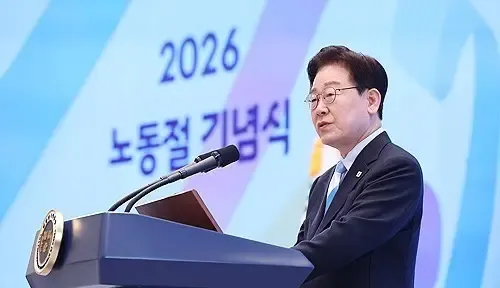
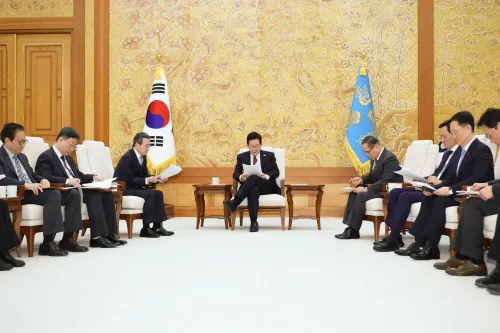
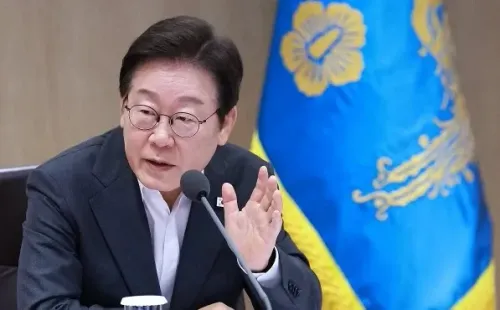
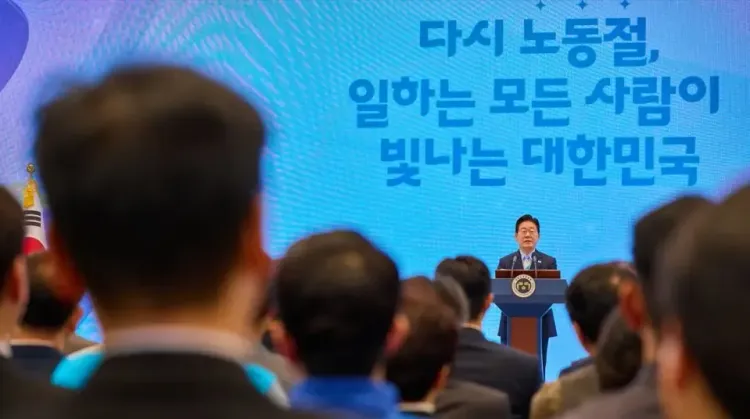
South Korean President Lee Jae Myung on Friday, 1 May 2025, pledged absolute commitment to workplace safety in a landmark Labour Day address held for the first time at Cheong Wa Dae — the presidential compound in Seoul. The event, which brought together 130 participants from labour, management, and government, also marked the first time both major umbrella trade unions jointly attended such a gathering.
Key Pledges from the President
Speaking directly to workers, President Lee drew a firm line on safety standards. "I will neither compromise nor make concessions on workplace safety," he said, vowing to build a "normal" country where no worker is ever compelled to risk their life on the job.
"Safeguarding workers is the most basic responsibility of any nation and any business," he added. The address was notable for its unequivocal tone — framing worker protection not as a policy choice but as a foundational obligation of the state.
Pushing Back on the Growth-vs-Labour Divide
Lee also challenged what he called outdated thinking that pits business interests against worker welfare. "We can only move forward by breaking free from the outdated thinking that being pro-business means being anti-worker," he said, according to Yonhap News Agency. "Growth has a future only when labour stands behind it," he stressed.
The president described workers as "the backbone of our economy" — those who keep operations running on the ground and drive the consumer spending that sustains growth. This framing positions labour not as a cost to be managed but as an engine of economic vitality.
On Artificial Intelligence and Job Displacement
Amid mounting public anxiety over artificial intelligence (AI) replacing human jobs, Lee sought to reassure workers that the government places people above productivity metrics. "As technologies advance, the prevailing view is that machines powered by artificial intelligence will largely replace human labour," he acknowledged. "But it is not right to ask workers to sacrifice themselves in the name of productivity," he said, adding that growth that leaves workers behind is not growth at all.
The remarks signal a deliberate policy stance as South Korea navigates an accelerating AI-driven economic transition — one that has already disrupted manufacturing and services sectors globally.
Historic Firsts at This Year's Event
The 1 May event was historic on multiple counts. It was the first time a Labour Day ceremony has been hosted at Cheong Wa Dae, lending the occasion a symbolic weight beyond previous years. Significantly, both the Federation of Korean Trade Unions and the Korean Confederation of Trade Unions — organisations reportedly holding differing political orientations — participated together for the first time in such a government-hosted event.
The South Korean government had originally observed Labour Day on 1 May before renaming it "Workers' Day" in 1963. The name was restored to Labour Day last year, and the government designated it a national holiday earlier this year, ensuring all workers receive the day off — a change that itself reflects a shift in how the state frames labour rights.
What Comes Next
Celebrations and awareness events were held across South Korea on the day, spotlighting the value of work in improving quality of life and driving economic growth. With President Lee having staked out a firm pro-labour position this early in his tenure, attention will now turn to whether legislative and regulatory action follows — particularly on workplace safety enforcement and AI-era labour protections.
Point of View
Signalling that labour is back at the centre of South Korean governance. The AI remarks are particularly telling: rather than deflecting worker anxiety with vague reassurances, Lee acknowledged the displacement risk directly and staked a position — people over productivity. The real test will be whether that rhetoric translates into enforceable safety standards and AI-era labour protections, or whether it remains a well-crafted speech delivered at a historically resonant venue.
NationPress
19 Sept 2026
Frequently Asked Questions
What did South Korean President Lee Jae Myung say on Labour Day 2025?
President Lee vowed "zero compromise" on workplace safety and challenged the notion that pro-business policies must come at workers' expense. He also addressed AI-driven job fears, saying growth that leaves workers behind is not growth at all.
Why was this Labour Day event historic in South Korea?
It was the first time a Labour Day ceremony was held at Cheong Wa Dae, the presidential compound. It was also the first time both major umbrella labour unions — the Federation of Korean Trade Unions and the Korean Confederation of Trade Unions — participated together in such a government-hosted event.
How did President Lee address concerns about AI replacing jobs?
Lee acknowledged that the prevailing view sees AI-powered machines largely replacing human labour, but firmly stated it is wrong to ask workers to sacrifice themselves in the name of productivity, signalling a people-first approach to technological transition.
What is the significance of South Korea restoring the name Labour Day?
South Korea originally observed Labour Day on 1 May before renaming it Workers' Day in 1963. The government restored the original name last year and declared it a national holiday earlier this year, ensuring all workers receive the day off — a symbolic and practical affirmation of labour rights.
Who attended the Labour Day event at Cheong Wa Dae?
Around 130 participants attended, including representatives from labour unions, management bodies, government, and workers from diverse occupations. Both the Federation of Korean Trade Unions and the Korean Confederation of Trade Unions were present.